

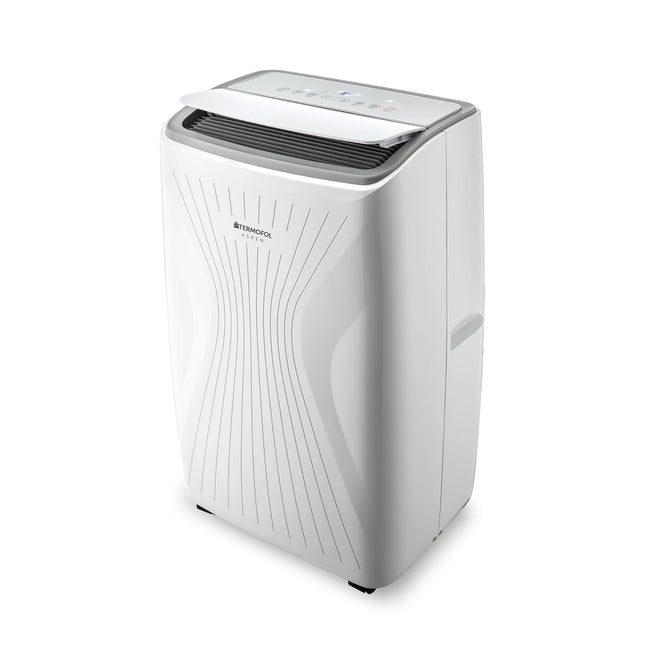
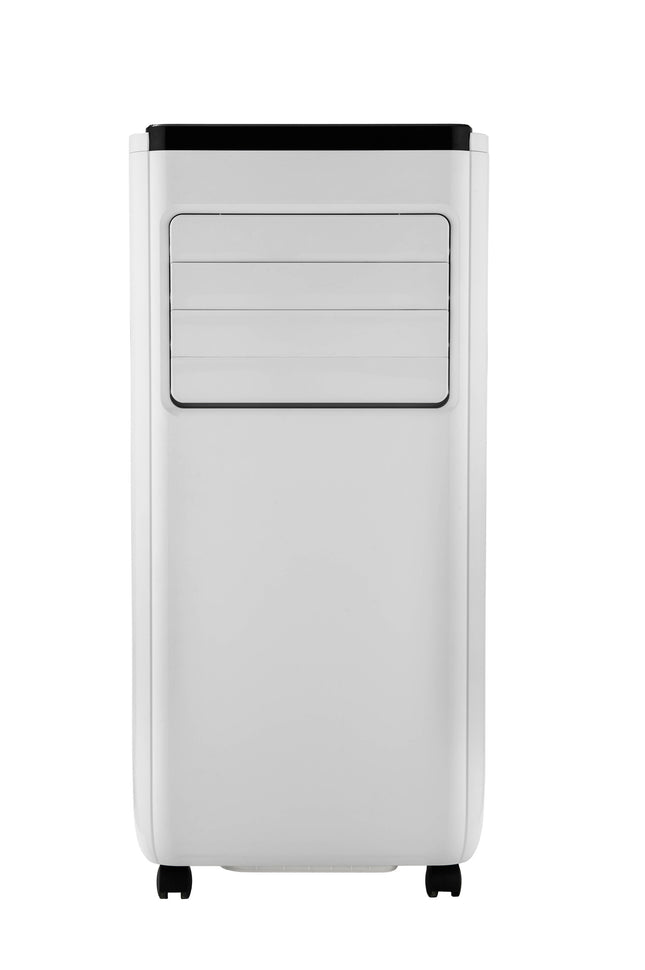


A quiet portable air conditioner cools a bedroom, home office, or living room without the noise constantly drawing attention. A portable air conditioner is not completely silent: the compressor, fan, and airflow remain audible. Nevertheless, a lower noise level, appropriate cooling capacity, and proper placement make a big difference. On this page, you can read how to fairly compare models and which features are important for use in Belgium and the Netherlands.

What is a quiet portable air conditioner?
With a portable air conditioner, all key components are located in the room. As a result, you hear more than with a fixed split air conditioner, where the compressor is located outside. Moreover, the term "quiet" is not an absolute technical category. Stores and manufacturers use different limits and measurement methods. Therefore, always compare the stated dB(A) value, the setting used, and the distance at which the measurement was taken.
Also pay attention to the difference between the minimum and maximum noise levels. A low value may only apply to ventilation or a special sleep mode, while the device is louder during active cooling. Are you looking for a quiet portable air conditioner for the night? Then specifically check the value during cooling, and not just the lowest value in the product specifications.
Understanding sound level in dB(A)
Decibels work logarithmically. As a result, a small difference on paper can be clearly audible. At the same time, sound perception remains personal: a steady airflow is often less disturbing than a compressor that switches on and off frequently. Hard floors, bare walls, and the distance to the bed also influence what you experience.
| What you are comparing | Why this is important |
|---|---|
| Minimum and maximum dB(A) | Show how quiet the device is on a low setting and how audible it becomes at maximum cooling. |
| Measuring status | A value for sleep mode, ventilation, or active cooling is not mutually equivalent. |
| Measuring distance | The sound decreases as you stand further away from the device. |
| Compressor rhythm | A quiet, smooth sound can feel more pleasant than frequent shifting. |
| Fan speeds | Multiple settings provide more control over the balance between cooling and rest. |
The quietest portable air conditioner starts with the right power
An air conditioner that is too light must run at full power for a long time. As a result, both the compressor and the fan remain distinctly audible. A unit that is much too heavy can cool the room quickly, but it will switch on and off more frequently. Therefore, choose based on the room volume in m³, the cooling capacity in kW or BTU, and the conditions of the room.
Do not consider only the floor area. An attic room, flat roof, large windows, afternoon sun, limited insulation, or multiple people present increase the cooling demand. Computers and other devices also emit heat. A manufacturer's maximum room volume is usually based on favorable conditions. With plenty of sun or moderate insulation, extra margin is advisable.
- Measure the length, width, and height to determine the volume of the room.
- Check the cooling capacity and the recommended maximum room size of each model.
- Choose sufficient reserve for a sunny facade, attic, or large glass section.
- Compare the noise level at the same operating mode.
- Check if a timer, sleep mode, and multiple fan speeds are available.
Quiet portable air conditioner for the bedroom
For sleep comfort, more counts than the lowest dB value. An illuminated display, airflow towards the bed, and sudden switching moments can also be disruptive. Therefore, cool the room before going to sleep. As soon as the walls, floor, and furniture retain less heat, the air conditioner can often continue operating at a lower setting.
Place the unit as far as possible from the headboard, but keep the exhaust hose short and straight. Do not direct the cold air directly onto the bed. Additionally, use blackout curtains during the day and keep windows and doors closed while cooling. For more specific advice and suitable models, you can also view the collection of portable bedroom air conditioners
Drain hose and window seal determine the comfort
A true portable air conditioner extracts heat from the indoor air and vents it outside through a hose. Without proper venting, that heat lingers in or around the room. The unit then has to run longer, increasing both energy consumption and noise levels. Therefore, keep the hose as short as possible, avoid sharp bends, and carefully seal the opening around the window.
Note the difference between a portable air conditioner and an air cooler. An air cooler uses water evaporation and has no exhaust hose, but it does not lower the room temperature in the same way. Therefore, anyone who actually wants to cool the room should compare models with clearly stated cooling capacity and heat dissipation.
Placement: fewer vibrations and a quieter airflow
Even a quiet portable air conditioner can sound unsettling on an uneven floor. Place the unit stably and clear of furniture or curtains. Keep the air intake and exhaust open so that the fan does not have to work harder. A suitable vibration-dampening mat can reduce impact noise through a hard floor, provided stability and ventilation are maintained.
Additionally, check the filter regularly and follow the manufacturer's maintenance instructions. A dirty filter restricts airflow. As a result, performance may decrease and the unit may become more audible. Always leave the prescribed clearance around the unit.
Which features are actually useful?
| Function | Practical advantage |
|---|---|
| Sleep or night mode | Typically lowers the fan speed and can dim the display. |
| Timer | Let the room cool down beforehand or switch off the device automatically later. |
| Thermostat | Regulates the desired temperature and prevents unnecessary continuous cooling. |
| Dehumidify | Can make humid air feel more comfortable, depending on the circumstances. |
| Remote control or app | Allows adjustment without getting up, especially handy in the bedroom. |
| Heating function | Increase usability in spring and autumn. |
Do you want a single device for both cooling and supplementary heating? Then take a look at portable air conditioners with heating. Check which functions are available per model; not every version has the same settings.
Portable air conditioner, portable split air conditioner, or fixed split air conditioner?
A portable monoblock air conditioner is flexible and usually does not require a fixed installation, but the compressor remains indoors. A portable split air conditioner divides the indoor and outdoor units and can therefore be quieter in the room. A fixed split air conditioner generally offers the lowest indoor noise and the highest efficiency, but requires professional installation and is not portable. The best choice therefore depends on whether you rent or own your home, your budget, the available installation space, and how often you cool.
For larger commercial spaces, workshops, or prolonged heavy loads, a consumer model is often not the right solution. In that case, compare industrial air conditioning and portable industrial air conditioning.
Buying a quiet portable air conditioner: practical checklist
- Determine the volume of the room and note the solar load and insulation.
- Select sufficient cooling capacity so that the appliance does not constantly run at maximum.
- Compare minimum and maximum dB(A) for the same function.
- Check if the drain hose and window seal fit your window.
- Pay attention to sleep mode, timer, fan speeds, and display lighting.
- View dimensions, weight, wheels, and the route between rooms.
- Check energy data, condensate drainage, and filter maintenance.
Why a quiet portable air conditioner from Warmteshop?
Warmteshop has been a specialist in climate and heating solutions since 2006. You can compare the range online or ask for advice on capacity, noise level, and installation. Those who wish to view a device first can visit our 30+ showrooms in Belgium and the Netherlands. You can find independent reviews via Trustlocal.
View the available models for quiet portable air conditioners. Do you want to compare all versions side by side first? Then go to the general overview of portable air conditioners. For nighttime use, you will find additional advice under portable air conditioners for the bedroom.
Frequently asked questions about quiet portable air conditioners
Does a completely silent portable air conditioner exist?
No. With a portable monoblock air conditioner, the compressor and fan are located indoors. As a result, active cooling remains audible. However, a low setting, appropriate capacity, and smart placement do reduce the perceived nuisance.
How many dB is quiet for a portable air conditioner?
There is no universal limit. Therefore, compare dB(A) values only when the measurement setting and conditions match. Pay particular attention to the noise level during actual cooling and to both the minimum and maximum.
Can a quiet portable air conditioner run all night?
That depends on the model and your preference. Use the manual, keep the drain clear, and set a moderate temperature. Often, pre-cooling followed by a low setting or timer works better.
Does a more powerful air conditioner make more noise?
Not automatically. An undersized unit actually runs longer at maximum power. Therefore, compare both cooling capacity and dB values, and choose a power output that suits the room.
How do I make my portable air conditioner quieter?
Position the unit stably, keep air vents clear, clean the filter, and use a short, straight exhaust hose with a good window seal. Additionally, cool before the hottest hours and use a lower fan setting afterwards.