
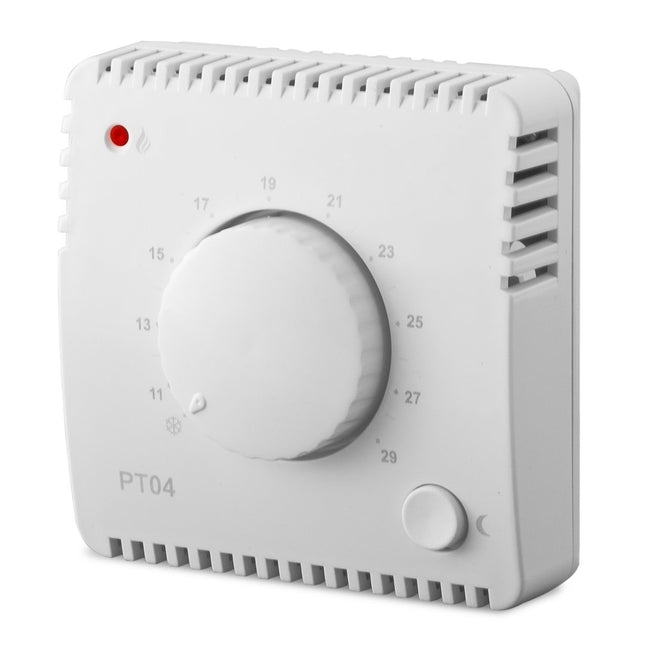
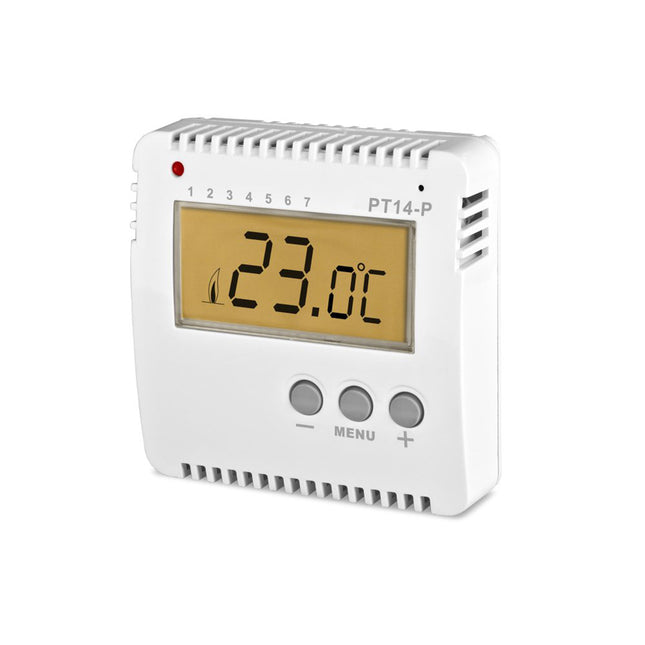
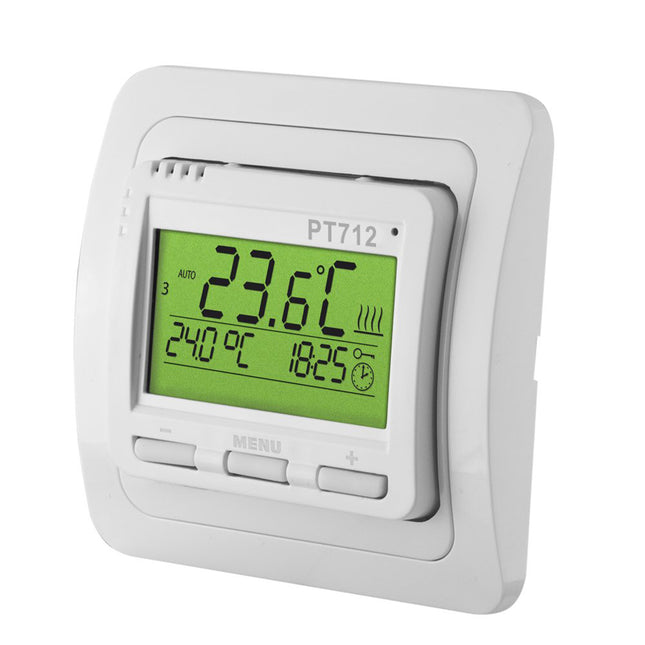


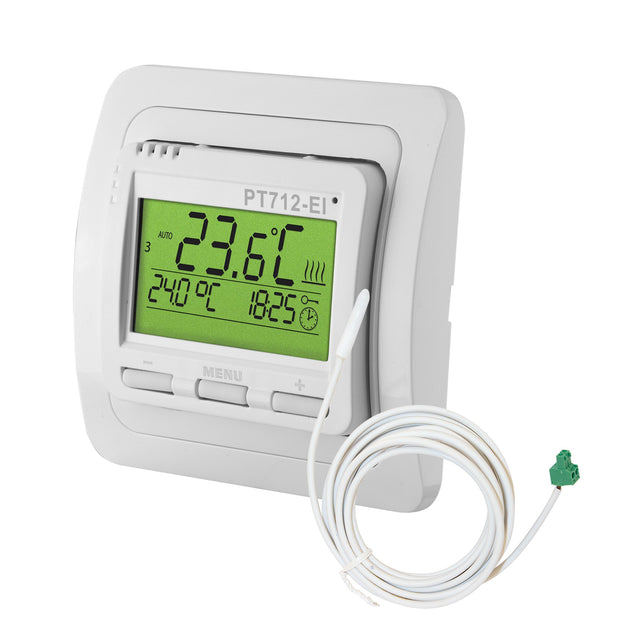
Wired thermostats for stable temperature control
Wired thermostats measure the temperature in a room and control your heating system via a fixed cable. This creates a reliable connection without batteries or a wireless signal. This collection is suitable for homes, offices, and other spaces in Belgium and the Netherlands where a constant temperature, simple operation, and a long lifespan are important.
A wired thermostat is more than just an on-off switch. The device determines when the heating starts, how long it operates, and when the set temperature is reached. This prevents unnecessary heating and ensures consistent comfort. Furthermore, many models are suitable for electric radiators, convectors, and other electric heaters. However, always check technical compatibility before purchasing.

Why choose a wired thermostat?
A fixed connection offers peace of mind and predictability. The thermostat communicates directly with the receiver or heating unit. As a result, there are no batteries to run out and no interference caused by a weak radio signal. This is particularly useful in rooms with thick walls, multiple floors, or many metal structures.
- continuous connection between thermostat and heating;
- no battery replacement or charging times;
- accurate measurement at a fixed, representative location;
- suitable for both simple and programmable controls;
- less dependence on wireless interference;
- A neat, permanent solution for new construction or renovation.
Therefore, wired thermostats are a logical choice when reliability is more important than a fully wireless installation. In an existing home, however, you must take into account the necessary cable routing and any wall modifications.
How does a wired thermostat work?
The temperature sensor in the thermostat compares the measured value with the set target temperature. If the room is too cold, the thermostat signals a heat demand. As soon as the desired temperature is reached, the demand is reduced or switched off. Modern controllers can refine this process with a differential switch, weekly program, or adaptive control.
The cable can carry a low-voltage signal or a switched-mode power connection. Which version you need depends on the heating system. Therefore, never simply connect a thermostat to an unknown voltage. Consult the wiring diagram and have the installation carried out by a qualified installer if you are in doubt.
Choosing wired thermostats: the most important features
On-off control or modulating control
A simple on-off thermostat switches the heating on when heat is needed. A modulating control adjusts the power gradually and can therefore operate more quietly. The thermostat and the receiver must support the same control technology. So, do not just look at the appearance, but also at the specifications of your radiator or convector.
Programmable weekly thermostat
With a weekly program, you set different comfort and temperature reductions for each day. For example, you heat primarily when you are present and lower the temperature at night or during workdays. Additionally, you can schedule holidays or temporary absences. A fixed schedule works best when your daily rhythm is reasonably predictable.
Manual operation
A simple rotary knob or digital control is well-suited to a guest room, storage room, or office with varying use. You set the temperature directly without complicated menus. This makes the solution clear and easy to understand for every family member.
Sensor and placement
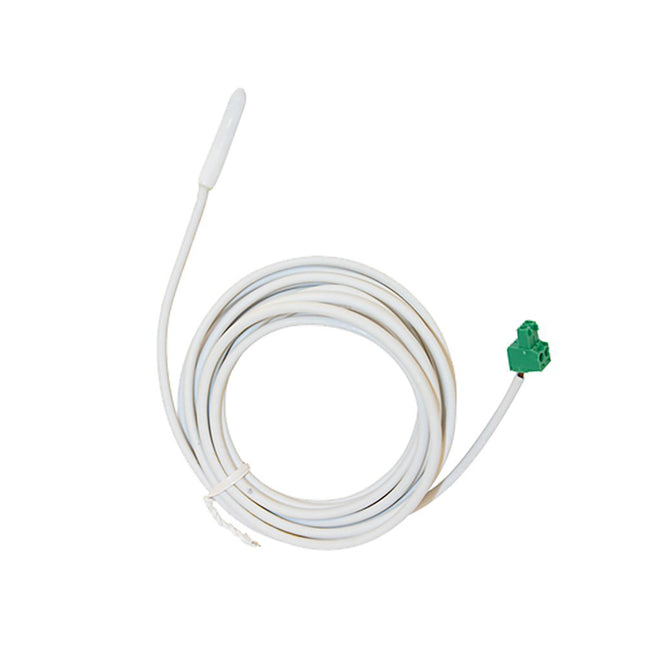
The measurement is only reliable when the thermostat is mounted correctly. Place the device on an interior wall, at approximately eye level, away from radiator heat, drafts, direct sunlight, and doors. Do not cover the sensor with curtains or furniture. In a large room, an external sensor can help measure the temperature at a representative location.
Compatibility with electric heating
Not every wired thermostat works with every heater. Therefore, check the maximum switching capacity, the voltage, the contact type, and the way the receiver is controlled. With multiple radiators, a central thermostat can control different receivers, provided the system is designed for this.
Additionally, pay attention to the combination with an existing control system. A radiator with a built-in thermostat, an external receiver, and a central control system must not interfere with each other. Before purchasing, note the brand and type of the heating, the number of units, and the existing wiring. This allows an installer to provide targeted advice.
Wired thermostats and saving energy
A thermostat saves energy by adjusting the heat demand to the use of the room. The greatest savings are usually achieved by setting a lower temperature when no one is present. Set the comfort temperature realistically and avoid large jumps that put an unnecessary strain on the heating system.
- Create a daily and weekly schedule that aligns with your attendance.
- Use a limited night-time reduction instead of turning off the heating completely.
- Keep doors and windows closed while the room heats up.
- Check that the thermostat is not hanging behind a piece of furniture or a curtain.
- Compare the measured consumption before and after setting a program.
- Have radiators, convectors, and sensors checked regularly.
A wired thermostat does not make an energy source cheap in itself. The result also depends on insulation, heat loss, the heating output, and your settings. Therefore, proper adjustment is at least as important as the purchase of the device.
Installation and cabling
In new construction or a renovation, the cable can be neatly concealed in the wall, floor, or conduit. In an existing home, a visible cable duct is often faster and less intrusive. Plan the route so that the cable does not run alongside strong power sources and is protected against mechanical damage.
Switch off the electrical installation before work and check for de-energization using suitable measuring tools. The connection of mains voltage and heating power is the responsibility of a qualified electrician. After installation, test the heat demand, the shutdown, and the program in each relevant operating mode.
Preventing maintenance and breakdowns
Wired thermostats require little maintenance. Dust the housing with a dry, soft cloth and do not use harsh cleaning agents. Check occasionally that the cable and connections are undamaged. An abnormal room temperature may indicate incorrect placement, a blocked sensor, or a problem with the heating element.
If the system does not respond, first check the set temperature, the power supply, and the fuse. Next, check if a time program or frost protection is active. If the fault persists, do not open the thermostat yourself but call in an installer.
Wired or wireless thermostat?
A wireless thermostat offers flexible placement and is convenient when running cables is difficult. On the other hand, batteries, range, and radio interference require attention. A wired thermostat has a fixed position but offers a continuous connection and less maintenance. Choose a wired option for a renovation with available wiring, a new construction project, or an environment where reliability is paramount.
In some homes, a hybrid solution is possible: a wired main thermostat with separate wireless zones. Have the control system and receivers checked in advance to see if they support this.
Frequently asked questions about wired thermostats
Can I connect a wired thermostat myself?
For low-voltage systems, the connection is sometimes simple, but always check the manual. As soon as mains voltage or a high switching capacity is involved, a certified installer should carry out the connection.
Where should I hang the thermostat?
Choose an interior wall at a height of approximately 1.5 meters, away from drafts, sunlight, heat sources, and obstacles. This way, the sensor measures the temperature you actually experience.
Do wired thermostats work with underfloor heating?
That is possible, provided the thermostat and the underfloor heating manifold are compatible. Underfloor heating responds slowly, making appropriate controls and a floor sensor important.
How many thermostats do I need?
Each room or zone with its own temperature control typically requires its own thermostat or zone sensor. The exact configuration depends on your heating system.
What if the cable is already present?
Note the number of conductors, the voltage, and the function of the wires. Never use an existing cable without checking the connection diagram.
Buy wired thermostats at Warmteshop
Compare wired thermostats based on control, compatibility, programming, and ease of installation. Warmteshop helps customers in Belgium and the Netherlands choose a solution that suits their electric heating and usage situation. Keep your current appliance specifications at hand and ask for advice if you have any doubts about voltage, power, or wiring. This way, you enjoy a stable indoor climate and control you can rely on every day.