


Comparing glass infrared panels? Choose the glass finish that suits your interior, but at the same time assess power output, installation, and operation. A glass front in itself says nothing about the required wattage or suitability for a bathroom. This collection helps you choose within the glass finishes; for other materials, view all infrared panels.
Have your glass panel selection checked
Glass finish, size and space
Compare the color, gloss, or satin finish with the location where the panel will be installed. Also check the dimensions and weight: a suitable appearance does not automatically mean that the wall or ceiling can support the panel. Keep the prescribed distances clear and ensure that furniture or curtains do not block the radiation range.
Are you looking for a reflective surface in which you can see your reflection? Then choose an infrared mirror. A standard glass heating panel has a different finish. For a different look, also compare metal panels.
Two glass models: difference in size and arrangement
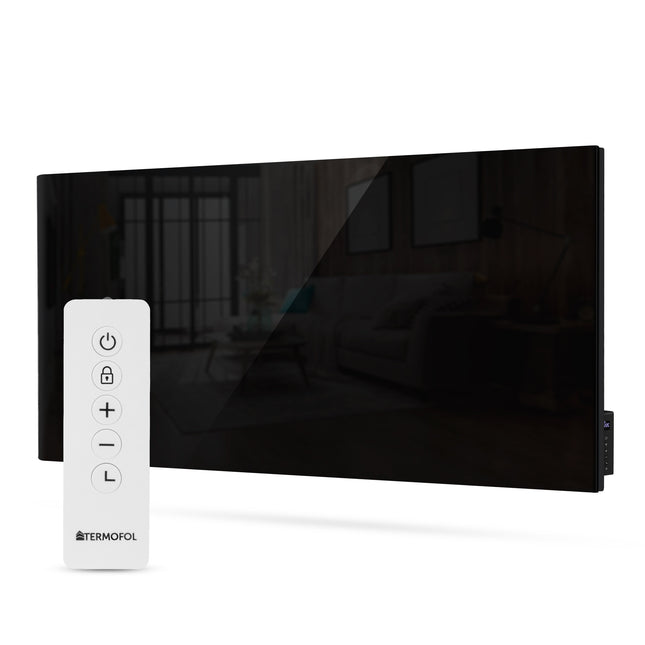
- Termofol TF-GB700: black glass, 700 W, 50 × 120 cm and 13 kg according to the product specifications. This model is for wall mounting and has a built-in thermostat with Wi-Fi/app control.
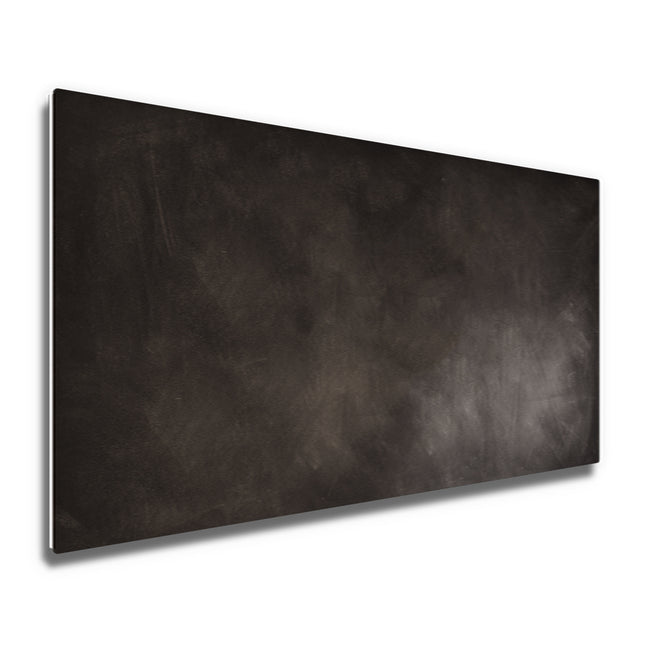
- Ecaros satin black glass 600 W: 60 × 90 × 2.2 cm and 13.5 kg according to the product specifications. The model is listed for wall and ceiling mounting and requires appropriate external control.
These examples are not a ranking of consumption or savings. Compare a complete solution: panel, required control system, receiver, and mounting components. Check the current version and scope of delivery via the product link. The different power ratings do not mean that both panels can heat the same room.
Glass on the ceiling requires specific inspection
Not every glass panel is suitable for ceiling mounting. Use only a model for which the manufacturer permits this installation, with the prescribed fixings and any additional glass locking. The Welltherm manual for the mentioned glass series, for example, specifies glass holders for ceiling mounting. Do not automatically adopt this requirement as an installation instruction for another brand: always follow the manual for your exact model.
Have the supporting structure, weight, fastening, and electrical connection assessed together. For the layout above seating or workspaces, consult the ceiling panel selection guide. If you also want lighting in that area, compare the panels with LED lighting; a light frame is not universally interchangeable.
Assess power and consumption
For local supplementary heating, the seating position, the range of the radiation, and your usage time are taken into account. For the entire room, heat loss, insulation, glazing, ventilation, and the desired temperature are also determining factors. A fixed range such as 500 to 900 W is therefore insufficient as a recommendation for every average room.
You calculate consumption using kW × active hours. A 700 W panel that heats continuously for two hours uses 0.7 × 2 = 1.4 kWh. At a hypothetical rate of €0.30/kWh, this costs €0.42. The actual operating time and your own rate determine the costs. Glass does not guarantee lower consumption than metal; the control system and usage also play a role.
Bathroom, condensation and maintenance
Check the IP class, permitted mounting location, and connection method for each product. An IP rating does not make a panel suitable for every bathroom zone. A heated glass surface is also no guarantee that condensation or moisture problems will disappear; ventilation and room conditions remain relevant.
The surface can become hot. Follow the usage and cleaning instructions, switch off the panel, and allow it to cool before cleaning. Do not use a damaged glass panel. Heating is not a treatment for allergies or asthma.
Which information helps with your advice request?
Note room dimensions, ceiling height, insulation, windows, and usage times. Indicate whether you want to heat a single spot or the entire room. Add photos of the installation site and specify the desired glass finish and controls. Through the heating advice, you can have power, distribution, and components assessed together.