


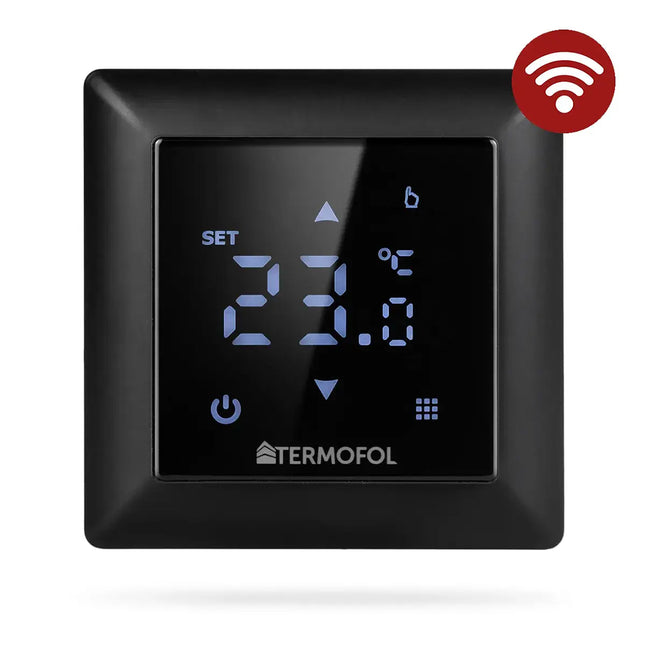
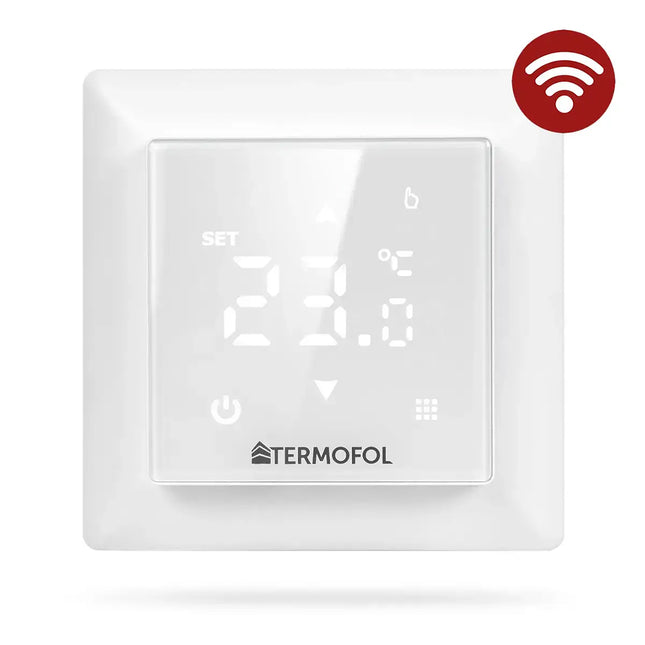
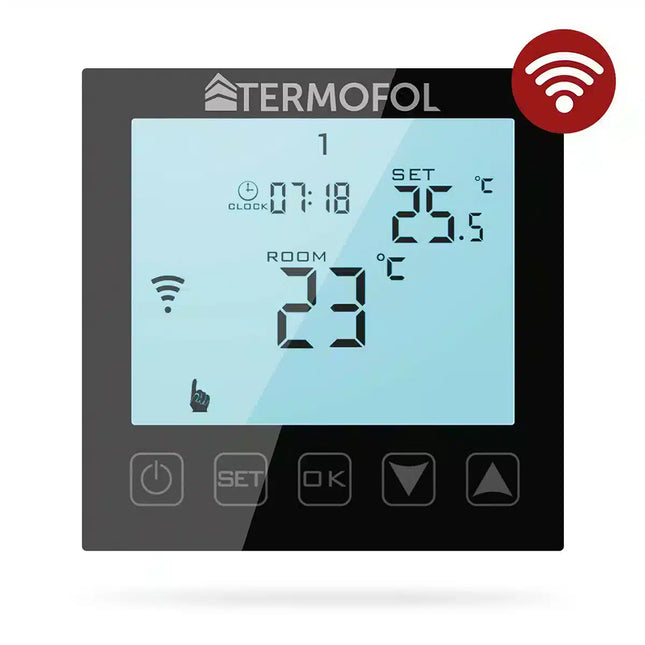
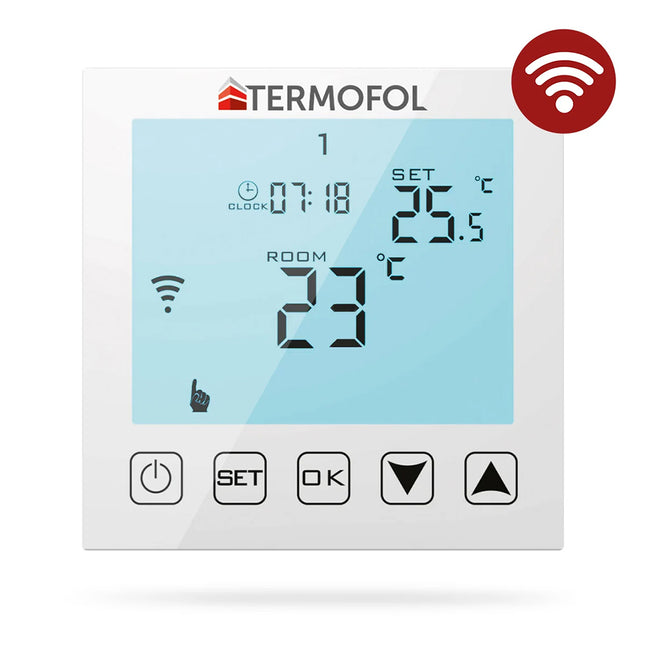
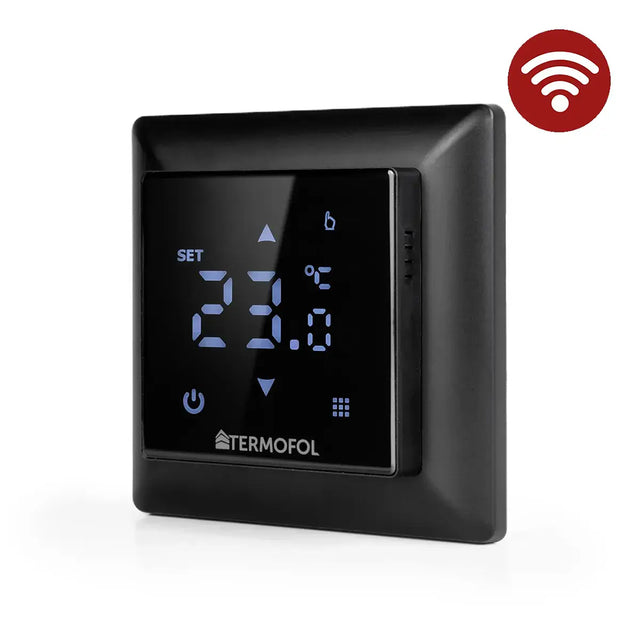
Wired thermostats with WiFi for electric heating
Wired thermostats with WiFi combine a fixed connection to your heating system with control via an app. The thermostat switches the heating on and off via a wired connection, while WiFi is used for settings, schedules, and remote control. This provides you with stable control as well as the convenience of smart temperature management. This collection is primarily aimed at electric underfloor heating and other compatible electric heating systems.
However, a Wi-Fi connection does not automatically make a thermostat suitable for every installation. Always check the power supply voltage, maximum switching current, sensor connection, and heating type before purchasing. This prevents a thermostat from being technically incompatible with your existing system.
What is a wired Wi-Fi thermostat?
With a wired thermostat, cables run between the thermostat, the power supply, and the heater. Therefore, the heating power is not switched wirelessly. Wi-Fi adds a digital control layer to this. Depending on the model, you can use the accompanying app to adjust the temperature, set a weekly schedule, and choose various operating modes.
Therefore, this solution is interesting for new construction, renovation, or the replacement of an existing built-in thermostat. The thermostat is permanently installed in the wall and generally does not require battery operation. Furthermore, operation via the screen or buttons usually remains possible even when the internet is temporarily unavailable. However, please check this in the product specifications of the chosen model.
Advantages of wired thermostats with WiFi
- Fixed connection: the thermostat switches the heating directly via the existing wiring.
- Remote control: adjust the temperature via a smartphone or tablet, depending on the app.
- Programmable schedules: heat only at the times when you need comfort.
- Room and floor sensor: many models can monitor both the room temperature and the floor temperature.
- Clear operation: a display or touchscreen makes local operation simple.
- Smart features: some versions support vacation mode, open window detection, or voice control.
These features can limit unnecessary heating hours. However, a Wi-Fi thermostat does not automatically save energy. The result depends primarily on your schedule, set temperature, insulation, and usage pattern.
For which heating system are these thermostats suitable?
The models in this collection are primarily intended for compatible electric underfloor heating, including heating foil or heating cables. The thermostat can measure the room temperature using an internal sensor. Additionally, an external NTC floor sensor can measure or limit the floor temperature, depending on the model and the selected control mode.
Do you want to connect an electric radiator, infrared panel, or other electrical appliance? Then check whether the power rating, wiring diagram, and control method match. Furthermore, a thermostat for a directly switched electrical load is not automatically suitable for a central heating boiler, heat pump, or OpenTherm installation. For such systems, you need a thermostat that supports the required protocol or potential-free contact.
Which wired Wi-Fi thermostat do you choose?
Start with the technical connection, not the design. Next, consider which smart features you actually use. Pay attention to the following points:
- Supply voltage: check if the thermostat is compatible with the available mains voltage.
- Maximum load: compare the switching current and the maximum power with your heating system.
- Sensor: check the type and resistance value of an existing floor sensor.
- Flush-mounting dimensions: measure the flush-mounting box and check the required depth and available wiring.
- Control modes: choose room, floor, or combined control when your application requires it.
- App and Wi-Fi: check the supported platform, router frequency, and system requirements.
- Smart home connection: Google Home or Amazon Alexa is only supported if explicitly stated with the product.
- Programs: compare weekly program, holiday mode, frost protection, and optional open window detection.
Check power and maximum switching current
The connected power determines how much current the thermostat needs to switch. Divide the total power in watts by the mains voltage to calculate the approximate current. For example, a 2,300-watt electric floor at 230 volts requires approximately 10 amperes. Additionally, take into account the regulations in the manual and the electrical installation.
Does the total load exceed the thermostat's permissible switching current? If so, do not connect the system directly. An installer can assess whether a suitable relay or contactor is required. Furthermore, do not distribute large heating surfaces across a single thermostat without calculation.
Room sensor, floor sensor, or combined control?
An internal room sensor operates based on the measured air temperature. This is practical when the thermostat is mounted in a prominent location. An external floor sensor, on the other hand, measures the temperature in the floor. This sensor can regulate comfort or monitor a maximum floor temperature.
With combined control, the room sensor determines the heat demand, while the floor sensor acts as a limiter. This is useful for floor finishes subject to a maximum temperature. Always adjust the limit to the heating system, the floor construction, and the floor manufacturer's specifications.
Wired or wireless: what is the difference?
A wired thermostat is connected to the power supply and heating via cables. Therefore, it is suitable provided the necessary wiring and a suitable flush-mounted box are present. A wireless system typically uses a separate receiver at the heating unit and a thermostat that communicates via radio signal.
Wired thermostats with WiFi therefore use two different connections: wiring for heating control and WiFi for smart control. That distinction is important. The term “Wi-Fi” does not mean that the entire installation can be connected without cables.
App control and smart schedules
With an app, you can change the set temperature without walking to the thermostat. Additionally, you can often create daily or weekly schedules. For example, set a comfortable temperature before getting up and lower it when the room is not in use. This allows the heating to align better with your daily rhythm.
Depending on the model, multiple homes or zones can also be managed in a single app. Check in advance whether each room requires a separate thermostat and whether the app supports the desired number of devices. Also check whether control and programming remain available without a subscription.
Installation and placement
A wired thermostat is connected to mains voltage and can switch a significant electrical load. Therefore, have the installation carried out or checked by a qualified electrician. Always switch off the power before performing any work and follow the wiring diagram of the exact product.
Place the thermostat on a prominent interior wall, away from direct sunlight, drafts, and other heat sources. Install a floor sensor between the heating strips in accordance with the installation instructions, preferably in a suitable sensor tube. This makes it easier to check or replace the sensor later.
Buy wired thermostats with WiFi at Warmteshop
First, compare the connection, maximum load, and sensor compatibility. Then, choose the controls, color, and smart features that suit your home. In this collection, you will find various Termofol versions for electric underfloor heating, including models with a touchscreen, programmable schedules, and app control. The exact features vary by product.
Are you unsure about the wiring diagram or the required power? Then note down the total heating power, the existing wiring, the floor sensor, and the dimensions of the flush-mounted box. With this information, an advisor can determine much more accurately which thermostat is suitable.
Frequently Asked Questions
Does a wired Wi-Fi thermostat work without internet?
Local control remains available on many models, but remote control requires a working internet connection. Check the product specifications for exact operation in the event of a Wi-Fi outage.
Can I reuse my existing floor sensor?
Only when the sensor type and resistance value are compatible. Therefore, first measure or check which NTC sensor is present. If in doubt, use the sensor that comes with the new thermostat.
Can one thermostat control multiple heating zones?
Multiple loads can sometimes be connected together as long as the total power remains within the limits. For independently controlled zones, a thermostat or separate control module is usually required per zone.
Is a Wi-Fi thermostat suitable for every router?
No. Many smart thermostats have specific requirements regarding Wi-Fi frequency and security. Therefore, check the network requirements of the chosen model before purchasing.
Can I connect this thermostat to a central heating boiler?
Not automatically. The models in this collection are primarily intended for compatible electric heating. For a central heating boiler, check whether the thermostat and boiler support the same on/off contact or communication protocol.
How much energy do I save with a smart schedule?
That varies by home and usage situation. A schedule can reduce unnecessary heating hours, but the final consumption also depends on insulation, surface area, outside temperature, and the set temperature.