

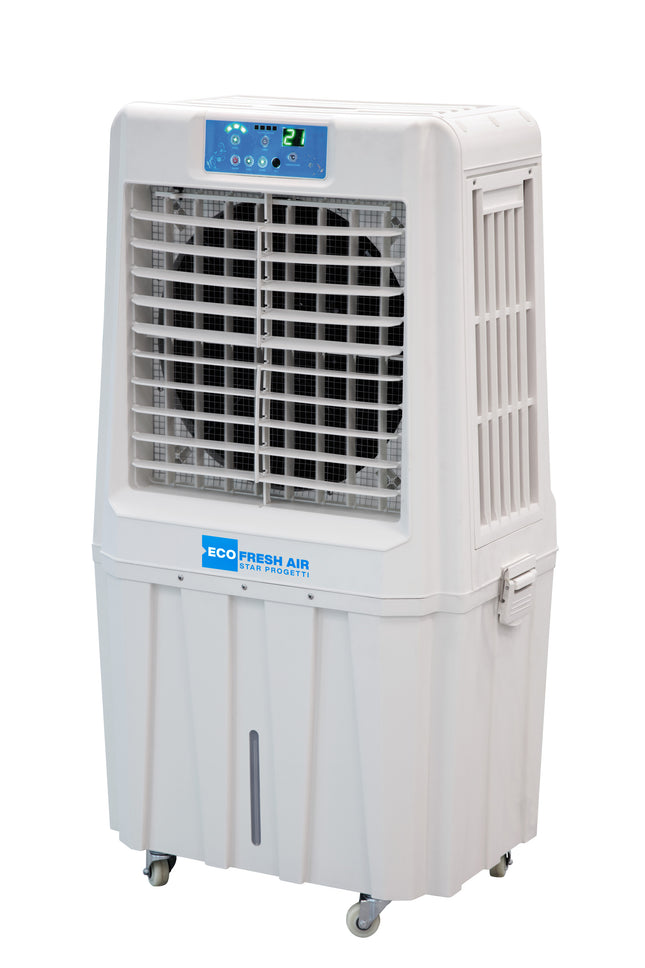
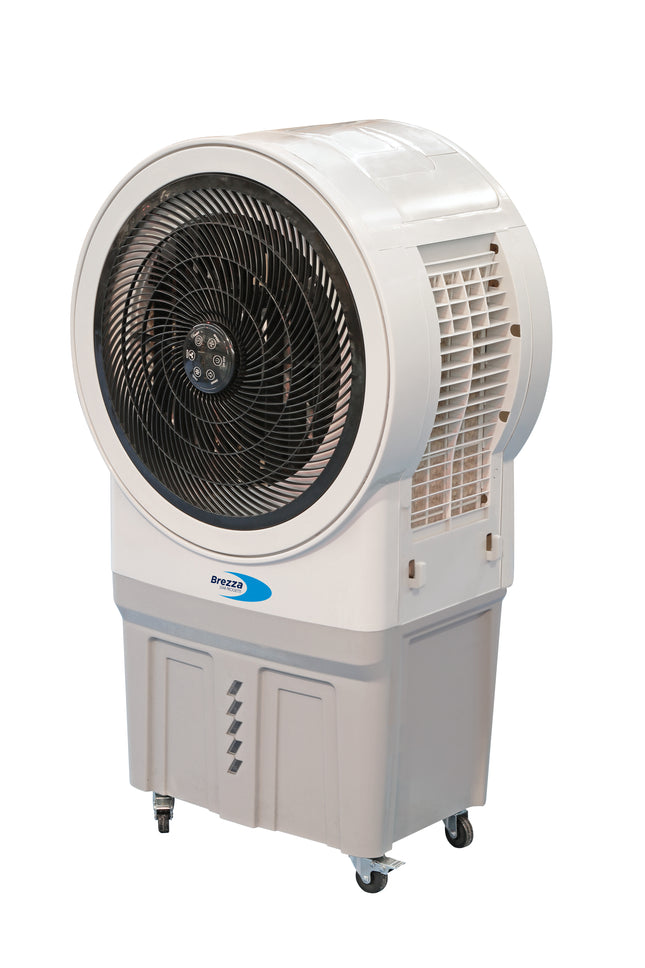
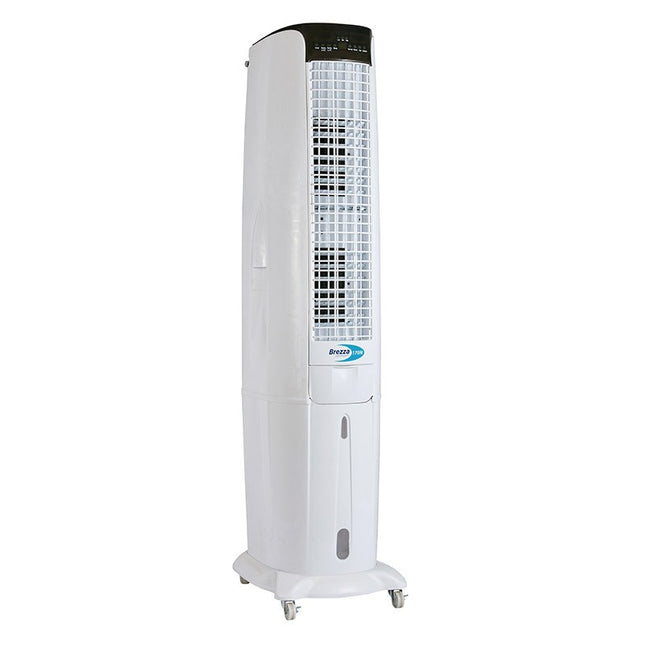
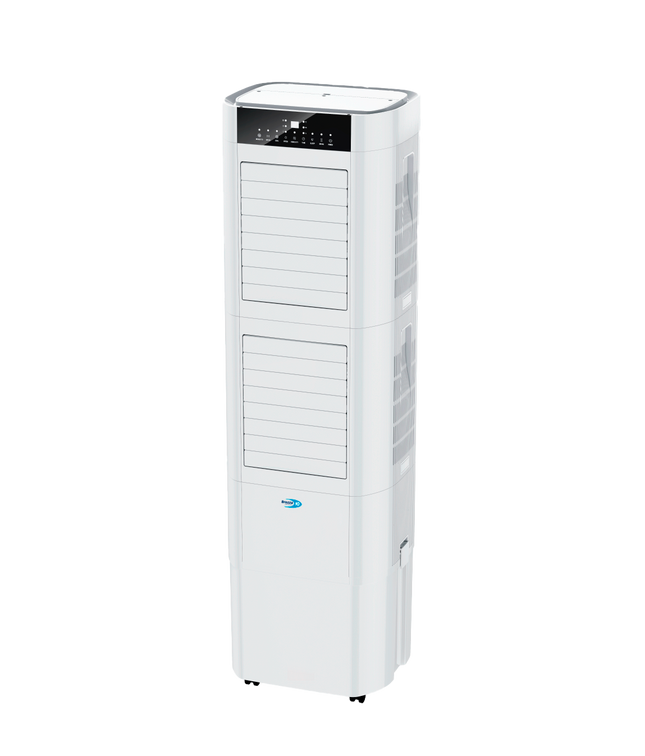


a portable industrial air conditioner for a workshop, warehouse, server room, or temporary location? A professional portable air conditioner provides targeted cooling without permanent installation. However, the stated cooling capacity is not the only factor determining suitability of a unit. Warm air extraction, room volume, internal heat load, air displacement, condensation, and power supply also play a role. This buying guide helps you choose a practical and technically suitable solution.

What is an industrial portable air conditioner?
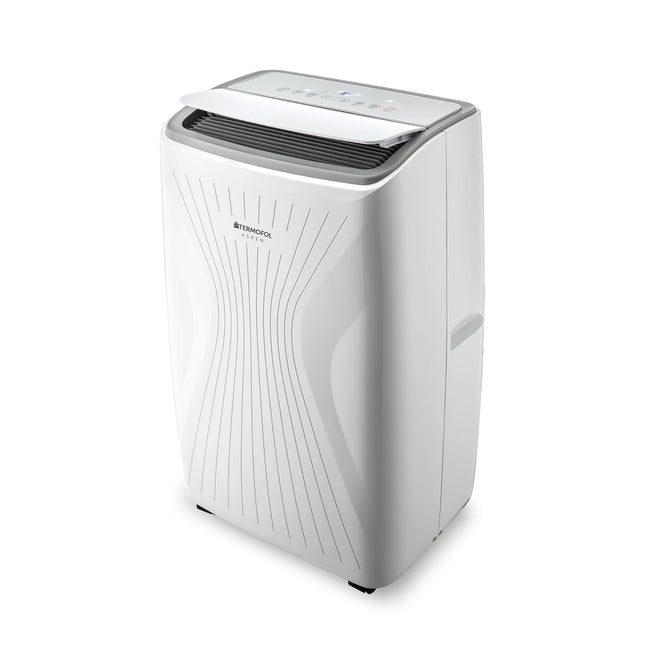
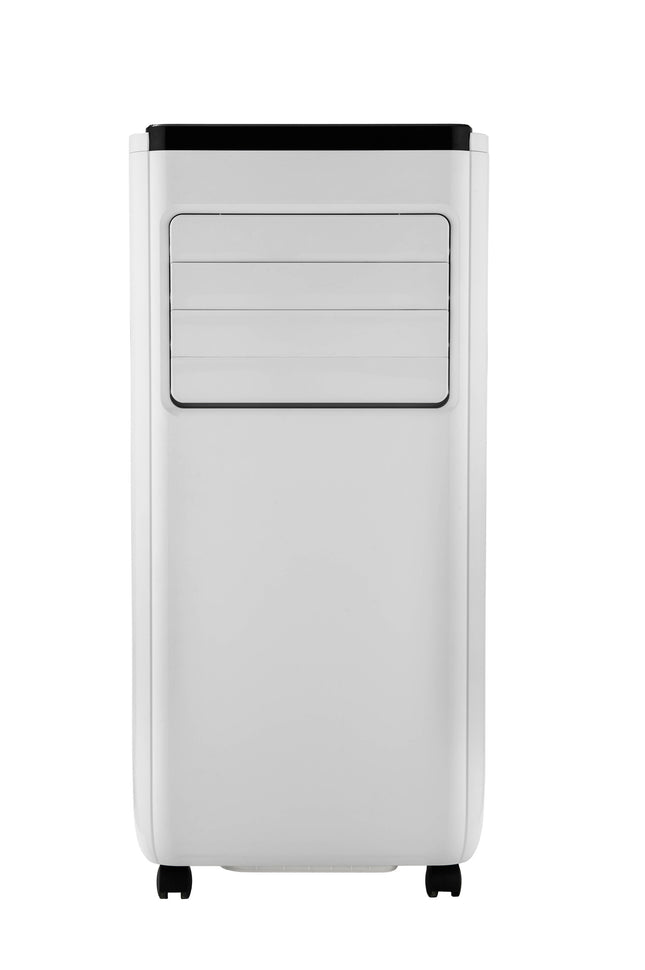
An industrial portable air conditioner is a wheeled compressor air conditioner for professional use. The unit extracts heat and moisture from the intake air. The cold air returns to the desired zone, while the absorbed heat is released on the condenser side. This warm air must exit the cooled zone. Otherwise, you simply move heat within the same space, and the net result remains limited.
Therefore, industrial models are typically built for higher cooling demands, more intensive use, and greater air displacement than standard portable residential air conditioners. Depending on the unit, you direct cold air onto employees, machines, or equipment via adjustable outlets or hoses. As a result, localized spot cooling can be beneficial when conditioning an entire industrial hall is impractical.
When do you choose mobile industrial cooling?
Moreover, mobility is particularly valuable when cooling demands fluctuate. For instance, the same unit can be positioned at a production line, loading zone, or temporary workspace on different working days. A portable unit can also be deployed quickly for seasonal peaks, events, renovations, and emergency cooling.
- Workshop: cool a fixed workstation or the area around a heat-producing machine.
- Warehouse: improve comfort at packing tables, loading areas, and other occupied zones.
- Server or technical room: vent the continuous heat from equipment in a controlled manner.
- Production: limit local heat in processes, motors, and installations.
- Temporary location: create cooling in tents, pop-up spaces, or during work activities.
- Emergency: provide temporary capacity when a fixed installation fails.
Industrial portable air conditioner, spot cooler, or portable split unit?
Mobile monoblock
For example, with a monoblock, the evaporator and condenser are housed in a single wheeled enclosure. This makes the unit easy to move. However, you must direct the warm air outside or to another zone using a suitable hose. Check the diameter, maximum hose length, and permitted bends beforehand. An exhaust that is too long or narrow can restrict airflow and performance.
Spot cooler
Subsequently, a spot cooler blows cold air directly towards a single person, workstation, or process. This is useful in a large or open hall where full room cooling requires significant capacity. However, the warm side still requires attention. Position the unit so that heat does not flow back into the cooled zone.
Portable split air conditioner
In a mobile split system, the indoor and outdoor units are separate, connected according to the system design. As a result, the condenser is located outside the cooled space. This can offer advantages for heat dissipation and noise distribution. The connection, placement, and maximum distance are model-specific.
Are you looking for a structural solution or do you want to compare different system types? Then also take a look at industrial air conditioning. For broader purchasing guidance, buying industrial air conditioning .
Industrial portable air conditioner: determining cooling capacity
In contrast, a surface area measurement in square meters is only a rough indication. Industrial halls often have high ceilings, large doorways, and substantial heat loads. Therefore, first calculate the room volume: length times width times height. Next, map out how much heat enters through the sun, machinery, lighting, people, ventilation, and open doors.
- insulation of roof, facade, windows and gates;
- ceiling height and the total number of cubic meters;
- heat dissipation from machines, ovens, motors, and electronics;
- number of people and duration of the occupation;
- solar radiation and orientation of windows or skylights;
- ventilation, extraction and air leaks;
- desired temperature and expected outdoor temperature;
- full room cooling or only a local work zone.
As a result, an undersized unit continues to run at full load for extended periods and may not reach the target temperature. An unnecessarily large unit is more expensive and does not necessarily regulate better. Therefore, for critical processes or large buildings, have the cooling load calculated based on the actual situation.
Cooling capacity, electrical power and efficiency
In short, cooling capacity and power consumption are different values. The cooling capacity in kW indicates how much heat an air conditioner can dissipate under specified conditions. The electrical power consumption tells you how much power the unit uses when running. Therefore, for a consumption estimate, use the power consumption of the specific model, not the cooling capacity.
Additionally, check the power supply. Some professional devices operate on 230 V, while heavier models may require a different electrical connection. Compare the voltage, maximum current, plug type, and recommended protection with the available installation. Have any missing or modified connections installed by a qualified professional.
Industrial portable air conditioner: venting warm air
Therefore, good heat dissipation is crucial. A compressor air conditioner produces cold air on one side and releases the extracted heat plus electrical energy on the other. If it blows that warm air back into the same zone, the unit must process its own heat again.
- Determine where the warm air can go before purchasing.
- Measure the required hose route and check the model boundaries.
- Avoid sharp bends, constrictions, and blocked exhaust vents.
- Seal the passage so that warm outside air does not return uncontrollably.
- Keep sufficient clear space around the air intake and condenser side.
In a very large hall, warm air can sometimes be directed to an unoccupied zone. However, you must assess beforehand whether this causes the entire hall to heat up further. Installing it outdoors and directing cold air indoors is only possible if the unit and the manufacturer allow it.
Condensation and dehumidification
Additionally, moisture condenses on the cold heat exchanger during cooling. As a result, a compressor air conditioner often partially dehumidifies the air. Depending on the model, the condensate collects in a reservoir, partially evaporates internally, or drains away through a hose. Check the dehumidification method before prolonged or unattended operation.
Consequently, a full reservoir can cause the device to stop. For continuous use, a safe, sloping condensate drain is therefore practical. Protect the route against kinks, blockages, and leakage. In a server room or above a vulnerable floor, water detection requires extra attention.
Industrial portable air conditioner: air volume and placement
However, high cooling capacity is only helpful if the cold air reaches the desired location. Therefore, also compare the air volume in cubic meters per hour, the number of fan speeds, and the options for directing the airflow. In high halls, warm air can linger at the top. Targeted circulation or additional fans can then help limit temperature stratification.
Place the unit on a stable, level surface and secure braked wheels. Keep the intake side clear and prevent cold air from flowing directly back into the inlet. Do not direct the exhaust unpleasantly at one person for an extended period and take into account paper, dust, or light materials in the airflow.
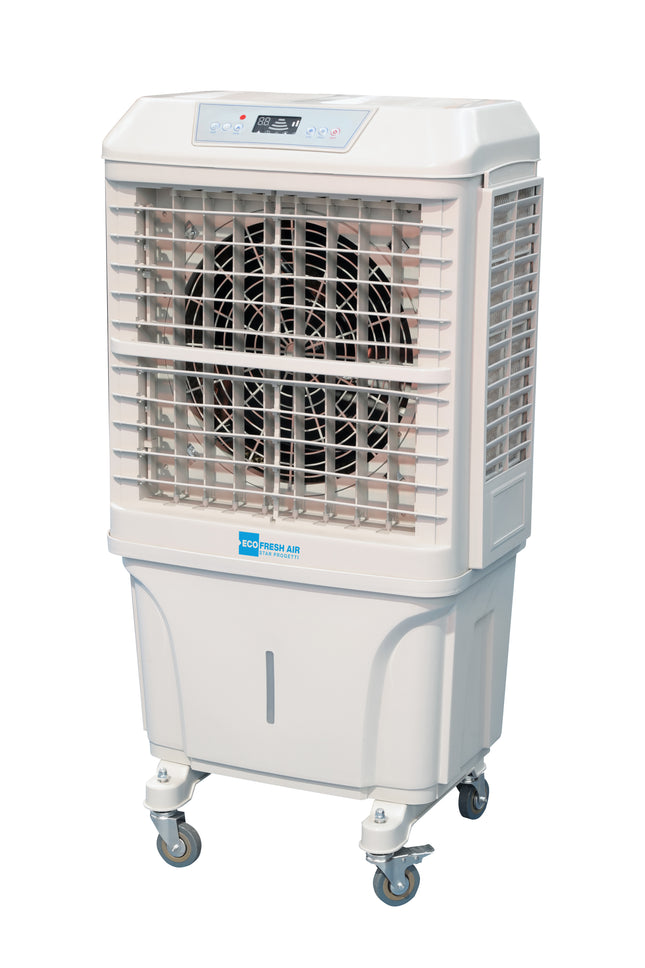
Portable air conditioner versus adiabatic cooling
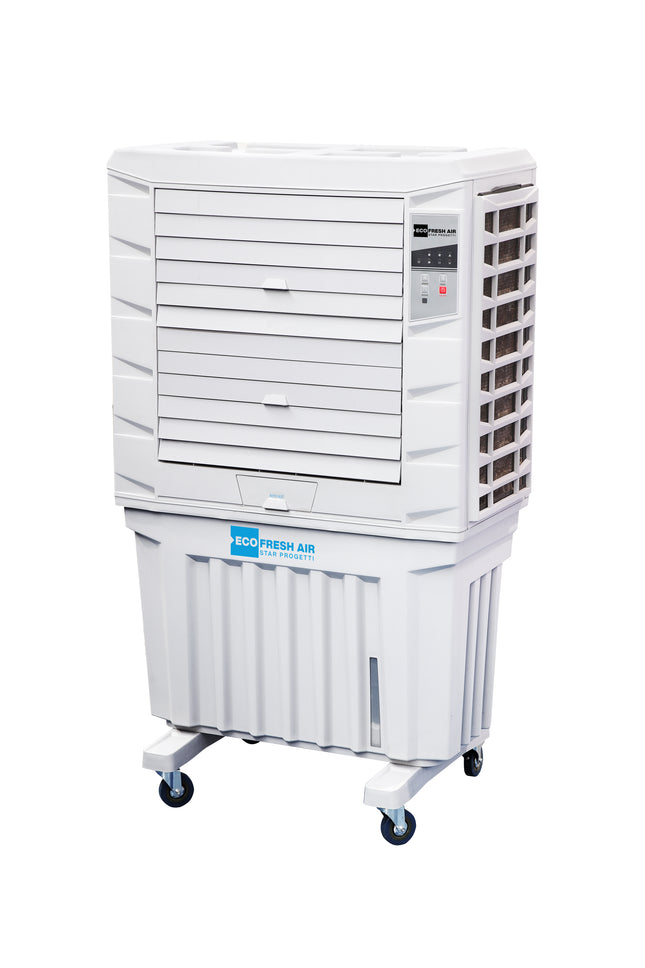
In contrast, a compressor air conditioner and an adiabatic cooler work differently. The portable air conditioner uses a cooling circuit and can deliver cold air that is significantly below the ambient temperature. This results in the formation of warm air and condensation. An adiabatic cooler evaporates water and thereby lowers the air temperature without a conventional cooling circuit.
Adiabatic cooling requires a continuous supply and removal of air. The effect depends, among other things, on temperature and relative humidity. In an enclosed space, humidity can rise and further evaporation decreases. Therefore, adiabatic cooling is particularly suitable for large, open, or well-ventilated environments. For an enclosed server room or a precise temperature target, a compressor solution is typically in a different category.
Open hall, fresh air and terrace
As a result, cooling an entire open hall is challenging because warm air constantly enters. Local spot cooling can then be more efficient: you cool the employee or the process, not every cubic meter of air. Outside, cold air dissipates quickly due to wind and mixing. Therefore, do not expect a uniform outdoor temperature from a portable compressor air conditioner.
For sheltered hospitality or outdoor areas, other techniques may be more relevant. Consider terrace cooling and tailor the solution to ventilation, humidity, wind, and the desired comfort zone.
Noise, dust and severe operating conditions
Furthermore, a mobile unit contains a compressor and fans. Compare the stated noise level and check under which measurement conditions that figure applies. The perceived nuisance depends on distance, fan setting, reflective walls, and duration of use. In a quiet work zone, a mobile split unit or another placement may be more suitable.
Additionally, dust, oil aerosols, and fibers can foul filters and heat exchangers more quickly. Check whether the unit is suitable for the environment. Clean filters more frequently in a dusty workshop and do not install a standard air conditioner in an explosion-hazardous or corrosive zone without explicit suitability.
Industrial portable air conditioner: technical checklist
- Cooling load: room volume, internal heat and desired temperature.
- Application: entire room, spot cooling, temporary use, or emergency cooling.
- Heat dissipation: route, pipe size, length, and passage to the outside.
- Air displacement: volume, throw, directivity and fan speeds.
- Condensation: reservoir, pump or continuous drain.
- Current: voltage, current, plug and available circuit.
- Sound: distance to employees, visitors, or equipment.
- Mobility: weight, dimensions, wheels, thresholds and storage.
- Environment: dust, moisture, outdoor temperature and permitted operating conditions.
- Maintenance: filter access, cleaning, and availability of parts.
Efficiently using industrial portable air conditioners
Therefore, close doors and gates whenever it is safe and practical. Limit solar load with suitable sun shading and switch off unnecessary heat sources. Set a realistic temperature; an extremely low setpoint value primarily causes the device to run longer and does not automatically cool the room faster.
Furthermore, clean filters according to the manual and keep both cold and warm air passages clear. Check hoses, couplings, and condensate drain regularly. Allow the unit to rest properly after relocation when prescribed by the manufacturer. This protects the cooling circuit and maintains reliable performance.
Common mistakes with portable industrial air conditioners
- only looking at square meters and forgetting the ceiling height;
- confusing cooling capacity with electrical power consumption;
- to blow warm air into the same cooled room;
- make a drain hose longer or narrower than permitted;
- do not make a plan for condensation;
- wanting to cool an entire open hall while spot cooling is more logical;
- Check noise, dust load, or electrical connection only after delivery;
- block air intakes or let the cold air recirculate immediately.
Frequently asked questions about industrial portable air conditioners
Can a portable industrial air conditioner operate without an exhaust hose?
A compressor air conditioner must dissipate the heat it absorbs. In a monoblock unit, this usually happens via warm air. Without a suitable exhaust to the outside or another zone, that heat remains in the same room and the net cooling effect is limited.
Is a spot cooler suitable for a large warehouse?
Yes, when you want to cool a local workstation or machine. For a uniform temperature throughout the entire warehouse, the total cooling load, air distribution, and building envelope are determining factors. Multiple zones or a fixed installation may be required.
How much kW cooling capacity do I need?
That depends on volume, insulation, sun, machinery, people, ventilation, and open gates. Use a surface area guideline only as a first indication. For professional applications, a cooling load calculation provides greater certainty.
Can I let the unit run continuously?
Consult the model's permitted operating time and conditions. Schedule filter maintenance, condensate drainage, and airway inspection. For critical processes or server rooms, monitoring and a backup plan are advisable.
Can a portable industrial air conditioner also heat?
Some models have a heat pump or heating function, others do not. Check the specific product sheet and the permissible outdoor temperatures. Do not assume heating simply because the unit contains a compressor.
Why choose Warmteshop?
Warmteshop has been a specialist in climate and heating solutions since 2006. Compare models based on cooling capacity, air volume, heat dissipation, connection, and operating conditions. If you would like to discuss the possibilities in person, visit our 30+ showrooms in the Netherlands and Belgium. You can find independent reviews via Trustlocal.
Compare industrial portable air conditioners
View the current range of mobile industrial air conditioners. For fixed and other professional systems, go to industrial air conditioning. If you primarily want to compare purchasing criteria and different solutions, also check out buying industrial air conditioning. Always check the cooling load, heat dissipation, condensate route, and power supply at your location before ordering.