

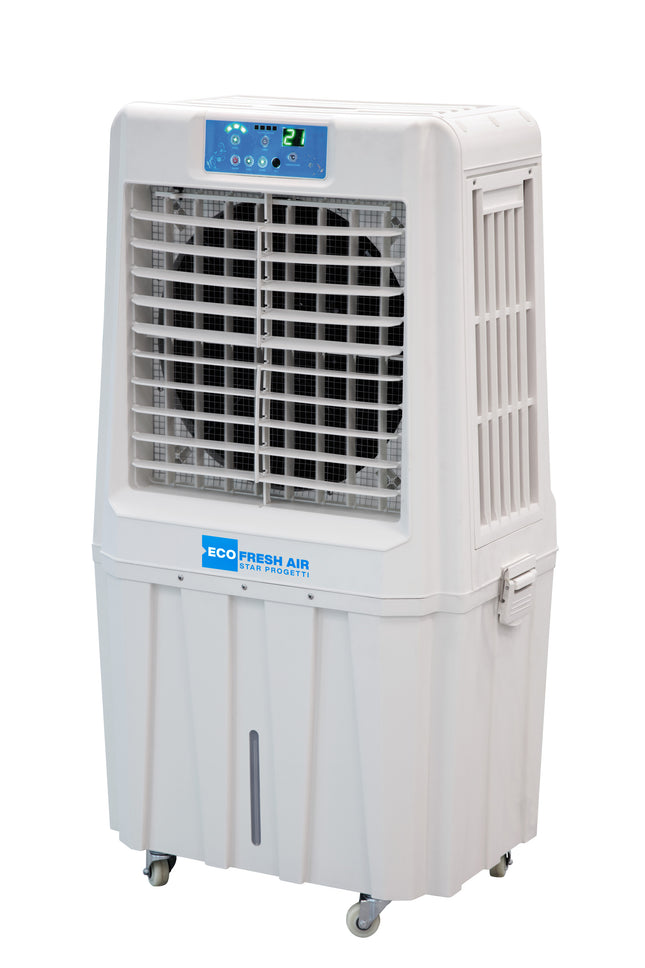
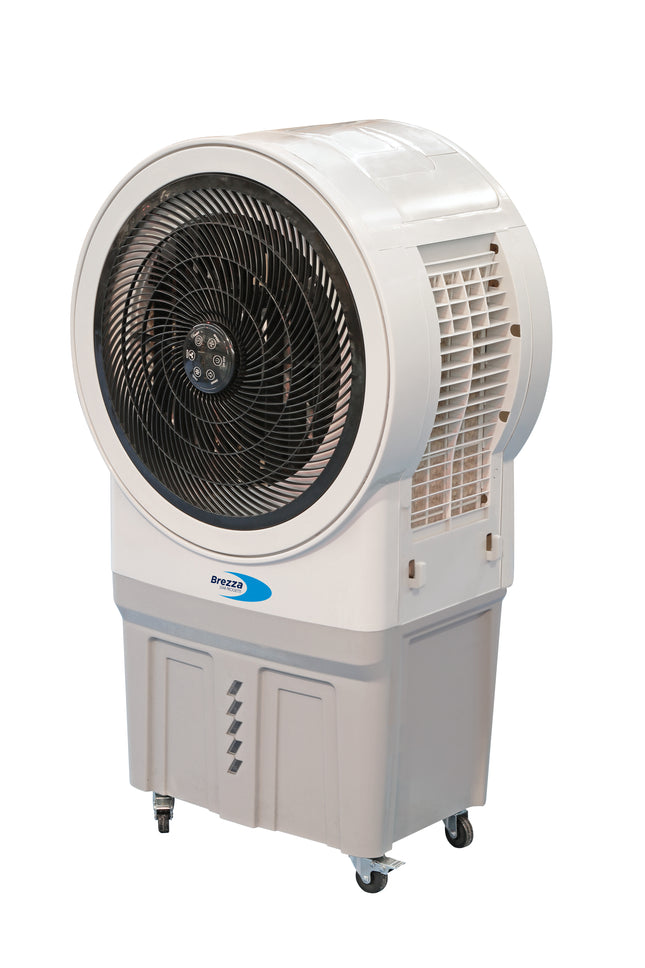
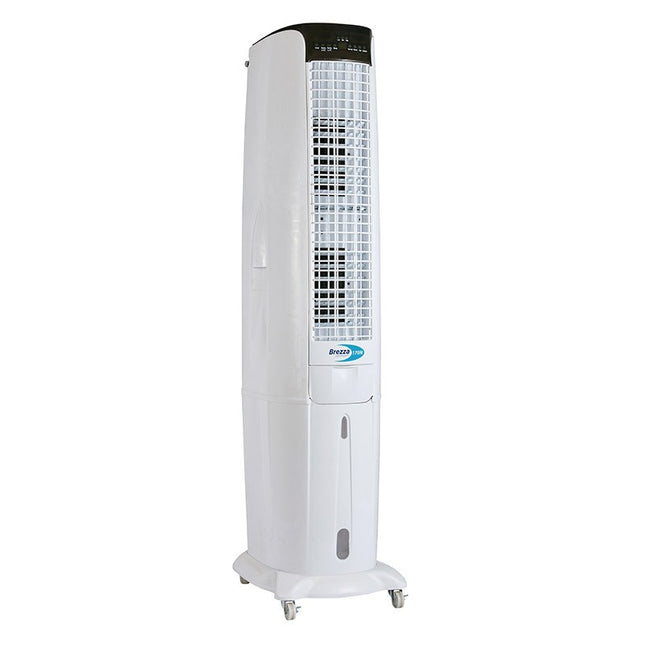
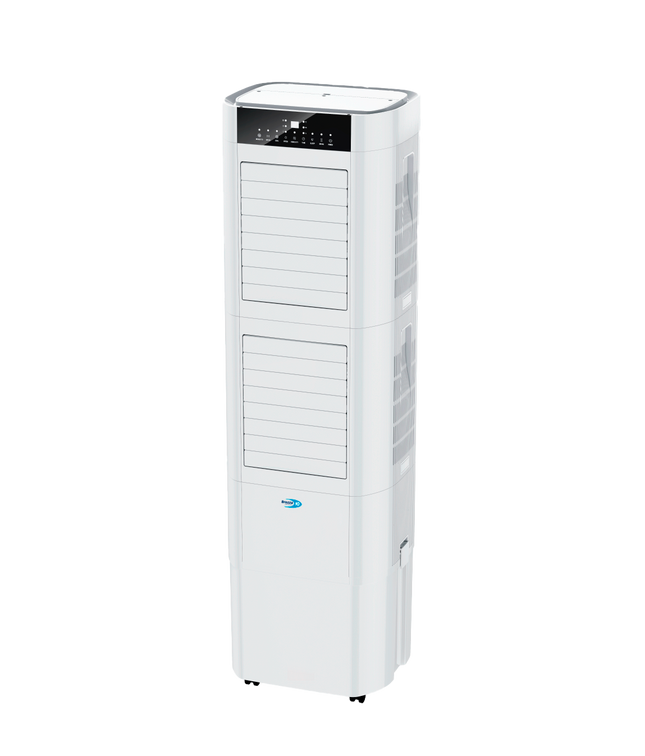


Looking to buy industrial air conditioning for a workshop, warehouse, or technical room? Floor area alone is not sufficient to choose the right installation. In addition, ceiling height, insulation, solar radiation, machinery, occupancy, and open doors determine the required cooling capacity. That is why, on this page, you will discover which industrial air conditioner suits your business, what technical aspects to consider, and how to prevent unnecessary energy consumption.

What is an industrial air conditioner?
Therefore, an industrial air conditioner offers a solution for larger, warmer, or more intensively used spaces. The unit extracts heat and moisture from the indoor air. This heat must then be discharged to the outside or to another zone. This is what distinguishes true air conditioning from a fan, which moves air but does not remove heat from the room.
In a workshop, for example, a mobile spot cooler can specifically cool a single machine or work zone. In contrast, for a server room, predictable, continuous heat removal is important. Furthermore, a warehouse with high ceilings requires sufficient air volume and well-thought-out air distribution. Therefore, the application determines the type of device.
When does buying an industrial air conditioner make sense?
Industrial cooling is particularly suitable when standard comfort air conditioning offers insufficient range, capacity, or flexibility. Examples include production halls, garages, warehouses, temporary workspaces, server rooms, tents, and technical rooms. Therefore, targeted cooling at a local heat source can be more efficient than fully conditioning a large hall.
- Workshop or production: cool employees or heat-sensitive machines locally.
- Warehouse and logistics: limit heat stress in fixed work zones, loading areas, or packing stations.
- Server and technical room: reliably dissipate continuous heat from equipment.
- Temporary situation: quickly install additional cooling during a heatwave, event, or renovation.
- Hospitality and showroom: improve comfort where many people, lighting, or equipment produce heat.
Portable air conditioner, spot cooler, or fixed installation?
Mobile industrial air conditioner
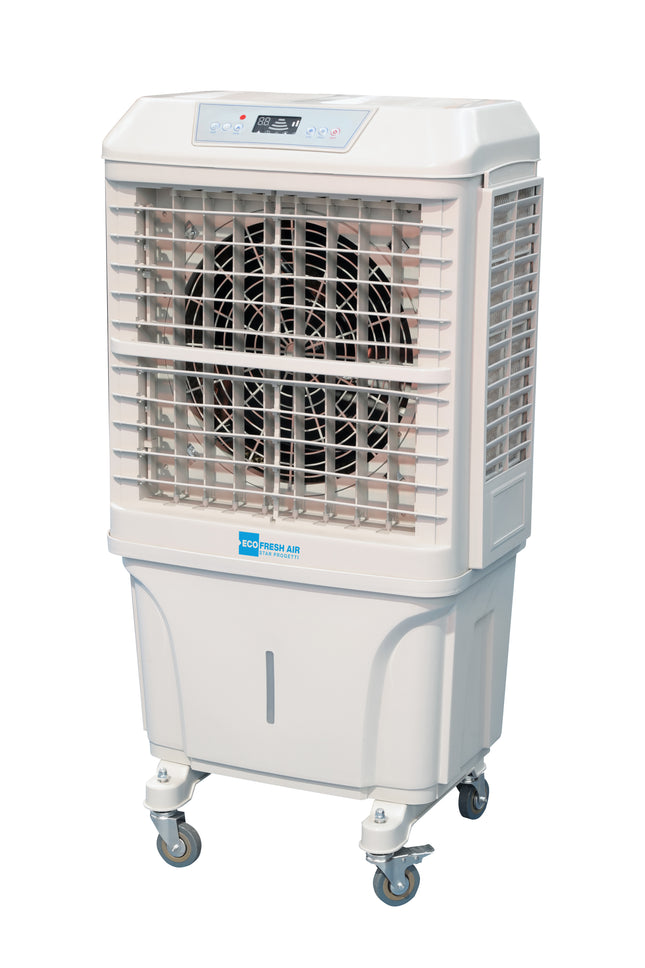
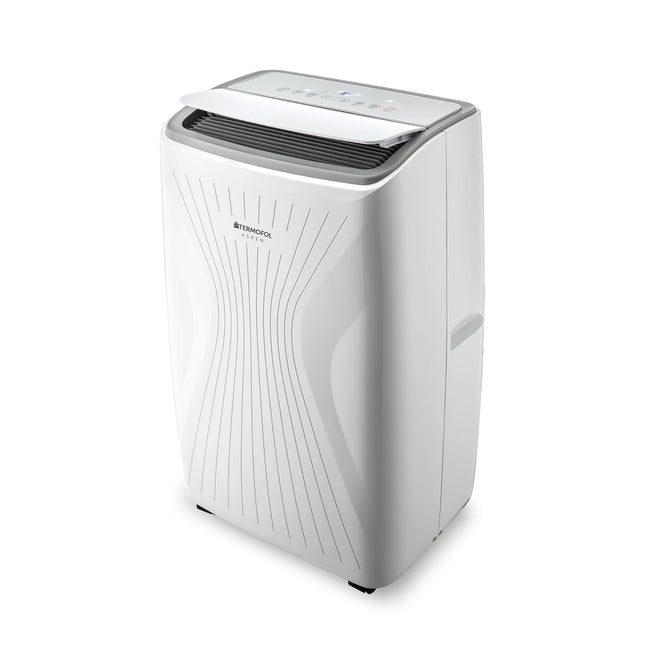
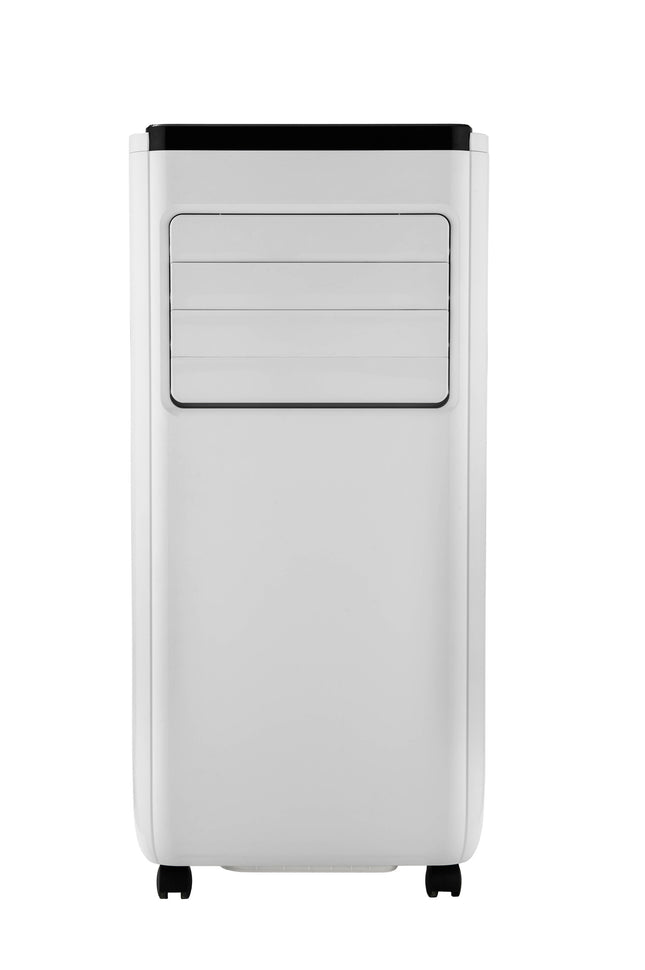
An industrial portable air conditioner is portable and can be deployed quickly. This makes it convenient for changing workplaces, rentals, emergencies, and seasonal cooling. Therefore, pay close attention to the warm air. With a monoblock unit, an exhaust hose must remove this heat from the cooled zone. Without proper exhaust, you are merely moving heat around within the same space, and the net cooling effect remains limited.
Spot cooler
A spot cooler directs cold air at a person, machine, or process. This means you do not always need to cool the entire hall. Some models can position the hot side outside the work zone or use hoses for cold and warm air. Always check the permitted hose length and the available air pressure of the chosen model.
Mobile split or fixed air conditioner
With a mobile split system, the evaporator and condenser are located separately. This can improve warm air dissipation and noise distribution. For structural cooling of an entire room, a fixed installation may be more logical. Therefore, also view the wider range of industrial air conditioning and compare the installation requirements with the desired operating life.
Buying an industrial air conditioner: calculate the cooling capacity
A general indication per square meter is only a starting point. Industrial buildings often have high ceilings, large doorways, and substantial internal heat loads. Therefore, first calculate the room volume in cubic meters: length times width times height. Then, map out all sources of heat and air exchange.
- insulation level of roof, facade, windows and gates;
- solar load and the number of hours of direct sunlight;
- heat from engines, ovens, lighting, computers and other machines;
- number of people and duration of the occupation;
- ventilation, extraction and how often doors or gates open;
- desired indoor temperature and expected outdoor temperature;
- continuous use or cooling only during peak hours.
Consequently, an undersized unit will continue to run at full load for a long time and may not reach the target temperature. An unnecessarily large unit can be more expensive, require more frequent switching, and regulate less smoothly. Therefore, if in doubt, have the cooling load determined based on the actual operating situation.
Cooling capacity is not the same as power consumption
Cooling capacity is usually expressed in kW. This figure indicates how much heat the unit can dissipate under specified test conditions. Electrical power consumption is a different figure. Therefore, to estimate consumption, use the power consumption of the specific model multiplied by the number of operating hours. Additionally, take partial load, thermostat control, and operating conditions into account.
Therefore, check before purchasing whether the location has the required connection. More compact models often operate on 230 V, while heavier versions may require a different power supply. Always consult the product specifications; do not deduce a connection based solely on the cooling capacity.
Warm air, condensation and air distribution
Ventilate warm air
With compressor air conditioning, warm air is generated on the condenser side. This must be vented to the outside, into another room, or via a suitable duct. Keep the exhaust as clear and correct as possible according to the manual. A hose that is too narrow, long, or severely bent can restrict airflow and performance.
Managing condensate
As a result, moisture condenses from the air during cooling. Depending on the model, this water is collected, evaporated, or removed via a drain. Check the reservoir and the condensate drain, especially during continuous use or in a humid environment. A well-planned drain prevents unwanted downtime.
Bringing cold air to the right place
Moreover, high air displacement is beneficial, but reach and direction are at least as important. Position the unit so that the intake and exhaust openings remain unobstructed. Direct cold air towards the occupied zone or heat source and avoid a short air loop between exhaust and intake. In high halls, an additional fan can help to mix temperature layers.
Enclosed space or open industrial hall?
A compressor air conditioner operates most efficiently when the cooled zone is confined as much as possible and the extracted heat does not return. Therefore, local spot cooling in an open hall or with continuously open gates can be more practical than full room cooling. Different principles apply to a terrace or a well-ventilated outdoor area. Please review the options for terrace cooling.
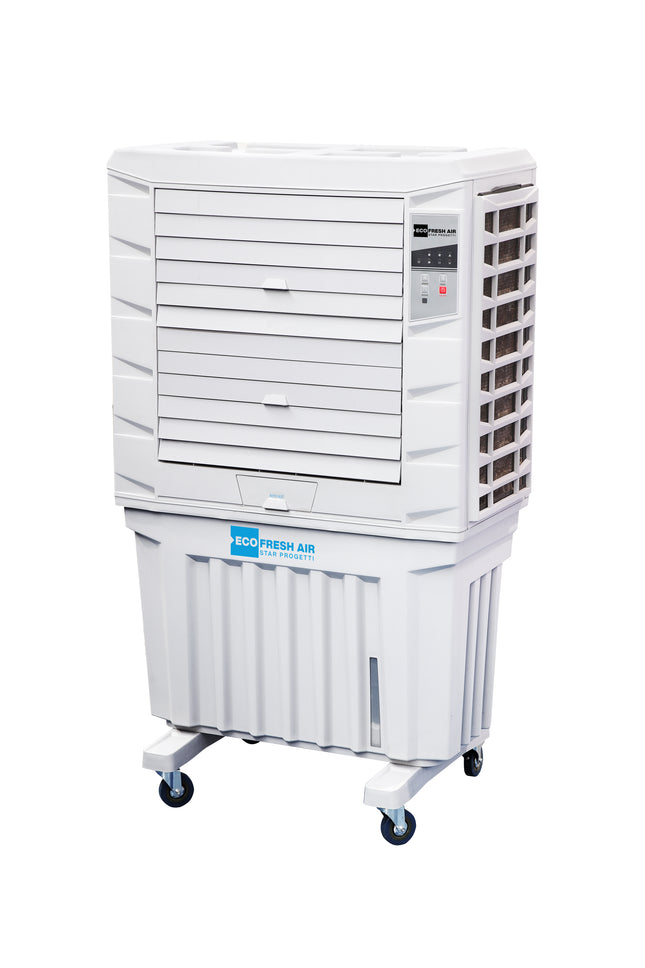
Evaporative coolers use water evaporation and require sufficient air supply and exhaust. They are not standard compressor air conditioners. In an enclosed space, humidity can rise and the effectiveness decreases. Therefore, choose the system based on indoor or outdoor use, climate, and ventilation.
Buying an industrial air conditioner: technical considerations
- Air volume and throw: does the cooled air reach the desired working zone?
- Temperature range: does the specified operating range match the expected conditions?
- Sound level: assess this at the actual distance and in the intended space of use.
- Electrical connection: check voltage, current, plug, and available circuit.
- Drainage: provide a route for warm air and any condensate.
- Dust and contamination: choose a suitable setup and clean filters more frequently in a dusty environment.
- Mobility: pay attention to dimensions, weight, wheels, thresholds, and storage space.
- Control: compare thermostat, ventilation settings, timer, and remote control options.
This is how you choose the right solution step by step
- Determine whether you want to cool the entire room, a work zone, or a heat source.
- Measure the length, width, and height and note the total room volume.
- Inventory sun, insulation, machines, people, ventilation, and open doors.
- Choose between a mobile monoblock, spot cooler, mobile split, or fixed installation.
- Check the warm air exhaust, condensate drain, and electrical connection.
- Compare cooling capacity, air volume, noise level, and power consumption.
- Plan the installation and maintenance before the device is delivered.
In short, with this approach, you compare appliances based on their actual suitability. This prevents an attractive kW figure from masking the practical limitations of the space.
Buying an industrial air conditioner: maintenance and efficient use
Therefore, clean the filters or replace them according to the manual. Keep the condenser, evaporator, and air vents free of dust and obstructions. Check hoses, couplings, and condensate drain regularly. Do not place the appliance directly next to a heat source if this causes the intake air to become unnecessarily hot. Additionally, close doors and gates where this is safe and practical.
Furthermore, use a realistic temperature setting. An extremely low setpoint value does not automatically cool the room faster, but it can cause the unit to run unnecessarily long. Targeted sun shading, insulation, and limiting internal heat load reduce the required cooling demand.
Common mistakes in industrial refrigeration
- only calculate with floor area and forget the ceiling height;
- confusing cooling capacity with electrical power consumption;
- blow warm air into the same room;
- using a portable air conditioner without a plan for condensate;
- trying to cool an entire open hall while spot cooling is more efficient;
- not taking into account noise level, dust or available power supply;
- Making hoses longer or narrower than the manufacturer allows.
Frequently asked questions about buying industrial air conditioning
How much kW cooling capacity do I need?
That depends on more than just the number of square meters. Volume, insulation, sunlight, machinery, people, ventilation, and open gates all count. For an industrial hall or technical application, a custom calculation is more reliable than a single fixed rule of thumb.
Can a portable industrial air conditioner operate without an exhaust hose?
A compressor air conditioner must release the absorbed heat somewhere. With a portable monoblock, this is typically done via warm air and therefore through a suitable exhaust. Without an exhaust to the outside or another zone, the same room heats up again.
Is a spot cooler suitable for a large hall?
Yes, when you primarily want to cool a specific workstation, machine, or process. For a uniform temperature throughout the entire hall, the total cooling load and air distribution are the determining factors. Sometimes multiple zones or a fixed installation are more suitable.
Can I use an industrial air conditioner continuously?
This varies by model and application. Check the specified operating conditions, condensate drainage, and maintenance intervals. For critical technical rooms, monitoring, backup planning, and professional advice are advisable.
Does industrial air conditioning also function as a dehumidifier?
With compressor air conditioning, moisture condenses during cooling. As a result, humidity often drops as well. The exact dehumidification capacity is stated in the product specifications and depends on temperature and relative humidity.
Why choose Warmteshop?
Warmteshop has been a specialist in climate and heating solutions since 2006. Compare the available models online and evaluate the cooling capacity, airflow, connection, and installation for each unit. If you would like to discuss the options in person, view the information about our 30+ showrooms in the Netherlands and Belgium. You can find independent reviews via Trustlocal.
Buy industrial air conditioning at Warmteshop
Ready to compare specifically? View the current range for buying industrial air conditioning. If you are primarily looking for flexibility, also compare portable industrial air conditioners. For the full segment, go to industrial air conditioning. Check the technical specifications for each product and tailor your choice to the cooling load, exhaust route, and power supply of your location.