

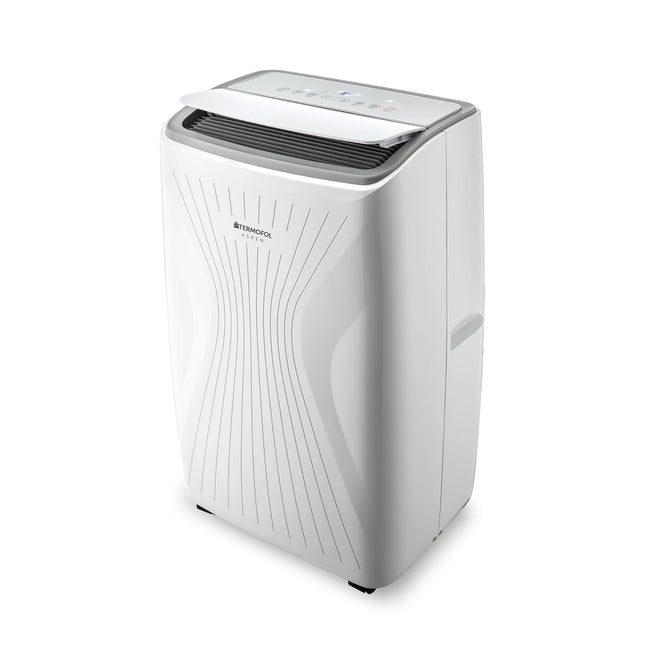
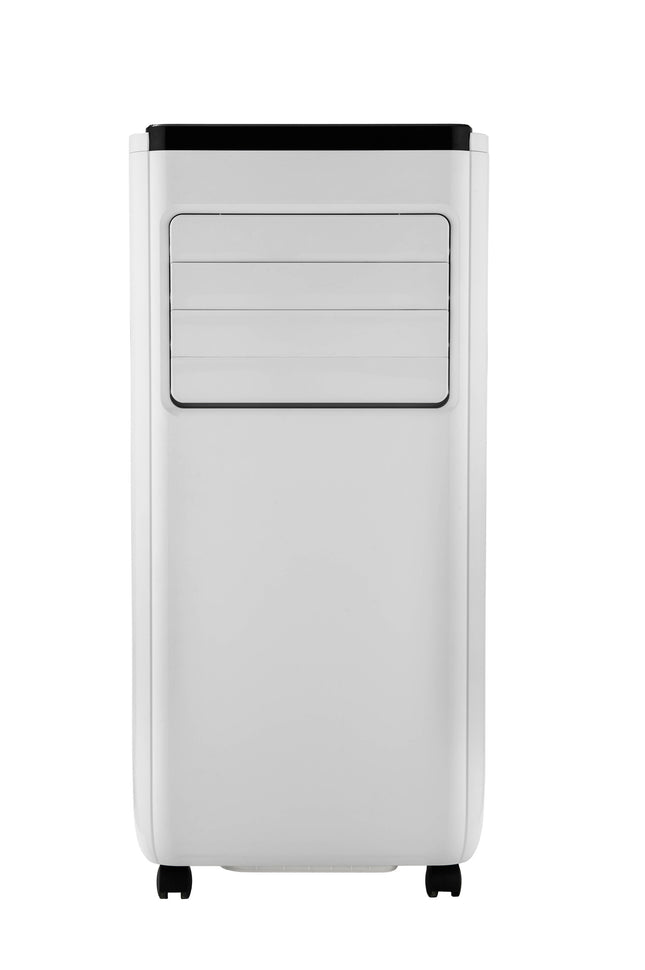


A portable air conditioner cools a room without permanent installation. You place the unit by a window, vent warm air outside via a hose, and move it using wheels when necessary. This makes the solution suitable for a bedroom, home office, living room, or attic. You choose the right model not only based on price or BTU, but also on room volume, heat load, noise level, power consumption, and window sealing.

How does a portable air conditioner work?
A real air conditioner extracts heat and moisture from the indoor air. The cooled air flows back into the room, while the absorbed heat is expelled outside through an exhaust hose. Therefore, a monoblock model is always placed near a window, door, or suitable wall vent. Without proper heat dissipation, the unit cannot cool the room effectively.
With many models, a slight negative pressure is created: air escaping through the hose must be replenished elsewhere. As a result, gaps can draw in warm outside air. A suitable window sealing kit limits this inflow and improves the result. Furthermore, keep the hose as short and straight as possible and avoid sharp bends.
Portable air conditioner or air cooler?
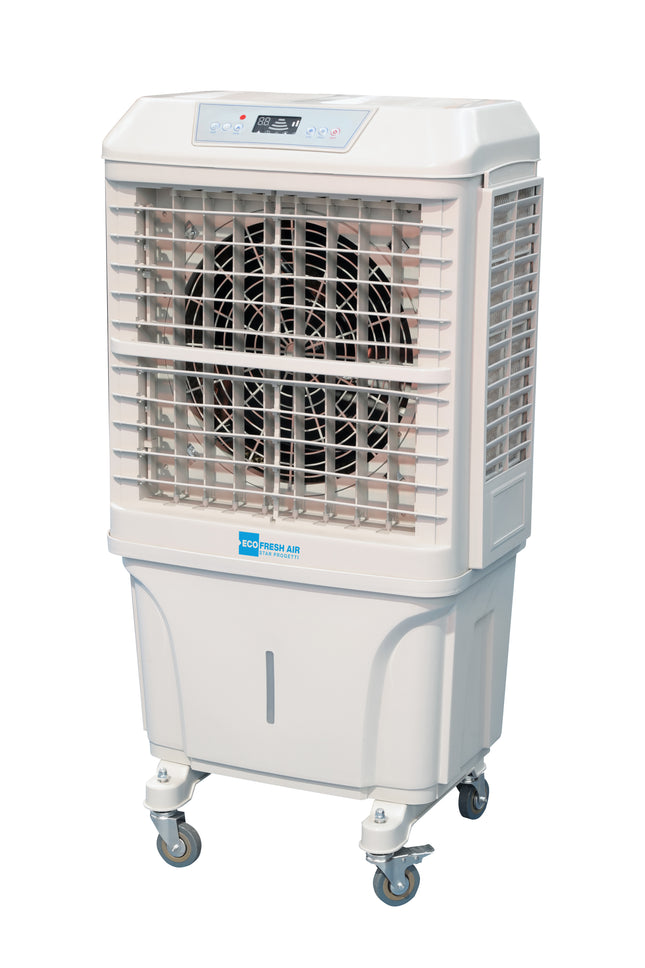
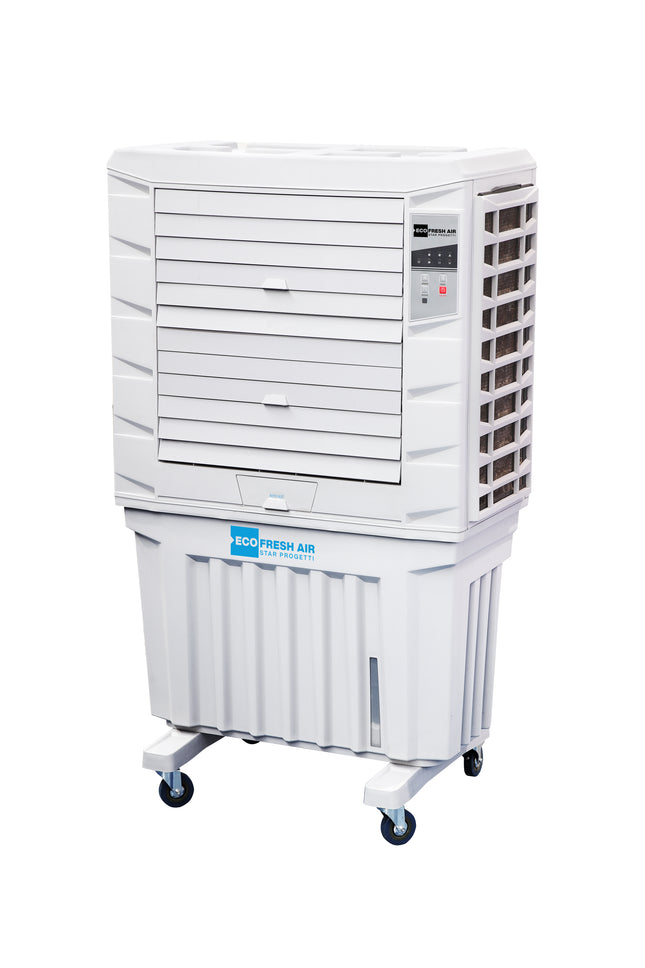
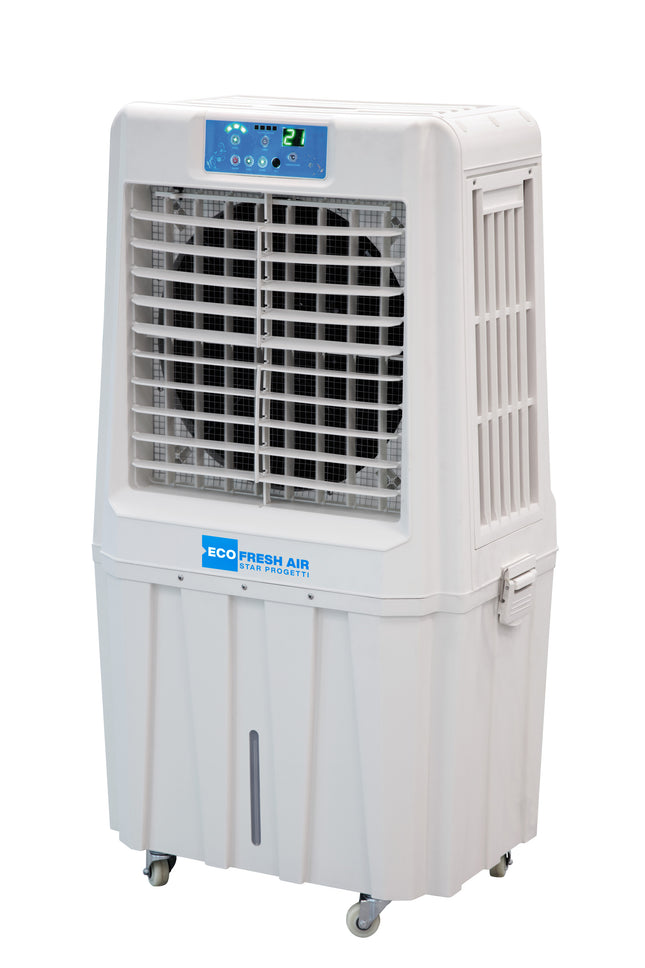
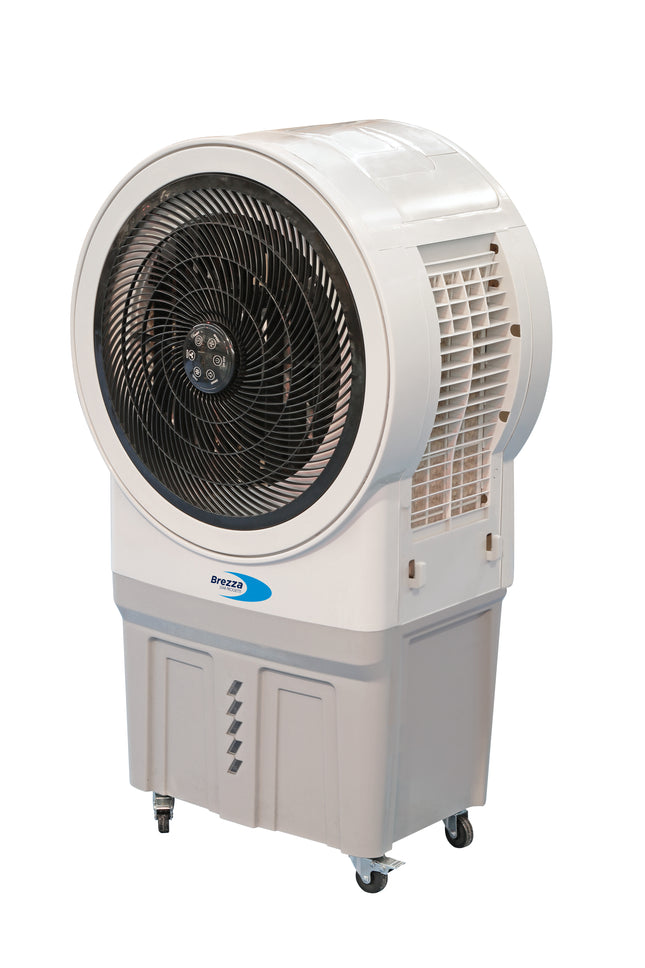
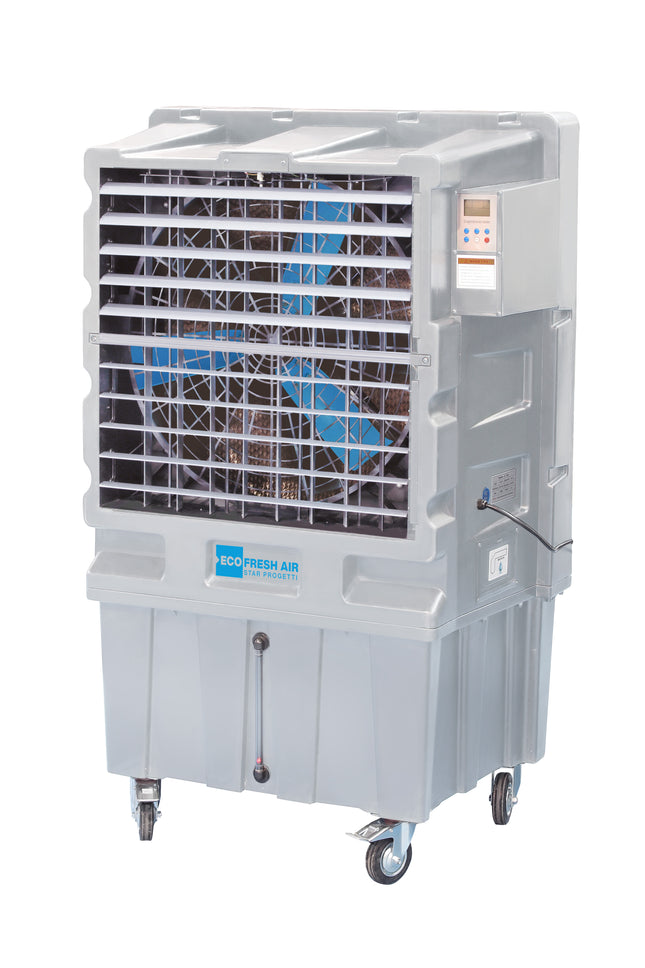
An air cooler and a portable air conditioner are not the same. An air cooler blows air past water or ice and can make the airflow feel fresher. An air conditioner uses a cooling circuit, actually lowers the room temperature, and removes heat. That is why a true portable air conditioner typically has a hose to the outside.
| Characteristic | Portable air conditioner | Air cooler |
|---|---|---|
| Cooling principle | Cooling circuit with compressor | Evaporation of water |
| Heat dissipation | Through a hose to the outside | No drain hose |
| Lower room temperature | Yes, within capacity | Limited; mainly wind chill |
| Dehumidify | Often | Typically adds moisture |
What cooling capacity do you need?
Cooling capacity is usually specified in BTU per hour and kW. As a conversion, approximately 1 kW of cooling capacity = 3,412 BTU per hour. A higher value means more cooling capacity, but not automatically a better choice. After all, the capacity must match the heat load of the room.
First calculate the volume: length × width × height. Then assess the conditions. A well-insulated room with little sun requires less capacity than an attic under a flat roof. Large windows, afternoon sun, many people, and computers increase the cooling demand. Therefore, compare the maximum room recommendations of models only under equivalent conditions.
- Room volume in m³ and ceiling height
- Insulation of roof, facade, floor, and windows
- Orientation and amount of direct sunlight
- Number of persons and heat of equipment
- Desired temperature and daily usage time
A portable air conditioner runs at maximum setting for extended periods and may not reach the desired temperature. An oversized model takes up more space and can be unnecessarily expensive or noisy. Therefore, choose a realistic capacity range, especially during high heat loads.
Monoblock or portable split air conditioner?
In a monoblock unit, the compressor, condenser, and fan are housed in a single mobile cabinet. This is compact and easy to install, but the technology remains audible in the room. A portable split air conditioner distributes the components between an indoor and an outdoor unit. As a result, it can be quieter and more efficient indoors, although a connecting pipe or window opening is still required.
In contrast, a fixed split air conditioner is generally the quietest solution for structural use, but it requires professional installation. The mobile variant is particularly suitable if you want flexibility, rent, only need to cool for a few warm periods, or do not wish for permanent installation.
Properly install drain hose and window seal
- Place the device stably and close enough to the window.
- Install the hose without kinks and do not stretch it more than necessary.
- Seal the window opening with a suitable sealant or plate.
- Keep the air intake and outlet clear of curtains and furniture.
- Close windows and interior doors as much as possible while cooling.
Furthermore, the hose heats up during use. Therefore, do not run it across the room unnecessarily and follow the minimum clearances specified in the manual. Extend the hose only when permitted by the manufacturer; additional length and bends increase resistance and can reduce performance.
Sound level: what does dB(A) mean?
A monoblock contains a compressor and fan in the same room. Therefore, it is not completely silent. Compare the minimum and maximum noise levels and check whether the lowest value applies to cooling, ventilation, or sleep mode. Decibels is a logarithmic scale, meaning that a small difference on paper can be clearly audible.
For sleeping or concentrated work, the nature of the sound also matters. A steady airflow can be less disruptive than frequent switching. Cool the room beforehand, do not place the unit next to the headboard, and then use a lower setting. For extra noise comfort, view quiet portable air conditioners. Specific advice can be found under portable air conditioner for the bedroom.
Electricity consumption and energy costs
Cooling capacity is not the same as electrical power consumption. For a simple cost estimate, use: power consumption in kW × operating hours × electricity price per kWh. A device that consumes 1.2 kW and operates continuously at that power for two hours uses a maximum of approximately 2.4 kWh.
However, actual consumption varies because the compressor can reduce output or switch off. Insulation, outside temperature, settings, window sealing, and heat load determine how much the appliance has to work. Therefore, compare energy data as well as BTU. Furthermore, shading during the day and starting the unit in good time help prevent walls and furniture from heating up significantly beforehand.
Condensation, dehumidification and maintenance
When cooling, moisture condenses from the air. Some models automatically remove a portion with the warm air. Others use a reservoir, drain point, or permanent condensate hose. Check what happens when the reservoir becomes full and follow the instructions for drainage and storage.
Therefore, clean the filter regularly according to the manual. A dirty filter restricts airflow, reduces performance, and can increase noise. Disconnect the device from the power supply before maintenance. Additionally, let the device rest upright after moving it if the manufacturer prescribes this.
Useful features to compare
| Function | Practical advantage |
|---|---|
| Thermostat | Regulates according to the set room temperature. |
| Timer | Allow to cool beforehand or switch off automatically later. |
| Sleep mode | Adjusts ventilation and sometimes display lighting. |
| Dehumidify | Reduces a clammy feeling in high humidity. |
| App or remote control | Enables remote control. |
| Heating function | Increase availability during the off-season. |
Do you also want to use the same unit for local heating? Then compare portable air conditioners with heating. Check cooling capacity, heating capacity, and the required exhaust separately.
Portable air conditioner for the bedroom
In a bedroom, noise, display light, and airflow are particularly important. Therefore, preferably cool the room before going to sleep and do not direct the cold air directly onto the bed. Additionally, good sun shading reduces the heat load during the day. You can find more applications and models under portable air conditioner for the bedroom.
Cooling and heating with one device
Some models heat using a reversible cooling process, others with an electric element. Efficiency and required ducting may vary. Therefore, please read the technical data sheet and manual. The full range can be found under portable air conditioners with heating.
Professional and intensive use
A consumer model is not always suitable for a workshop, warehouse, server room, or prolonged heavy load. In such cases, operating time, robustness, high cooling capacity, and targeted exhaust are of paramount importance. In that case, consider industrial portable air conditioners or industrial air conditioning.
You cannot cool an open terrace in the same way as an enclosed room. For outdoor use, you will find suitable applications under terrace cooling.
Buying a portable air conditioner: complete checklist
- Measure the room in m³ and assess the heat load.
- Compare BTU, kW cooling capacity, and maximum room recommendation.
- Check power consumption, energy label, and noise level.
- Check if the window sealant fits casement, tilt, or sliding windows.
- Measure the available space and check the hose length and diameter.
- Compare condensate drainage, filter maintenance, and included accessories.
- Pay attention to weight, wheels, handles, and thresholds between rooms.
- Choose features that you actually use, such as a timer, app, or sleep mode.
Why choose Warmteshop?
Warmteshop has been a specialist in climate and heating solutions since 2006. You can compare models online or ask for advice on capacity, noise, and placement. If you would like to view a device first, visit our 30+ showrooms in Belgium and the Netherlands. You can read independent reviews via Trustlocal.
View the range of portable air conditioners. For cooling and supplementary heating, go to portable air conditioners with heating. Those who value peace and quiet can also compare quiet portable air conditioners.
Frequently Asked Questions
Does the drain hose always have to go outside?
With active cooling, yes. The absorbed heat must go outside. However, an open window without a seal lets new heat in, so use a suitable window solution.
How many BTU do I need?
That depends on room volume, insulation, sunlight, windows, people, and equipment. Use the manufacturer's room recommendation and allow sufficient margin for a high heat load.
Can I use a portable air conditioner without a hose?
Not as a true air conditioner during cooling. Devices without a hose are often air coolers and do not vent the extracted heat to the outside.
Can the device be left on all night?
Follow the manual and ensure free air and heat dissipation. For many people, pre-cooling followed by a moderate setting or timer works better.
How do I make the cooling more efficient?
Use sun protection, close windows and doors, seal the hose opening, keep the filter clean, and start before the room is fully heated.