

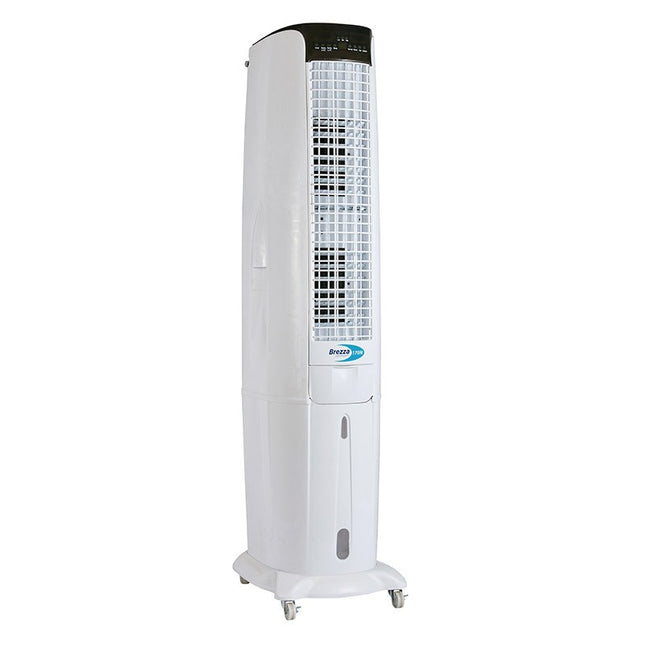
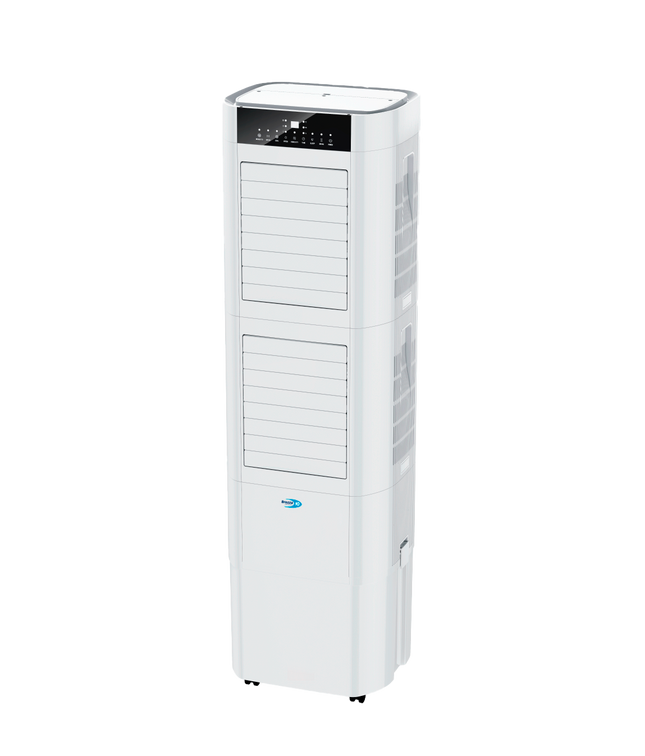

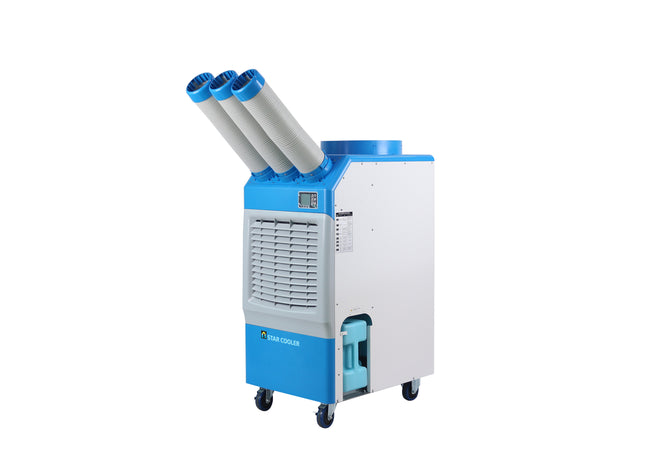

A portable air conditioner with heating combines cooling in the summer with localized heat when it gets cooler outside. This allows you to use a single portable unit in a bedroom, home office, attic room, or other space without a fixed air conditioner. However, performance varies significantly by model. Therefore, pay attention to cooling capacity, heating capacity, power consumption, noise level, and the required air and condensate drainage separately.

What is a portable air conditioner with heating?
A portable air conditioner with heating is a mobile air conditioner that can supply warm air in addition to cooling. Furthermore, many models can ventilate and dehumidify. Thanks to wheels, the unit is relatively easy to move. However, weight, power cable, exhaust hose, and window installation remain important practical considerations. Permanent installation is usually not necessary, but for effective cooling, the extracted heat must be vented to the outside.
Therefore, this unit is particularly suitable for targeted climate control in a single room. Think of supplementary heating during cool spring and autumn days or cooling during a heatwave. For permanent primary heating of an entire home, comfort, efficiency, capacity, and noise are generally more important than mobility.
How does the heating function work?
Not every device heats in the same way. Some models reverse the cooling process and function as an air-to-air heat pump in heating mode. Others use an electric heating element. Additionally, combinations exist. Therefore, always check the technical data sheet and manual of the specific model.
| Technology | Operation | What to look out for? |
|---|---|---|
| Reversible heat pump | Moves heat from outside the room to the inside. | Performance depends on outdoor temperature, setup, and proper air and condensate drainage. |
| Electric element | Convert electricity directly into heat. | Compare the electrical power consumed with the heat released. |
| Hybrid version | Combines techniques or functions, depending on the model. | Check which capacity and connection apply per business stand. |
The heating capacity in kW is not the same as power consumption. For example, a device can output more heat than it consumes electrically when operating as a heat pump. Therefore, compare the capacity, the power consumption, and any COP value under the specified test conditions.
Select cooling capacity and heating capacity separately
A room does not have the same requirements in every season. Cooling capacity is often expressed in BTU per hour and in kW. Heating capacity is usually listed separately. Therefore, base your choice on the room volume in m³, insulation, glass surface area, solar load, and desired temperature. An attic under a dark roof, for example, requires more cooling reserve in the summer. Conversely, a moderately insulated room loses heat more quickly in the winter.
- Measure the length, width, and height of the room.
- Check both cooling and heating capacity in the technical specifications.
- Allow extra margin for lots of sun, a flat roof, or large windows.
- Check the minimum outdoor temperature at which heating is permitted.
- Compare the maximum space recommendation only under comparable circumstances.
A portable air conditioner with heating will run on high power for a long time and may not achieve the desired comfort. A unit that is much too heavy can be unnecessarily large, expensive, and loud. Appropriate sizing is therefore more important than simply choosing the highest BTU value.
Drain hose for both cooling and heating
During cooling, the unit extracts heat from the room. This heat must be expelled outside through the exhaust hose. Therefore, keep the hose short and as straight as possible, avoid kinks, and carefully seal the window opening. Otherwise, warm outside air will come back in, and the air conditioner will have to run longer.
For heating, however, the required setup differs depending on the technology. A reversible model may need to vent cold air or moisture in heating mode. A version with an electric element may operate differently. Therefore, connect the hose and condensate drain exactly as prescribed by the manufacturer. After all, a setup that is correct in cooling mode does not automatically apply to every heating mode.
Condensation and dehumidification
Cooling and dehumidifying produce condensation. Some portable air conditioners automatically evaporate a portion and remove it with the airflow. Others, however, have a reservoir, drain point, or permanent drain hose. Condensation can also form during heating, depending on the technology and conditions.
Therefore, before purchasing, check how the portable air conditioner with heating drains water and what happens when the reservoir is full. Install a drain hose only according to the manual and ensure that water can drain freely. This will prevent malfunctions, leaks, and unnecessary interruptions.
Calculate power consumption and operating costs
For a realistic cost estimate of a portable air conditioner with heating, you need the power consumption, not just the cooling or heating capacity. The simple upper limit is: power consumption in kW × operating hours × your electricity price per kWh. A 1.0 kW unit operating continuously at that power for one hour consumes a maximum of approximately 1 kWh in that hour.
However, the compressor can regulate down intermittently or switch off as soon as the set temperature is reached. Actual consumption therefore depends on insulation, outside temperature, set temperature, fan speed, and operating time. Additionally, compare the energy label and efficiency values per function; a label for cooling does not automatically tell you everything about heating.
When is supplementary heating with a portable air conditioner beneficial?
| Situation | Practical application |
|---|---|
| Home office | Only cool or temporarily heat the used room. |
| Bedroom | Cool down beforehand in the summer and briefly heat up on chilly days. |
| Attic room | Seasonal comfort in a room with large temperature fluctuations. |
| Holiday accommodation | Flexible solution when a fixed climate control system is not desired. |
| Spring and autumn | Local heat without immediately using the entire heating system. |
During frost or prolonged winter cold, the power or efficiency of certain heat pump models may decrease. Therefore, check the permitted temperature range of the portable air conditioner with heating. View the function primarily as space heating within the specifications of the unit, not automatically as a replacement for every existing main heating system.
Sound, sleep mode and placement
A monoblock portable air conditioner contains a compressor and fan in the room. As a result, it remains audible during active cooling and often during heating as well. Therefore, compare minimum and maximum dB(A) and check at which setting the values were measured. For extra attention to peace and quiet, you can quiet portable air conditioners . Additionally, specific bedroom advice can be found under portable air conditioner for the bedroom.
Place the unit on a stable surface, clear of curtains and furniture, and not directly next to the headboard or desk. Clean the filter according to the manual. A free airflow helps the unit operate more efficiently and prevents the fan from having to run unnecessarily hard.
Important features to compare
- Separate cooling and heating capacity.
- Power consumption and efficiency values per stand.
- Thermostat, timer, and multiple fan speeds.
- Sleep mode and dimmable display for use in the evening.
- Dehumidification capacity and method of condensate drainage.
- Remote control, WiFi or app control.
- Dimensions, weight, wheels and length of the drain hose.
- Window sealant, accessories and permissible ambient temperature.
Mobile solution or fixed split air conditioner?
A portable air conditioner with heating is portable and typically does not require a permanent refrigerant installation. On the other hand, there is a hose through the window, audible technology indoors, and generally a lower overall efficiency than a well-chosen fixed split air conditioner. A split air conditioner places the compressor outside and is therefore often more suitable for structural, frequent use. However, this solution requires professional installation.
For larger commercial spaces, workshops, or heavy loads, a consumer model is not always suitable. In that case, compare industrial air conditioning and portable industrial air conditioning.
Buying a portable air conditioner with heating: checklist
- Determine the room volume and assess insulation, windows, and sun exposure.
- Check the cooling capacity and heating capacity separately.
- Compare capacity with the electrical power consumed.
- View the allowed temperature range for heating mode.
- Check hose arrangement and condensate drain in both operating modes.
- Compare noise, operation, filter maintenance, and included accessories.
- Choose a model that physically fits the window and the available floor space.
Advice from Warmteshop in Belgium and the Netherlands
Warmteshop has been a specialist in climate and heating solutions since 2006. Compare models online or ask for advice on capacity, technology, and installation. If you would like to view a device first, visit our 30+ showrooms in Belgium and the Netherlands. You can read independent reviews via Trustlocal.
View the available models for portable air conditioners with heating. For all versions, go to portable air conditioners. Those who primarily want quiet cooling can additionally opt for a silent portable air conditioner.
Frequently Asked Questions
Can a portable air conditioner really heat?
Yes, when the model has a heating function. The technology can be a reversible heat pump, electric element, or a combination. Consult the product specifications for capacity and temperature range.
Does the exhaust hose also need to go outside when heating?
This varies per appliance and heating principle. Always follow the manual for hose and condensate drainage in the selected operating mode.
Is a portable air conditioner with heating energy-efficient?
That depends on the technology, efficiency, outdoor temperature, and usage. Compare the power consumption with the heat supplied and look at the relevant efficiency value.
Can I heat an entire house with it?
A mobile unit is primarily intended for a single room. For multiple rooms or permanent main heating, a central or fixed system is usually more logical.
What is more important: BTU or heating capacity?
For cooling, compare the cooling capacity in BTU and kW. For heating, use the separately specified heating capacity. Both must suit the room and conditions.