

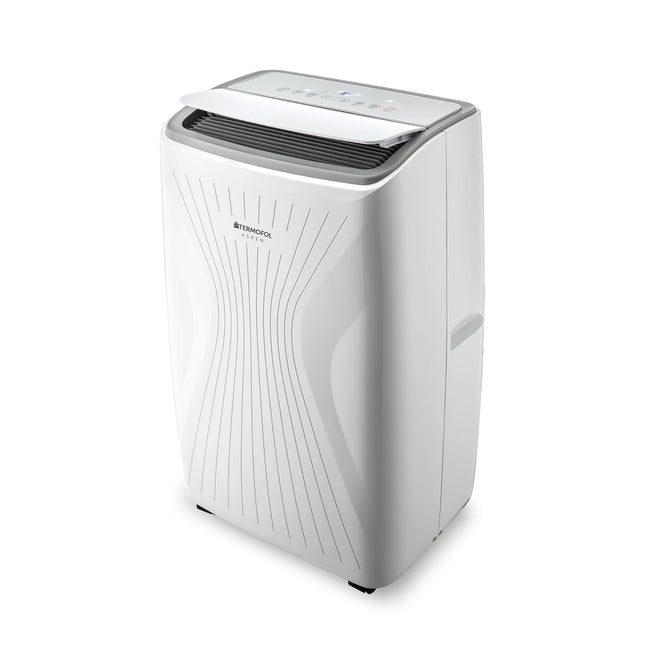
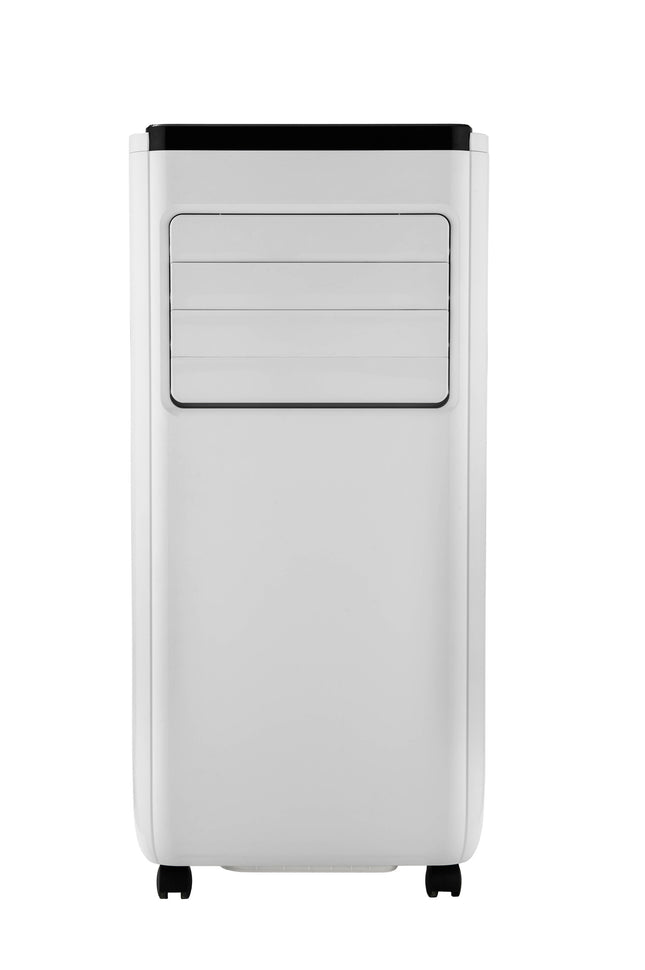
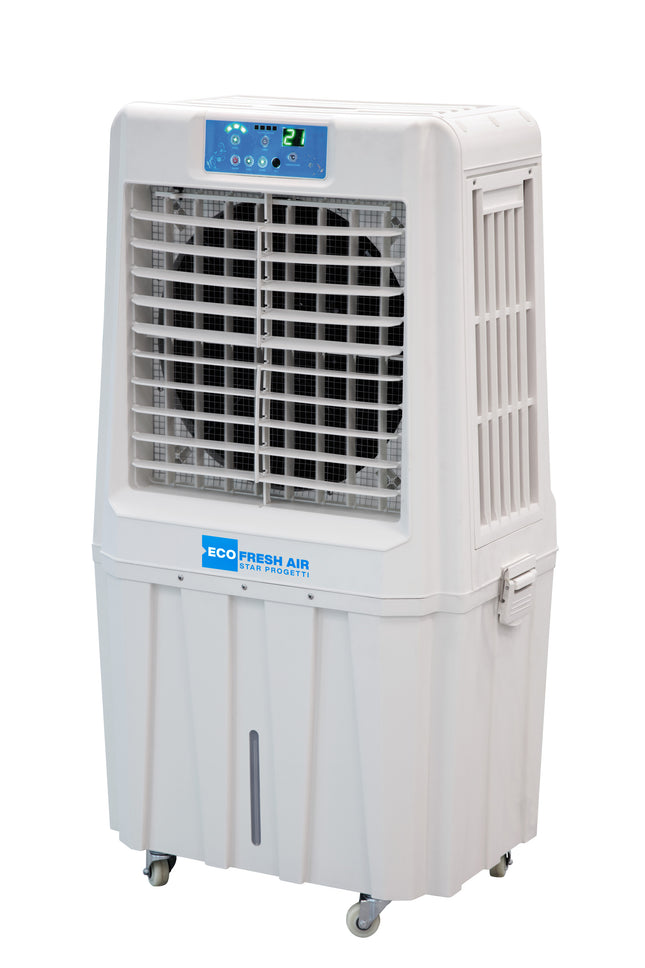
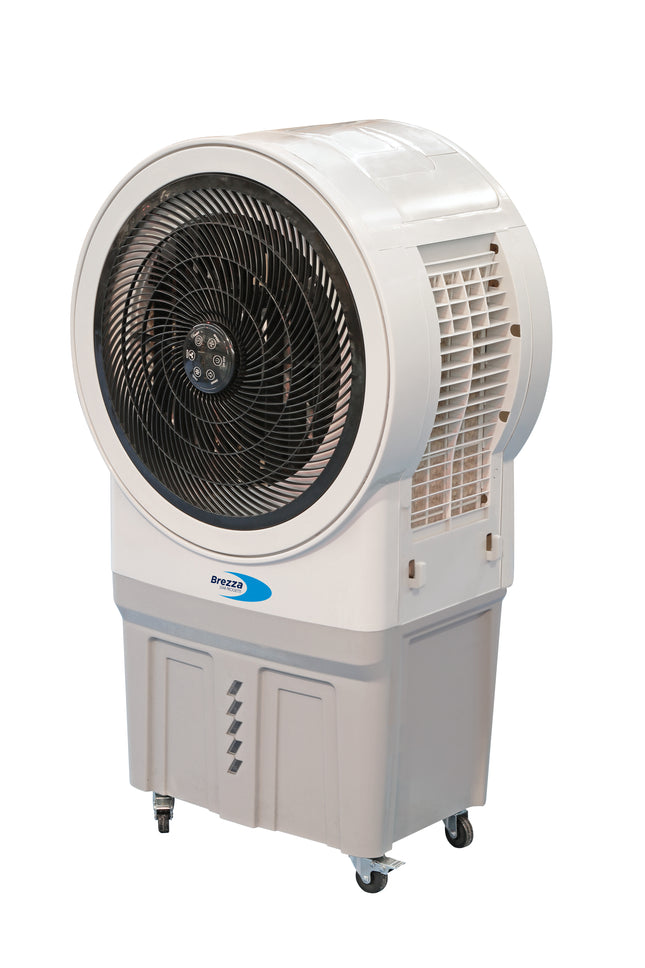
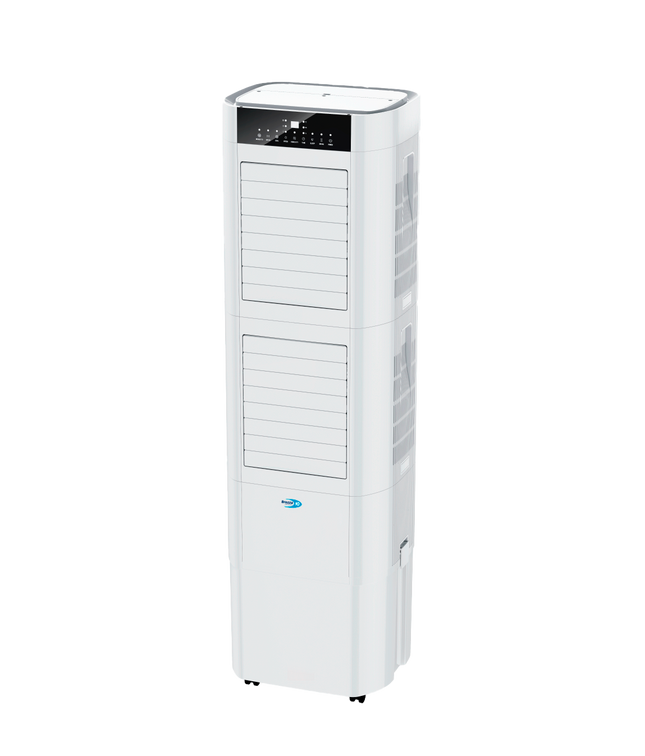

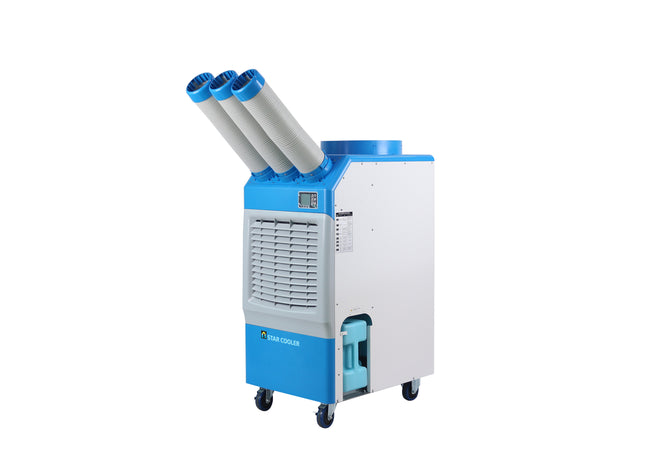

A portable air conditioner for the bedroom is a practical choice when your sleeping area does not cool down sufficiently during warm days. You do not need to install a fixed outdoor unit and can store the unit away after the summer. However, for a good night's sleep, more features matter than just cooling capacity. Noise level, window sealing, condensate drainage, operation, and the room's heat load also determine comfort. With this selection guide, you can find a suitable model for a bedroom in Belgium or the Netherlands.

Is a portable air conditioner suitable for the bedroom?
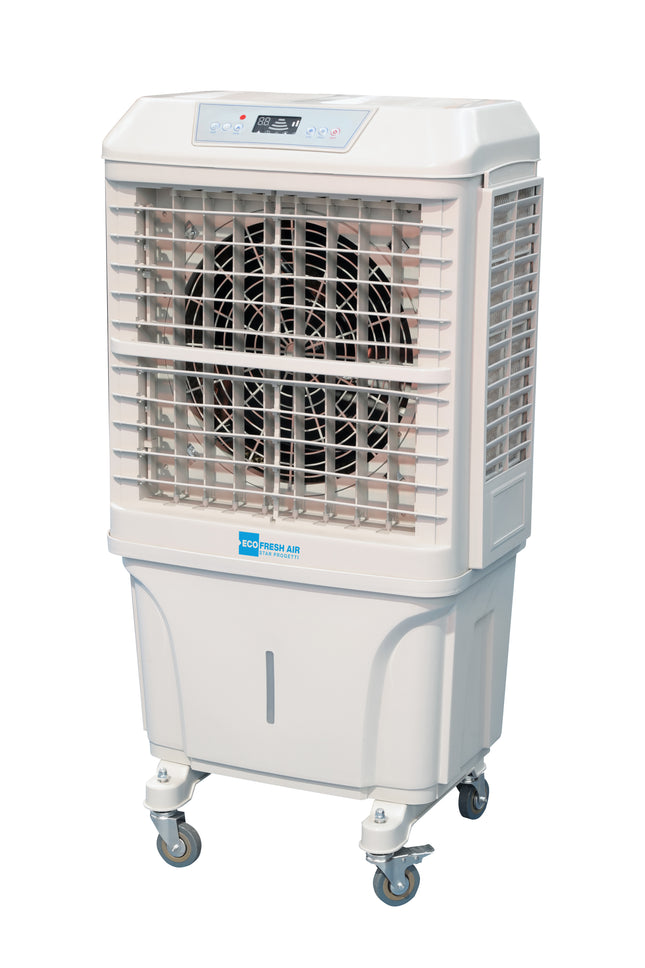
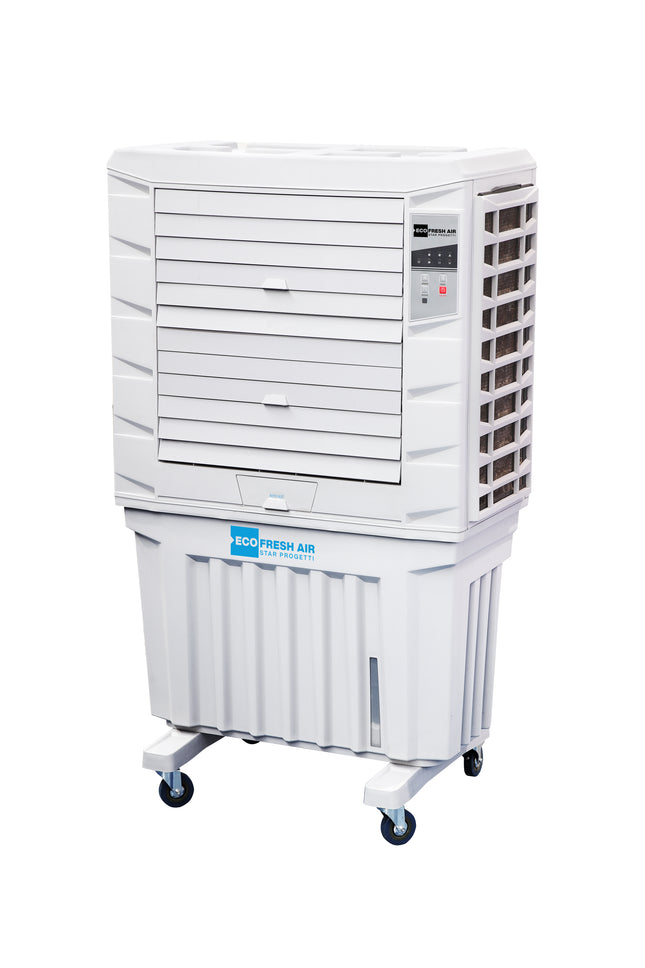
A portable air conditioner really lowers the temperature. The compressor extracts heat and moisture from the room air. A hose then vents the absorbed heat to the outside. This distinguishes the device from a fan, which only moves air, and from an air cooler, which evaporates water and can increase humidity.
However, a portable monoblock has an important point to consider: the compressor is located in the bedroom. As a result, the unit remains audible, even if the manufacturer offers a night or sleep mode. Those sensitive to noise can therefore pre-cool the room one to two hours before bedtime and let the unit operate later on a lower setting, timer, or thermostat.
Choosing a portable air conditioner for the bedroom: the most important points
Do not compare models solely on price or maximum power. Check at least these features before purchasing:
- Suitable room volume: compare the specified range with the number of cubic meters of your bedroom.
- Heat load: include sun exposure, roof, glass surface area, insulation, and floor level.
- Sound level: view both the low and maximum settings in dB(A).
- Night mode: check what that mode actually does to ventilation, temperature, and display lighting.
- Window set: choose a seal that fits a casement, tilt, sliding, or roof window.
- Condensation management: check whether the appliance evaporates on its own, uses a reservoir, or requires a drain.
- Control: a timer, remote control, or app prevents you from having to get out of bed at night.
- Dimensions: keep space clear around the air intake and plan a short route to the window.
If nighttime noise comfort is a priority, also check out the silent portable air conditioner. Always pay attention to the measured noise level, and not just a marketing name like 'silent'.
How much cooling capacity does your bedroom need?
First, measure the length, width, and height of the room. Multiply these values to calculate the volume in cubic meters. For example, a bedroom measuring 4 by 3 by 2.5 meters has a volume of 30 m³. Then, compare this volume with the manufacturer's room indication.
That indication is a starting point, not a guarantee. A north-facing room with external sun shading and good insulation requires less power than an attic room with a sloping roof and afternoon sun. Large windows, a flat roof, open doors, computers, and two sleeping people also add heat.
| Situation | Heat load | Point of attention |
|---|---|---|
| Well-insulated room, little sun | Low | Base the choice on room size and quiet partial load use. |
| Average bedroom with a normal window | Average | Allow a margin and carefully close the window and door. |
| Attic, flat roof or lots of afternoon sun | High | Choose extra capacity and limit solar radiation during the day. |
| Large room or poor insulation | Very high | Have the heat load assessed if product indications differ significantly. |
A portable air conditioner that is too small for the bedroom will run at full power for a long time. As a result, the room cools down slowly and you hear the compressor more often. A model that is much too heavy is not automatically better either: it may switch on and off more frequently and takes up more space. Therefore, choose capacity based on volume and circumstances.
What is a quiet portable air conditioner for the bedroom?
No monoblock air conditioner is completely silent. The compressor, fan, and airflow produce noise. The dB(A) rating helps with comparison, but check whether the manufacturer specifies the minimum setting, maximum setting, or sound power level. These values are not interchangeable.
A sleep mode can slow down the fan, dim the display, or gradually adjust the set temperature. This is convenient, but it does not always mean that the compressor remains off. Therefore, read the product specifications and manual. Furthermore, do not place the unit against the bed, a freestanding cabinet, or a lightweight partition wall, as these surfaces can amplify vibrations.
Do you want to minimize night noise? Cool the room beforehand with the door and blinds closed. Then let the device run on the lowest effective setting or use a timer. Ensure adequate ventilation and always follow the manufacturer's safety instructions.
Window seal and drain hose determine the result
The exhaust hose carries heat outside. If the window remains open around the hose, warm outside air flows back in quickly. A suitable window seal limits this backflow and also keeps insects and rain out more effectively. Check which window type you have before purchasing; a textile set for a tilt window does not automatically fit a sliding window or skylight.
Place the unit as close to the window as possible. Keep the hose short and as straight as possible, without sharp kinks. A long, compressed, or hot hose reflects heat back into the bedroom and increases resistance. Extend the hose only if the manufacturer explicitly permits it.
Many portable monoblocks extract air from the room. This can create slight negative pressure, allowing replacement air to enter through gaps. A good seal, a closed inner door, and a short hose help the system operate as efficiently as possible.
Condensation and dehumidification during warm nights
During cooling, moisture condenses from the air. Some models evaporate a large portion via the drain hose. Other units collect water in a reservoir or require continuous drainage during high humidity. Check where the drain opening is located and whether you can easily place a collection container or hose next to it.
Dehumidifying can make a clammy bedroom feel more comfortable. However, this is no reason to cool it down to an extremely cold temperature. Choose a pleasant, stable setting and avoid directing the airflow directly at your head or body.
This is how you cool the bedroom more efficiently
- Close curtains, roller blinds, or external sun protection during the day before the sun heats up the room.
- Ventilate early in the morning or late in the evening when the outside air is cooler.
- Close the window seal and interior door as soon as the portable air conditioner starts cooling the bedroom.
- Start well before bedtime and use a higher setting first to reduce the stored heat.
- Then switch to the lowest effective setting, thermostat, or timer.
- Clean the filter regularly and keep the inlet, exhaust, and hose clear.
This sequence reduces the time the device has to operate at maximum power at night. An app or programmable timer can be useful to pre-cool the bedroom before you go upstairs.
Extra features: which are useful in the bedroom?
A thermostat prevents unnecessary overcooling. A timer can switch off the unit after falling asleep or start it before bedtime. You can change settings using a remote control or app without getting up. A dimmable display keeps the room dark, and an adjustable airflow helps avoid drafts.
Some models can also heat. This is useful for a guest room, attic, or garden room that gets chilly during the transitional seasons. Compare these models via portable air conditioners with heating. Check the cooling and heating ranges separately.
Placement and safe nighttime use
Place the air conditioner upright on a flat, stable floor and observe the clearance specified in the manual. Keep textiles, curtains, and bedding away from air vents and hot hose parts. Preferably, connect the unit directly to a suitable power outlet. Only use an extension cord if permitted by the manufacturer and the cable is suitable for the power consumption.
Check the condensate reservoir before you go to sleep. Also ensure that the hose and window kit are securely fastened. For a skylight or window above street level, the structure must be able to safely withstand rain and wind. Have a permanent cable gland installed neatly and airtight.
When is another solution better?
A portable air conditioner for the bedroom is particularly attractive for temporary cooling, rental properties, or spaces where a permanent installation is not desired. For daily, long-term use, a fixed split air conditioner can be quieter and more efficient because the compressor is located outside. However, this requires professional installation and an outdoor unit.
Portable industrial air conditioners and industrial air conditioners are designed for very large spaces, server rooms, or heavy industrial loads . For a normal bedroom, such systems are usually unnecessarily large and loud.
Why choose Warmteshop?
Warmteshop has been a specialist in climate and heating solutions for Belgium and the Netherlands since 2006. You compare models based on capacity, noise, operation, window solution, and condensation management. This way, you choose a device that is not only powerful on paper but also fits practically in your bedroom.
Would you like to experience the dimensions, operation, or sound characteristics for yourself first? Then visit our 30+ showrooms. You can find independent reviews of Warmteshop via Trustlocal.
Frequently asked questions about portable air conditioners for the bedroom
Can a portable air conditioner run all night?
This is possible with many models, provided you follow the manual, position the drain correctly, and condensation is handled safely. Use a moderate temperature, do not direct the air at the bed, and optionally select a timer or sleep mode.
Does the window need to be open for a portable air conditioner?
The exhaust hose must go outside. This requires a window, door, or fixed conduit. Seal the opening around the hose so that warm air does not easily flow back.
Which is better: m², m³ or BTU?
Room volume in m³ also takes ceiling height into account. BTU/h or kW expresses cooling capacity. Combine both with sun exposure, insulation, glass surface area, and floor level for a realistic choice.
Is sleep mode always silent?
No. Sleep mode can adjust the fan, display, and temperature control, but the compressor sometimes remains audible. Therefore, compare the official noise levels of the different modes.
How long does it take for the bedroom to cool down?
That depends on power, room volume, starting temperature, heat load, and window sealing. Preferably start before bedtime and limit solar radiation during the day.
Buy a portable air conditioner for the bedroom
View the models within the portable air conditioner for the bedroom and first compare room range, noise level, night mode, and window kit. For extra attention to noise, view quiet portable air conditioners. If you want to compare all portable models, go to the portable air conditioner.