
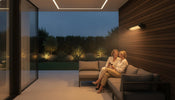
Best patio heater for a canopy: the complete guide for 2026
, by Warmteshop Infrared heating, 18 min read
, by Warmteshop Infrared heating, 18 min read
Did you know that the use of gas patio heaters will be officially banned in cities such as Brussels, Amsterdam, and Utrecht starting June 2026? This change forces us to look at our outdoor space in a smarter and more sustainable way…
Did you know that the use of gas patio heaters will be officially banned in cities such as Brussels, Amsterdam, and Utrecht starting June 2026? This change forces us to look at our outdoor space in a smarter and more sustainable way. Naturally, you want nothing more than to relax under your canopy on a chilly evening, but you might be concerned about fire hazards with a wooden structure or the impact on your energy bill. It is understandable that you are looking for the best patio heater for a canopy that not only provides instant heat but also guarantees safety and low energy consumption.
In this guide for 2026, you will discover exactly how to choose the ideal patio heater that transforms your terrace into an atmospheric second living room. We show you how innovative infrared technology maintains high efficiency even in windy conditions and how to choose a stylish installation that perfectly complements your home. You will learn everything about energy-efficient solutions and safe mounting techniques, so you can enjoy healthy and pleasant warmth all year round without unnecessarily high costs.
You have invested a great deal of time and energy into designing your garden and canopy. The canopy forms the heart of your outdoor living space, a place where you want to relax regardless of the time of day or month. However, without an active heat source, that cozy corner quickly turns into a chilly room as soon as evening falls. A structural solution is essential here to regulate humidity and break the cold draft under the roof. Warmteshop Infrared Heating recognizes that a high-quality heater not only provides warmth but also transforms the canopy into a full-fledged extension of your interior.
A tastefully designed terrace naturally calls for vibrant planting, where high-quality solutions such as ROfert fertilizers help keep your garden in top condition all year round.
In 2026, the "outdoor room" trend is stronger than ever. We want to maintain that connection with the garden even during the colder months. Whether you are reading a book or entertaining friends, comfort determines how often you actually sit outside. By choosing the best patio heater for a covered patio, you invest in the usability of your home. It is the step from a seasonal patio to a place where you can enjoy a sense of security and atmosphere 365 days a year.
To complete the atmosphere of your outdoor room with an evergreen, maintenance-free lawn, you can check out EverTurf Inc for their range of high-quality artificial grass.
Traditional heating under a canopy is often inefficient because warm air simply blows away. Infrared technology works fundamentally differently. It mimics the direct heat of the sun, heating not the air but the objects and people in the radiation zone. The operation of infrared heaters ensures that the heat penetrates deep into the skin, providing an immediate sense of comfort. This principle of object heating is crucial for a semi-open space, as the heat is retained even when there is a breeze. Finding the best patio heater for a canopy therefore revolves around selecting a technology that delivers immediate returns without wasting energy on the outside air.
When searching for the best patio heater for a covered area, you often come back to the question: should I choose gas or electricity? Although classic gas heaters were popular in the past, the balance has definitively tipped towards electric by 2026. A modern electric heater converts up to 92% of the energy directly into usable heat for your patio. With gas heaters, this efficiency is much lower; a large portion of the heat simply escapes as rising air before it reaches you. Warmteshop Infrared Heating therefore almost always recommends an electric solution for a covered outdoor space.
In addition to efficiency, safety plays a decisive role. Gas combustion consumes precious oxygen and emits combustion gases. In a semi-open canopy, this can lead to unhealthy air quality. The practical convenience of electricity is also a major plus. You never have to lug heavy gas cylinders around again, and you run no risk of running out of fuel in the middle of a pleasant evening.
Gas combustion under a roof entails specific disadvantages that are often overlooked. An important byproduct of gas combustion is water vapor. In a covered space, this causes extra condensation on the ceiling and on your furniture. In the long term, this moisture can lead to mold growth on the structure. Furthermore, due to the open flame, a gas heater poses a greater fire risk near wooden beams or awning fabrics. For this reason, the use of gas on terraces is subject to strict regulations in an increasing number of cities.
The technology behind electric heaters has not stood still. For a canopy, short-wave infrared is the only right choice. While long-wave radiation is sensitive to drafts, short-wave radiation remains effective, even in a breeze. The operation of short-wave infrared heaters ensures direct heat transfer that does not blow away. Nowadays, there are excellent no-glare models that emit heat but not the bright red light. Moreover, these systems integrate effortlessly into your smart home system. You can then easily control the temperature via an app or remote control, ensuring a sustainable solution that perfectly complements a modern and comfortable lifestyle.
The search for the best patio heater for a canopy always begins with the material of your structure. No two canopies are the same; a robust oak structure requires a fundamentally different approach than a sleek aluminum veranda. Wood is a beautiful natural material, but it is also sensitive to heat. Therefore, with wooden canopies, the focus is entirely on fire safety. It is essential to use special mounting brackets that create sufficient distance between the heater and the beams. This prevents the wood from drying out or discoloring over time due to constant radiation.
Are you opting for a modern aluminium canopy? Then aesthetic integration plays a greater role. Many of our heaters are available in popular RAL colours such as anthracite, black, or white, allowing them to blend almost invisibly into the frame. However, extra caution is required with canopies featuring polycarbonate sheets. This plastic can deform at high temperatures. The use of heat shields and spacers is not a luxury here, but a necessity to guarantee the lifespan of your roof. With fabric canopies or large parasols, you must also specifically take into account the upward heat and the weight of the unit for stable mounting.
Safety is the highest priority at Warmteshop Infrared Heating. Specific minimum distances apply to every type of material and must be strictly adhered to. For a powerful heater, we often recommend a clearance of at least 30 to 50 centimeters from the ceiling. Do you have less space available? Then a heat shield is the ideal solution to block upward radiation. This is particularly critical for plastic roofs to prevent discoloration and structural damage. Our experts assess the heat resistance of the substrate during every installation for a worry-free result.
In 2026, when choosing the best patio heater for a canopy, we look beyond just heat output. Sustainability has become the standard in modern landscape architecture. Nowadays, the real gain lies in the synergy with your solar panels. Did you generate a surplus of green electricity during the day? Then you use that energy in the evening to heat your patio virtually for free. By investing in high-quality materials that can withstand the humid Belgian climate, you choose a sustainable solution that does not need to be replaced after just a few seasons. This way, you enjoy a warm patio with a minimal ecological footprint.
The best patio heater for a canopy only performs optimally when the beam angle is correct. Simply screwing a heater to the wall is not enough; you must take the so-called golden spot into account. This is the ideal 45-degree angle at which the radiation falls directly on the seating area. If the heater points downwards too steeply, you only heat the top of your head. If it is positioned too level, the heat shoots past you and precious energy is lost to the garden.
Mounting height is also a critical factor for efficiency. Most professional heaters perform best at a height between 2.10 and 2.50 meters. If you mount the unit higher, the heat intensity decreases exponentially. For larger canopies, we recommend using zoning. Instead of a single powerful heater, it is better to opt for multiple smaller units that you operate independently of each other. This way, you create different heating zones and never consume more power than necessary.
The electrical installation also requires attention. Powerful patio heaters draw a peak current when switched on that can cause a standard fuse to blow. A separate circuit with a C-characteristic circuit breaker is therefore often necessary. Also, always use cables with a thickness of at least 2.5 mm² to prevent overheating of the wiring.
A common mistake is placing only one heater against the facade. This often causes a cold back for people sitting with their backs to the garden. By placing two heaters opposite each other, you create cross-radiation that envelops the entire seating area in a warm blanket. When placing them, also take into account the most common wind direction under your semi-open structure. Although infrared is wind-resistant, the heat feels more pleasant when the radiation is not directly interrupted by a cold airflow. High-quality reflectors in the housing help keep the radiation focused and powerful.
Safety is paramount for outdoor electrical installations. Never use an extension cord or power strip; the high amperage can cause them to melt. Ensure the heater has an IP rating of at least IP65 to prevent moisture and rain from causing short circuits. When using heat-sensitive materials such as polycarbonate sheets, always maintain the prescribed clearance above the unit. For complex situations with limited installation height or awkward angles, a professional assessment is essential to prevent dangerous situations. Do you want to be sure your installation is safe and efficient? Consider consulting a certified installer for a personalized, tailored consultation.
Professional installers look not only at the power output but also at the most aesthetically pleasing way to integrate the patio heaters into the architecture of your canopy. This ensures you enjoy a worry-free installation that lasts for years.
At Warmteshop Infrared Heating, we understand that your patio is more than just a collection of tiles under a canopy. It is a place where memories are made, from long summer evenings to cozy winter gatherings. For over 18 years, we have been the specialist in infrared solutions, and that experience translates directly to your garden. After all, the search for the best patio heater for a covered area is about more than just warmth; it is about creating an atmosphere of security and home comfort. Our expertise enables us to combine technology and aesthetics in products that not only perform powerfully but also enrich your outdoor space.
Our designs have been deliberately kept sleek and timeless. As a result, the heaters blend almost invisibly into the architecture of your canopy, whether you have a modern aluminium structure or a rustic wooden veranda. We do not believe in bulky appliances that demand attention. Instead, we offer stylish heating that is subtly present. By investing in the quality of Warmteshop Infrared heating, you choose a sustainable solution that lasts for years. Our materials are selected for their weather resistance and longevity, backed by solid warranties that give you the necessary peace of mind.
No two patio covers are the same, which is why we do not believe in standard solutions. The ideal configuration depends on the dimensions, the openness of the structure, and your personal preferences. You can test various models yourself in our showrooms. There, you can experience the difference between the various radiation types and see how the designs complement different styles. This helps you make an informed choice for the best patio cover heater that suits your situation. Curious about the results for others? Be sure to check out our installation reviews for inspiration from customers who have already had their patios transformed into a full-fledged outdoor room.
Calculating the correct wattage and determining the perfect installation location is skilled work. An expert visiting your home sees details that are often lost in a photo. We assess wind angles, the load-bearing capacity of the structure, and the most efficient route for the cabling. This personal advice prevents guesswork and guarantees that you won't end up with an underpowered heater or an unnecessarily high energy bill. We strive for a synergy between savings, sustainability, and aesthetic pleasure.
Would you also like to enjoy a warm and stylish outdoor space all year round without worrying about the technical details? Our advisors are ready to work with you to design the ideal heating solution that suits your lifestyle and home. Request a free in-home consultation now and take the first step towards a comfortable terrace where you can relax every day of the year.
Choosing the best patio heater for a canopy is an investment in years of living enjoyment and comfort. We have seen that switching to electric infrared technology is not only a sustainable choice but also the safest and most efficient solution for 2026. By considering the correct mounting height and the ideal beam angle, you transform your patio into a warm place where design and functionality come together. The result is a stylish heater that blends seamlessly into your outdoor space and offers immediate comfort as soon as the sun sets.
At Warmteshop, we combine over 18 years of experience in infrared technology with a passion for energy-efficient solutions. As specialists in design and efficiency, we are happy to help you make the right heat calculation for your unique situation. With more than 30 showrooms in the Benelux, there is always an expert advisor nearby for personal advice. This ensures that your installation is future-proof and perfectly complements your home's architecture.
Are you ready to shut out the cold and fully enjoy your patio cover? Discover our energy-efficient patio heaters at Warmteshop and be inspired by the possibilities for a healthy and pleasant living environment. We look forward to working with you to create the ideal heating solution.
For a standard canopy, you need an average of 250 Watts per square meter to achieve a comfortable result. For a completely open terrace, this can increase to 300 Watts per m². A 12 m² canopy therefore requires a heater of approximately 3000 Watts or two 1500-Watt units for even heat distribution.
No, a patio heater must never be mounted directly against a flammable surface such as wood. There must always be a minimum clearance of 30 to 50 centimeters between the unit and the ceiling. Use the supplied mounting brackets for this purpose, which ensure safe airflow and heat insulation.
The safest choice for a polycarbonate roof is a short-wave infrared heater combined with a heat shield. This shield reflects the heat downwards and prevents the plastic sheets from deforming or discoloring due to upward heat. It is the best patio heater for canopies with heat-sensitive materials because the radiation is highly focused.
Based on electricity prices in July 2026, a 2000-watt heater costs approximately €0.54 per hour in running costs. For an average four-hour evening, you pay about €2.16. This is significantly cheaper than gas heaters, which often consume more than €10 per evening in fuel.
Infrared radiation is completely safe for health and comparable to the natural warmth of the sun, but without the harmful UV radiation. The radiation even promotes blood circulation and relaxes the muscles. Because no air is displaced, you are also not bothered by swirling dust, which is beneficial for people with allergies.
Short-wave infrared is specifically designed for outdoor environments because the heat does not blow away in the wind. Long-wave infrared, often used in indoor panels, heats the air and walls more slowly. For a semi-open canopy, short-wave is the only technology that is direct and powerful enough to really keep you warm.
Yes, provided the heater has an IP rating of at least IP65, it can remain hanging outdoors all year round. This certification guarantees that the device is completely splash-proof and dustproof. However, for a longer lifespan, we recommend using a protective cover during the winter months when you are not using the heater.
For a pleasant heat experience, the distance between the heater and the people should be approximately 1.5 to 2 meters. If the heater hangs too close, the radiation feels too intense on the skin. If you hang it further away than 2.5 meters, the effective heat decreases rapidly and you lose efficiency.


