



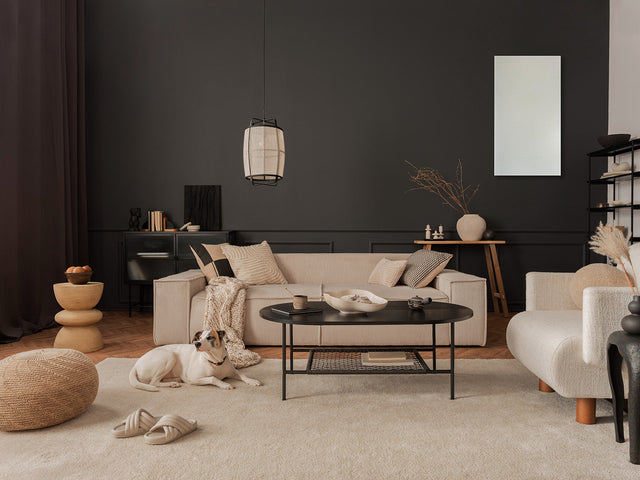
Infrared wall panel: targeted heat without taking up floor space
An infrared wall panel provides targeted radiant heat and keeps the floor completely clear. The panel hangs flush against the wall, making it easy to fit into a living room, bedroom, bathroom, or office. Moreover, you choose the position, power, and controls yourself. This allows you to tailor the heat to the room as well as your daily use.

A wall panel is suitable as local supplementary heating. With proper heat calculations, it can also form part of the main heating system. However, the correct result depends on insulation, glass surface area, room size, and desired temperature. Therefore, you will find practical selection advice below, without general promises of savings.
How does infrared wall heating work?
An infrared panel converts electricity into radiant heat. This radiation heats people and surfaces within its range. Walls, furniture, and floors then radiate a portion of that heat. Consequently, the air heats up indirectly as well.
This differs from a classic radiator, which primarily circulates air. A panel without a fan generally operates silently. The system itself also generates little air movement. Nevertheless, the placement determines how much heat you actually feel. After all, a cupboard, door, or curtain in front of the panel blocks the line of radiation.
Benefits of a wall-mounted infrared panel
- No loss of floor space: handy in smaller rooms and narrow doorways.
- Targeted heat: place the panel opposite the zone where you often sit or work.
- Calm appearance: flat white, glass, or printed models fit into various interiors.
- Silent operation: models without a fan do not have a continuous airflow.
- Zone control: with a suitable thermostat, you heat only where and when necessary.
- Flexible mounting: many models can be hung horizontally or vertically, if the manual permits.
Always check the product specifications. Not every panel has the same mounting bracket, surface temperature, IP rating, or control option.
Where does an infrared wall panel come into its own best?
In the living room, a panel can provide targeted heating to a seating area. Preferably, mount it with an unobstructed view of the sofa or dining table. This way, the radiation reaches the usage zone without large furniture getting in the way.
For the bathroom, the correct IP rating and safety distances are important. Therefore, choose only a model that, according to the manufacturer, is suitable for the intended zone. If in doubt, have the electrical connection checked by a professional.
For a home office, you can combine wall heating with an infrared panel desk. The wall then heats the upper body, while desk heating can provide extra comfort around the legs and feet. As a result, the entire room does not always need to be warmer.
Would you like heat with an extra function? Then take a look at an infrared panel with lighting. For a compact bathroom or hallway, a mirror variant interesting option. Here too, pay attention to power output, installation instructions, and moisture resistance.
How do you choose the right capacity?
The required power is not a fixed number of watts per square meter for every home. First, you look at the heat loss of the room. Surface area and ceiling height play a role, but so do insulation, ventilation, exterior walls, and windows. Additionally, it makes a difference whether the panel will be used for primary or supplementary heating.
A well-insulated interior room generally requires less power than a corner room with a lot of glass. A bathroom often requires a temporarily higher comfort temperature. Therefore, a heat loss calculation is more reliable than a single general rule of thumb.
Insufficient power results in long running times and potentially inadequate comfort. Nor is oversizing automatically better. While a suitable thermostat can switch off the power in time, the purchase price and electrical load remain higher. Therefore, choose a realistic safety margin and have multiple zones assessed separately.
Mounting height and beam direction
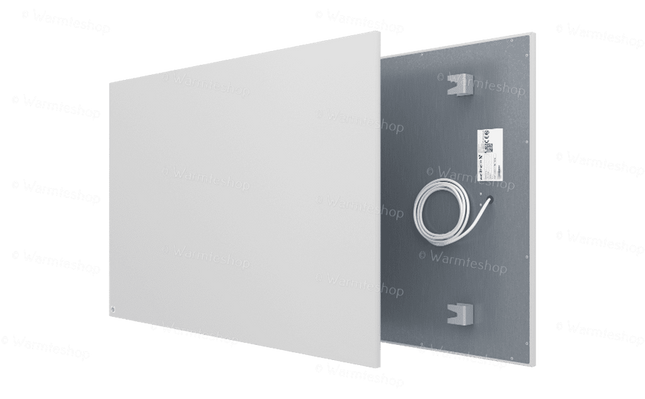
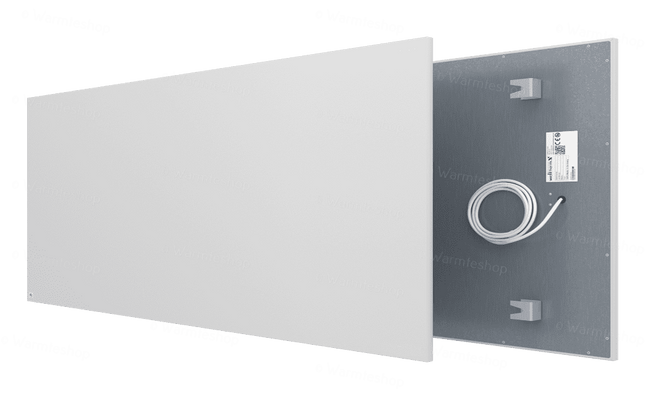
An infrared wall panel must be able to freely radiate its heat into the room. Always follow the minimum distances specified in the manual. These vary by material and model. Additionally, use the supplied or prescribed bracket.
- Choose a sturdy, flat wall that can support the weight.
- Check where pipes and electrical cables run before you drill.
- Keep the panel free of curtains, cabinets, and other obstacles.
- Direct the radiation plane at the usage zone and not at an unused passageway.
- Respect the minimum distance to the floor, ceiling, and adjacent materials.
- After assembly, check that all fastening points are securely tightened.
Do not automatically mount a panel as high as possible. With wall heating, the line of sight to the seating or work zone is important. At the same time, the warm surface must remain out of unintended reach when children or pets are present.
Thermostat, timer and smart control
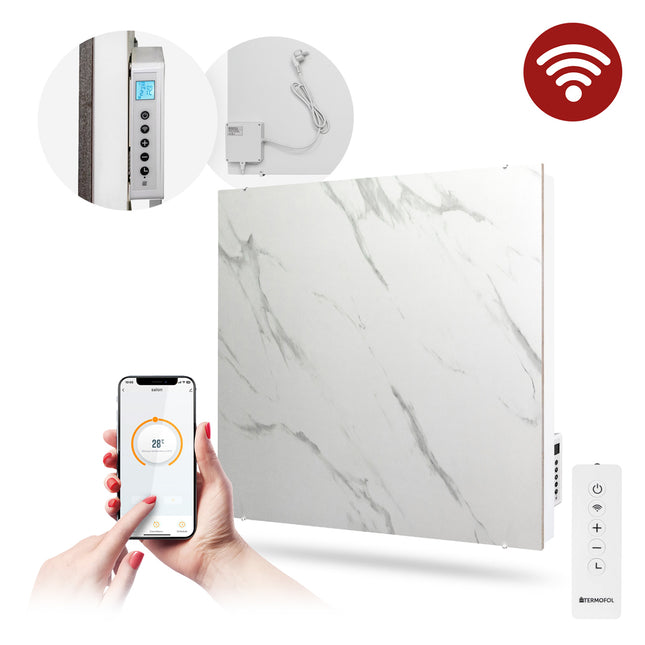
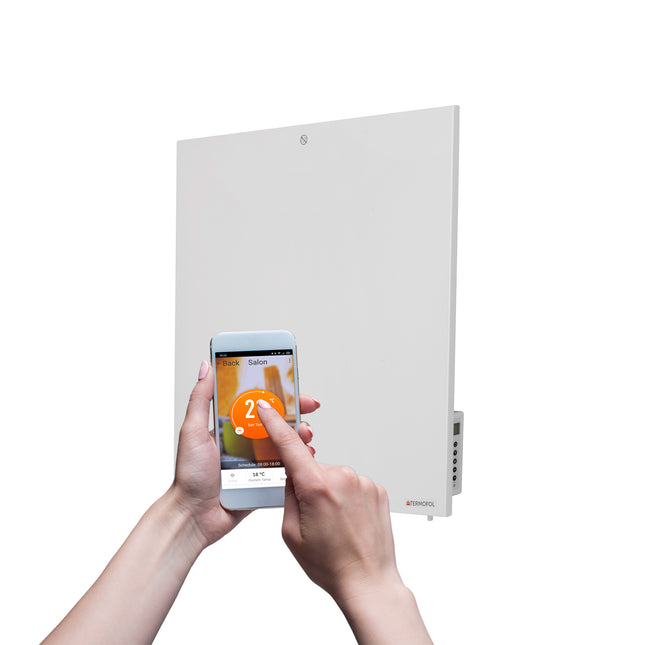
A thermostat measures the room temperature and switches the heating on and off according to the set value. As a result, the panel does not run unnecessarily. A programmable model adds time schedules. With Wi-Fi control, you can adjust settings remotely, provided the system and network are correctly configured.
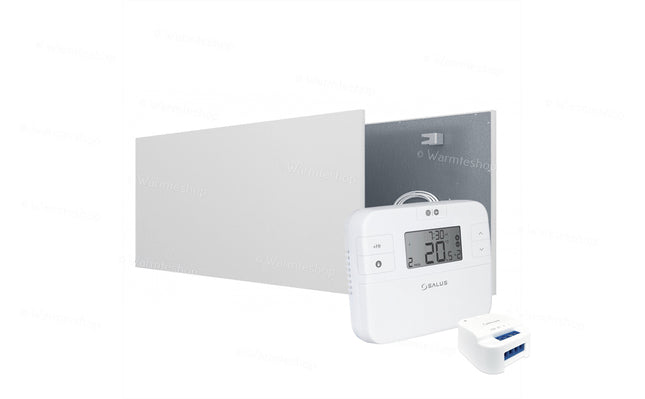
View our selection of infrared panels with thermostat if you want to match the panel and control system. Check the maximum switching load and compatibility, as a standard smart plug is not suitable for every heating device.
Do not place a separate temperature sensor directly above or right next to the panel. The measured temperature there may be higher than elsewhere in the room. Preferably choose a representative spot without direct sunlight, drafts, or radiant heat.
Wall, ceiling, or a movable panel?
Wall mounting provides horizontal radiation and keeps the floor clear. A freestanding infrared panel, on the other hand, is easy to move to another work or seating area. However, it does take up floor space and requires a stable base.
An infrared panel on the ceiling distributes radiation from above. This can be useful when the walls are full of panels. However, even in this case, the mounting height, surface temperature, and downward radiation zone must match the model. The best choice therefore depends on the layout of the room.
Safe use in the home and bathroom
The surface of an infrared panel can become hot. The exact temperature varies per product. Therefore, do not touch the panel during use and never block the surface with clothing or towels. Also ensure that the cord is not under tension or runs along hot parts.
For damp rooms, a general designation such as “splash-proof” is not the only relevant factor. Check the specified IP rating, the bathroom zone, and the installation instructions. Additionally, the power supply must comply with local electrical regulations. A professional can assess whether additional protection is required.
Inspect the mounting and cables regularly. Switch off the system in case of damage, discoloration, loose parts, or an unusual odor. Clean a cold panel according to the manual. Do not use abrasive or wet cleaning agents unless permitted by the manufacturer.
How much does infrared wall heating consume?
The maximum power consumption is easy to calculate. Divide the wattage by 1,000 and multiply this by the number of operating hours. An 800-watt panel consumes a maximum of 0.8 kWh with one hour of continuous operation. A thermostat can shorten the effective running time once the set temperature has been reached.
The final costs therefore depend on capacity, electricity price, and operating time. Insulation and user behavior also influence the result. Therefore, compare systems based on the same heat demand and comfort level. The wattage consumed alone does not indicate how many panels a room needs.
Material, color and interior
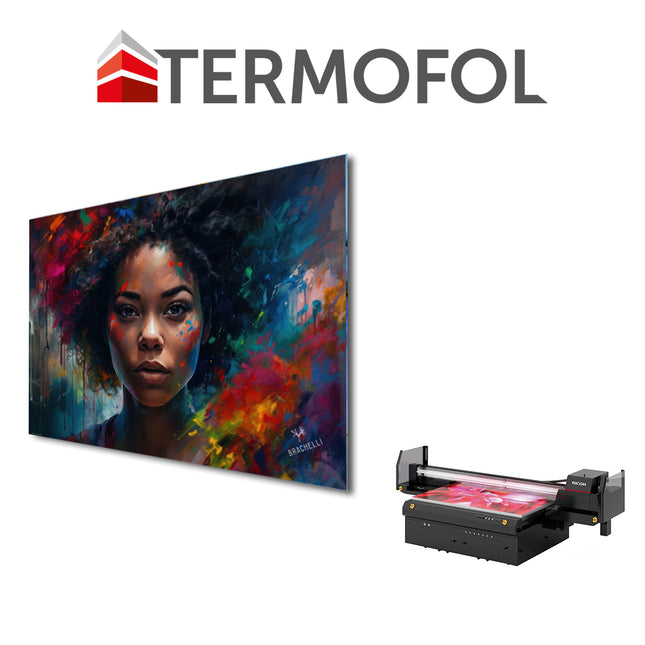
Metal panels are often lightweight and have a minimalist design. Glass versions offer a sleeker look, while mirror and photo panels combine multiple functions. Each material has its own dimensions, weight, and thermal properties. Therefore, consult the technical specifications rather than just the appearance.
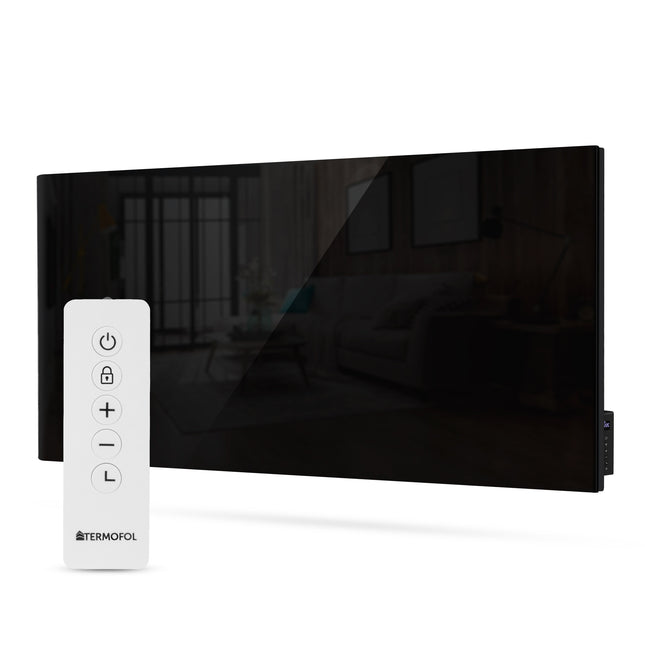
A white panel blends seamlessly against a light wall. A black or printed model, on the other hand, can serve as an accent. Leave sufficient free space around the panel. This ensures the design remains visible and the radiant heat can reach the room unimpeded.
Main heating or supplementary heating?
As supplementary heating, a wall panel provides quick comfort in a single usage zone. Consider, for example, a workspace used during the day or a seating area in the evening. For primary heating, all heat losses must be covered. Furthermore, a larger room sometimes requires multiple panels for even distribution.
When renovating or building a new house, also have the electrical connection assessed. Multiple panels can place a significant load together. A zone plan with separate thermostats then provides more control per room. This allows you to better tailor the heating to actual usage.
Buying advice: compare these points
- Required power based on heat loss and intended use.
- Dimensions, weight, and horizontal or vertical mounting.
- Free line of radiation to the place where heat is needed.
- Thermostat, timer, Wi-Fi and maximum switching load.
- IP class and permitted installation zone in damp rooms.
- Surface temperature and accessibility for children or pets.
- Length and routing of cables, plus the available electrical circuit.
- Warranty conditions, manual, and available service.
This way, you compare not only the price, but above all the suitability for your room. A well-chosen infrared wall panel combines sufficient power with safe installation and appropriate control.
Why choose advice from Warmteshop?
Warmteshop helps you view the panel, position, and operation as a single system. That is why our advisors take insulation, glass surface area, space utilization, and installation height into account. Furthermore, you can compare different materials and heating experiences in a showroom.
Warmteshop is officially certified via Trustprofile. Do you have a floor plan or dimensions? Bring them along for more targeted advice on capacity and distribution.
Read more: infrared panels · ceiling · freestanding · desk · with thermostat · with lighting
Frequently asked questions about infrared wall panels
Can a wall panel hang behind a sofa?
Only if the prescribed distances and unobstructed line of radiation are maintained. A high sofa can block a significant portion of the heat. Therefore, it is preferable to place the panel opposite or next to the seating area if this is permitted according to the manual.
Can I mount an infrared panel vertically?
This is only possible if the manufacturer allows both mounting directions. This is because the bracket, internal sensor, and cable outlet may be designed for a fixed orientation.
How much space must remain clear around the panel?
Use the minimum distances specified in the product manual. There is no safe universal distance for all models, materials, and power ratings.
Is an infrared panel wall suitable for a bedroom?
That depends on power, controllability, and placement. Do not position the panel too close to the bed and use a thermostat with a suitable night schedule. Additionally, check the instructions for the chosen model.
Does every wall panel need a thermostat?
For comfortable room control, a compatible thermostat is usually advisable. Some panels have built-in control, while others require an external thermostat or receiver.
Can I install the panel myself?
Mechanical mounting is often possible for experienced DIYers if the wall is suitable. However, have a permanent electrical connection or questionable bathroom installation carried out by a professional.