
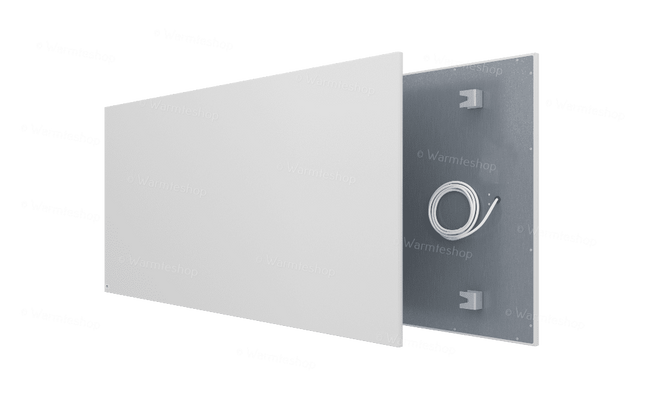
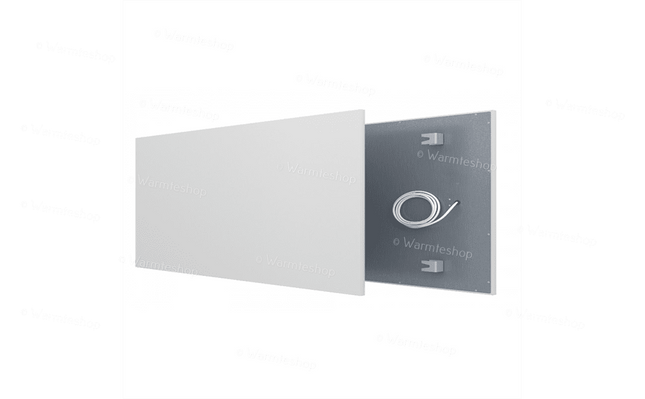
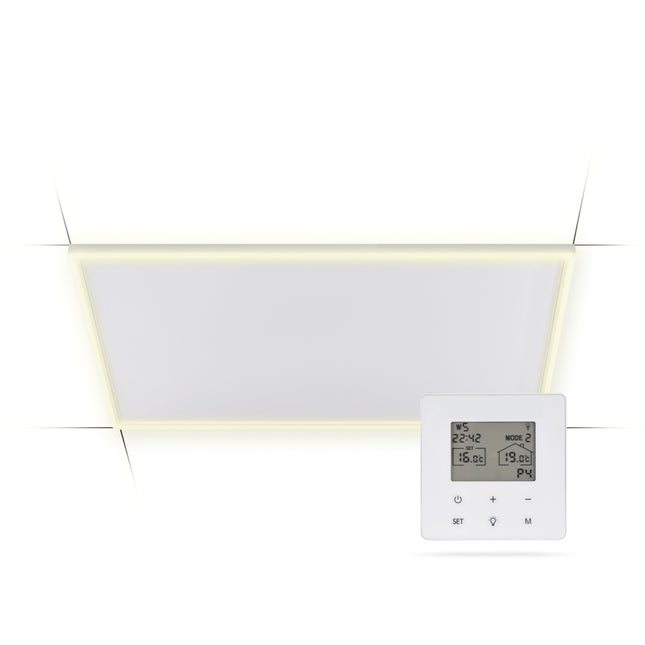
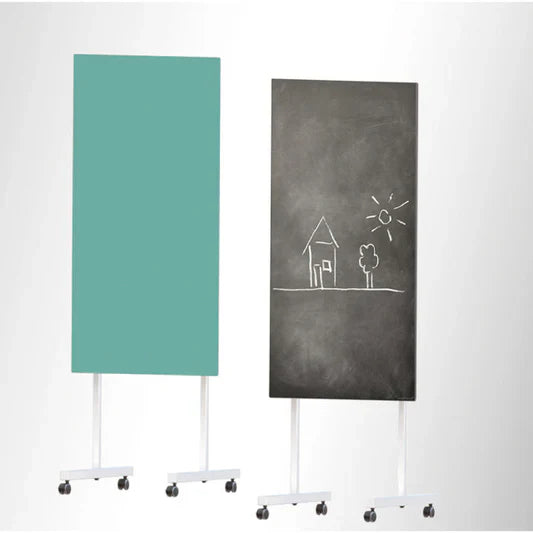
Standing infrared panel: portable, targeted heat
A freestanding infrared panel provides focused radiant heat without permanent mounting to a wall or ceiling. You place the panel wherever temporary extra comfort is needed, for example near a sofa, desk, dining table, or workspace. This makes a freestanding model attractive for rental homes, home offices, and spaces where heating needs change frequently.

How does a freestanding infrared panel work?
The panel converts electricity into heat and radiates it to people and surfaces within its range. Therefore, the entire room air does not need to heat up before you experience warmth. However, the final performance depends on power, distance, direction, insulation, and the time the panel is active.
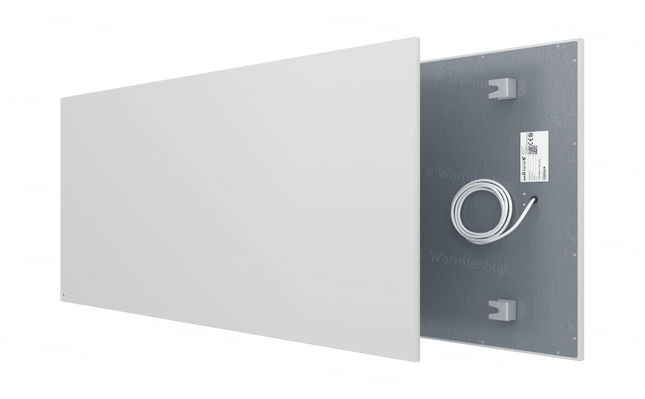
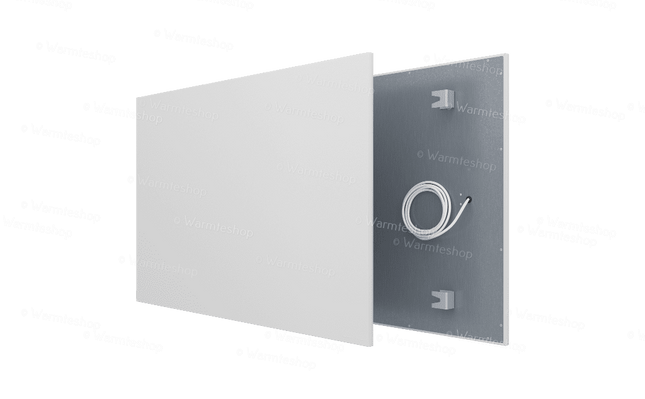
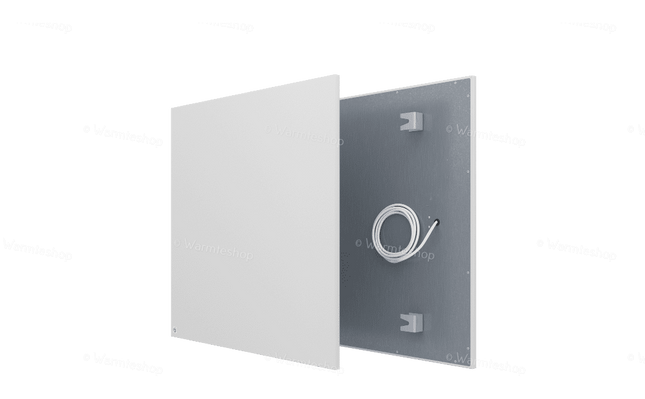
A freestanding version works on the same principle as a fixed infrared panel. The main difference lies in the placement: feet, a floor frame, or wheels keep the panel upright. Some models are designed specifically for mobile use. For other panels, suitable feet must be ordered separately.
Advantages of a standing infrared panel
- Portable: use the same heat source in different places.
- No fixed mounting: drilling into the wall or ceiling is generally not necessary.
- Targeted heat: direct the radiant surface at the used seating or work zone.
- Silent operation: a panel without a fan makes hardly any noise.
- Flexible supplementary heating: temporarily heat a cold spot without immediately making the entire room warmer.
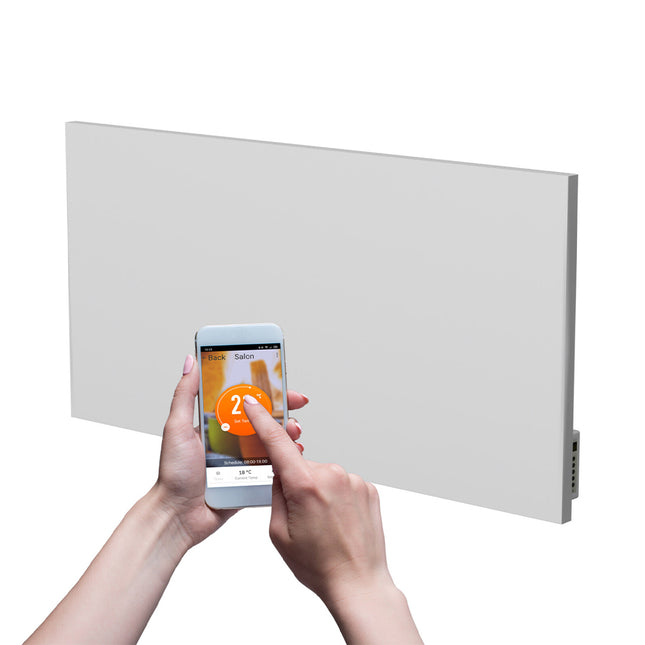
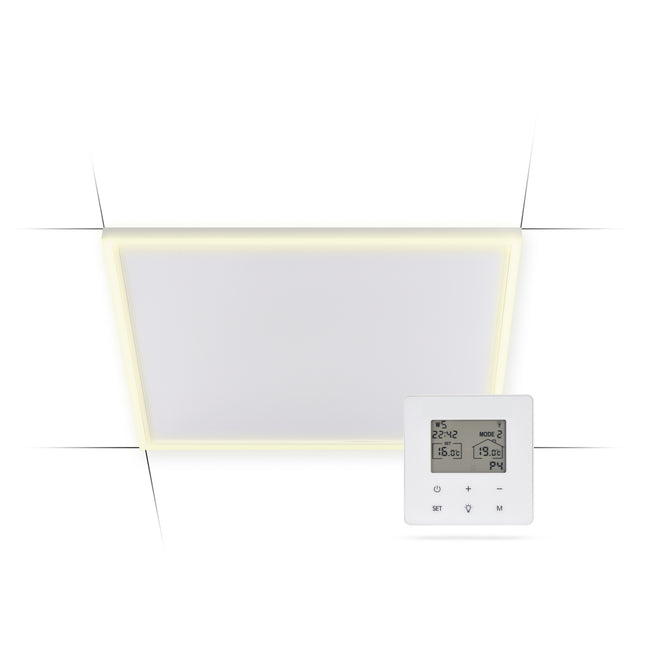
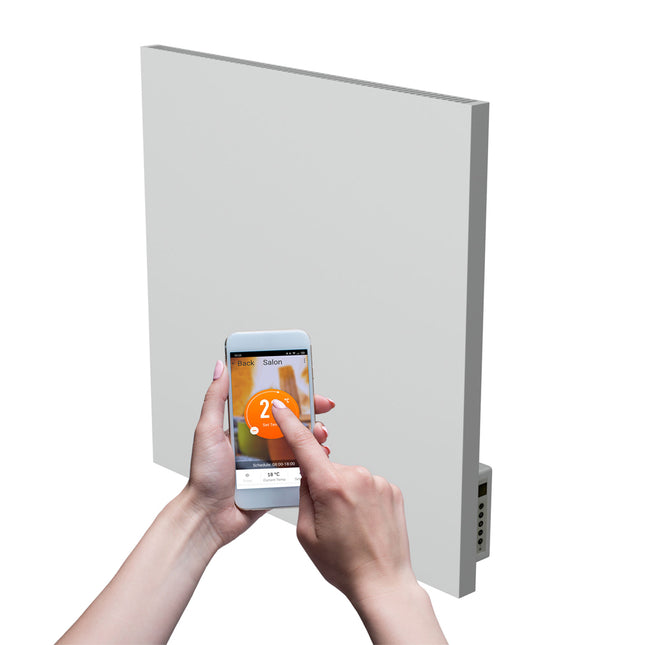
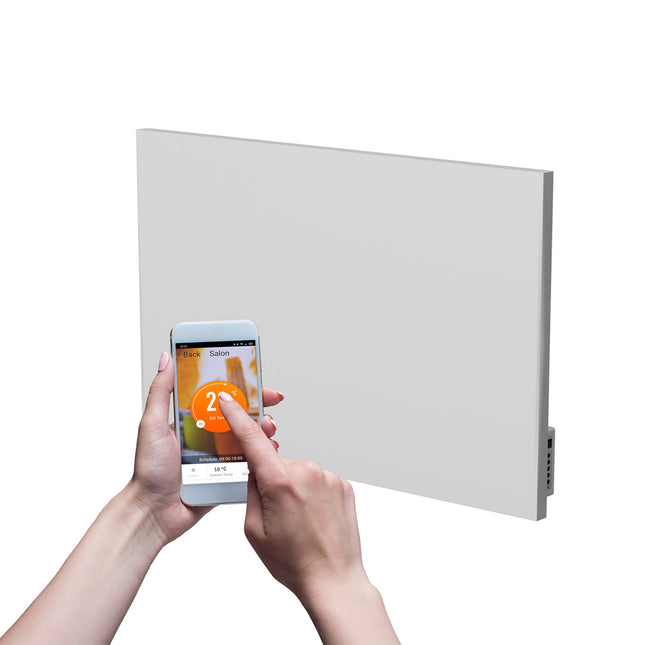
- Various controls: depending on the model, you get a switch, thermostat, timer, remote control, or Wi-Fi.
However, portability does not mean that every panel can be safely placed anywhere. Therefore, always check the stability, minimum distances, surface temperature, and permitted operating environment.
When do you choose a freestanding model?
A freestanding infrared panel is particularly suitable for fluctuating or temporary heating needs. Think, for example, of a reading nook used only in the evenings, a guest room, a workspace, or a rental property where permanent installation is undesirable. For targeted heat while working, you can also compare our collection of desk heaters .
If, on the other hand, you wish to structurally heat the entire room, a heat loss calculation and fixed installation are often more practical. A wall panel takes up no floor space. Moreover, a ceiling panel can illuminate a larger area when correctly sized.
Footrests, floor frame or wheels
Before purchasing, check how the panel is positioned upright. Some products come complete with feet, while others require an optional foot set. Use only supports approved for the exact model and weight. An improvised stand may tip over or alter the required distance from the floor.
Wheels are convenient when you regularly move the panel within the same room. Then pay attention to wheel lock, total width, and stability. Only lift a heated panel according to the manual and never pull on the power cord to move the device.
Choosing the right capacity
The required power depends on the purpose. For local supplementary heating, you primarily consider the distance to the user and the desired heat zone. For space heating, floor area, ceiling height, insulation, glazing, exterior walls, and the desired indoor temperature also play a role.
Use a guideline value per square or cubic meter only as an initial indication. After all, a well-insulated intermediate room requires less power than an older corner room with a lot of glass. Therefore, have a calculation made if the standing panel is to serve as the primary heating source.
Moreover, do not automatically choose the most powerful model. At close range, high power can feel uncomfortable. An adjustable thermostat or power setting helps, but does not replace proper sizing and placement.
Radiation direction and placement
A freestanding infrared panel works best when the radiating surface is directed freely towards the usage zone. Do not place it behind a sofa, table, cabinet, or curtain. Such obstacles absorb a large portion of the radiation and can also come too close to the warm surface.
- Place the panel on a flat, sturdy floor.
- Follow the distances specified in the product manual.
- Let the front radiate completely freely.
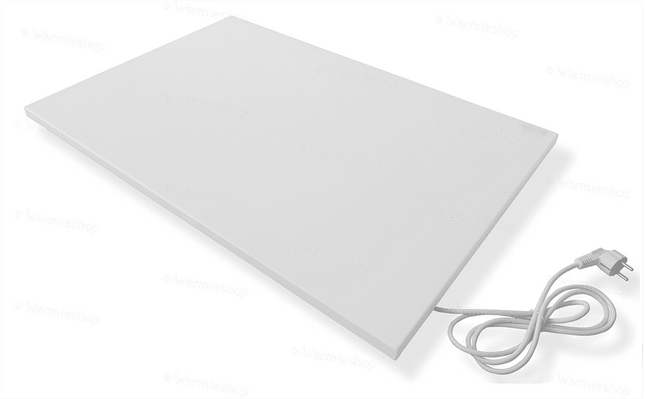
- Place the power cord out of walkways and prevent tripping hazards.
- Never cover the panel with clothing, towels, or other materials.
- Do not place the device directly under or in front of a power outlet when the manual prohibits this.
Thermostat, timer and Wi-Fi
Operation varies by product. A simple switch is sufficient for short, local use. A timer can prevent the device from remaining switched on unnecessarily long. A thermostat, on the other hand, measures the room temperature and switches the heating on based on the set value.
Pay attention to the location of the temperature sensor. If it is close to the warm panel, the measurement may deviate from the temperature elsewhere in the room. A separate room thermostat often provides a more representative reading when placed away from direct radiation and drafts. For this, also view the collection of infrared panels with thermostat.
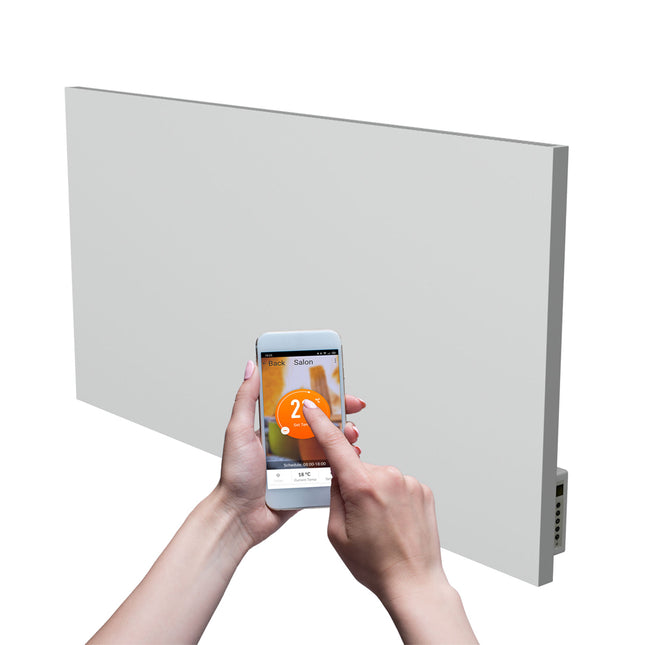
Wi-Fi offers remote control and programs, depending on the model. Check the required app, router frequency, and available features in advance. Additionally, verify whether local control continues to work if the internet temporarily drops out.
Safety for children and pets
The surface of an infrared panel can become hot during use. Therefore, do not rely on general claims that every model can be touched safely. Check the maximum surface temperature and keep children and pets at a sufficient distance.
For busy walkways, choose a stable model with suitable footrests and, where available, anti-tipping protection or automatic shut-off. Do not place the panel where it can be easily knocked over. Always follow the safety instructions for the specific product.
Use in a bathroom or damp room
Not every freestanding infrared panel is suitable for damp rooms. Check the IP rating, the permitted bathroom zone, and the electrical connection. Furthermore, a splash-proof rating does not mean that the device may be placed directly next to a shower or bath.
Portable electrical appliances require extra caution in the bathroom. If in doubt, have a qualified installer assess whether the model and position comply with applicable regulations. Use a panel without a suitable classification exclusively in dry indoor spaces.
Calculate power consumption and operating costs
You calculate the maximum consumption using the power. Divide the wattage by 1,000 to find the consumption per full heating hour in kWh. A 600-watt panel uses a maximum of 0.6 kWh per hour when operating continuously at full power.
Next, multiply this by the current electricity rate. A thermostat or timer can shorten the effective switch-on time. However, savings on total heating consumption only occur when you actually heat less elsewhere or use the panel for a shorter period.
Freestanding panel or fixed mounting?
- Standing: flexible and movable, but takes up floor space.
- Wall: fixed position and no loose feet, but requires mounting.
- Ceiling: free floor and walls, but less easy to move.
- Mobile folding model: compact and local, but usually not intended as a full space heater.
The best choice therefore depends on the intended use, available space, and desired direction of radiation. Also check whether a product can be used both freestanding and wall-mounted; this option varies by model.
Home and workplace applications
In the living room, a freestanding panel can provide extra warmth at a seating area. In a home office, it can be used as local supplementary heating. Additionally, it can provide temporary assistance in a bedroom, hobby room, practice room, or reception area. Always direct the heat towards the zone in use and ensure there is sufficient walking space.
For multiple workstations, individual control is often useful. However, be sure to calculate the total electrical load and do not connect multiple powerful panels to the same power strip or circuit without checking. Additionally, set timers or shutdown schedules for the end of the workday.
Buy a standing infrared panel at Warmteshop
First, compare the required power and the desired heating zone. Next, look at weight, dimensions, feet, wheels, and controls. Finally, check the thermostat, timer, Wi-Fi, cord length, IP rating, and safety features.
Warmteshop has specialized in infrared heating since 2006. Our advisors assist with the choice of power, placement, and control. Warmteshop is also listed on Trustprofile.
Read more: infrared panels · ceiling · wall · desk · with lighting · with thermostat
Frequently asked questions about freestanding infrared panels
Are footrests always included?
No. Feet or wheels are included with some models, while you must order them separately for other panels. Check the scope of delivery and use only suitable original or approved supports.
Can a freestanding panel serve as primary heating?
This is possible if the total output matches the heat loss of the room. Have a calculation made for this. A single locally directed panel is not automatically sufficient for the entire room.
How far does the palpable heat extend?
This varies depending on power output, surface temperature, panel size, and environment. Obstacles and the angle of the panel also affect the range. Therefore, follow the product specifications instead of using a single fixed distance for all models.
Can I move the panel while it is warm?
Follow the manual. Some surfaces and edges may become hot. If necessary, switch off the panel, let it cool down, and use only the designated handles or the frame.
Is a smart plug suitable for every panel?
No. Check the maximum power of the smart plug and whether the panel automatically resumes safely after a power interruption. Do not use external control if the manufacturer advises against it.
Does an infrared panel make noise?
A model without a fan generally operates quietly. During heating or cooling, materials may sometimes expand or contract slightly. Consult the product information if silence is essential.