
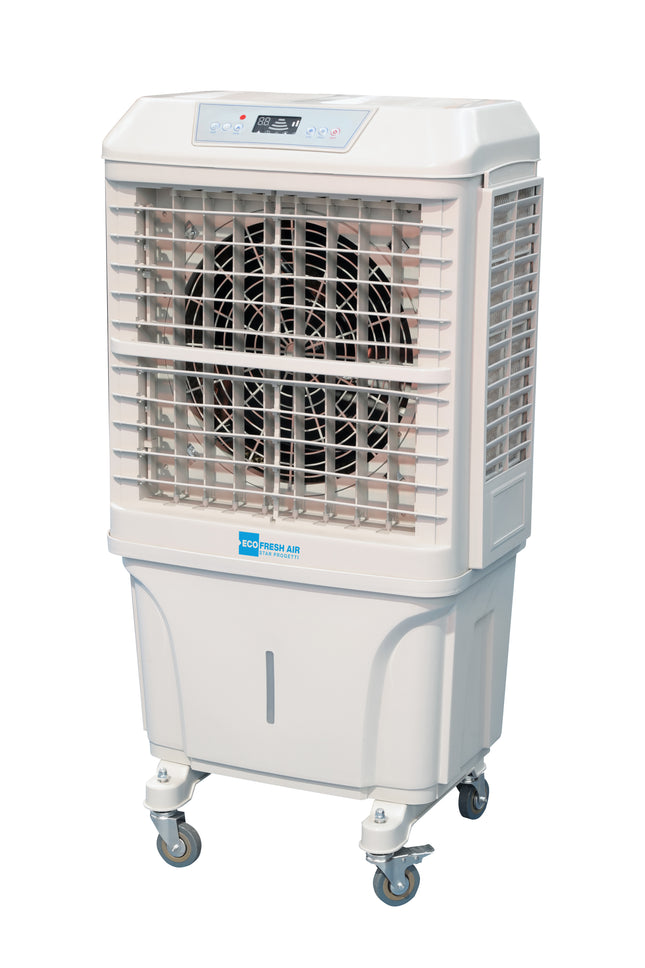

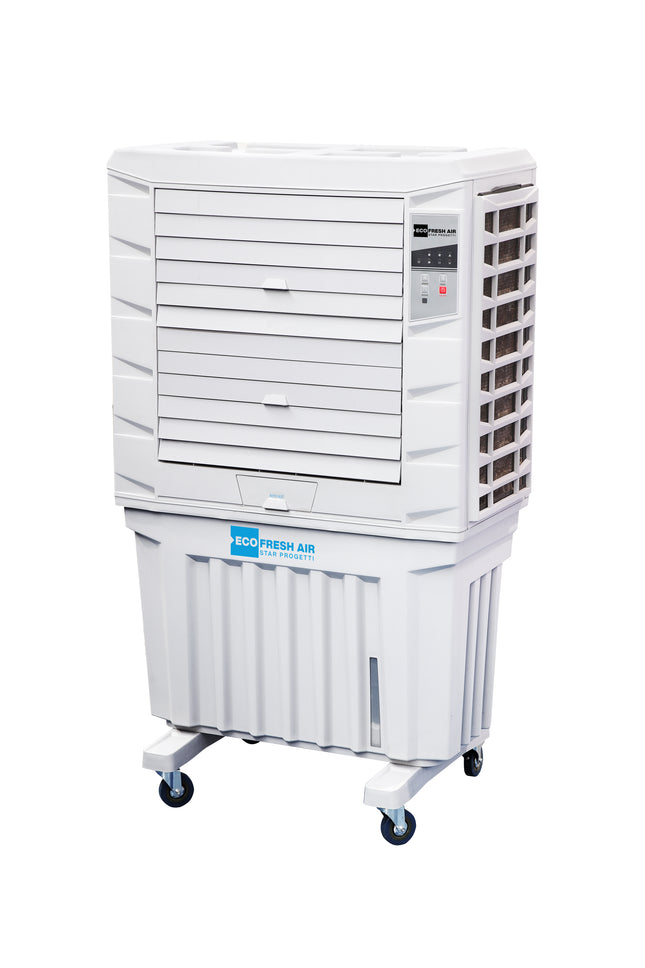
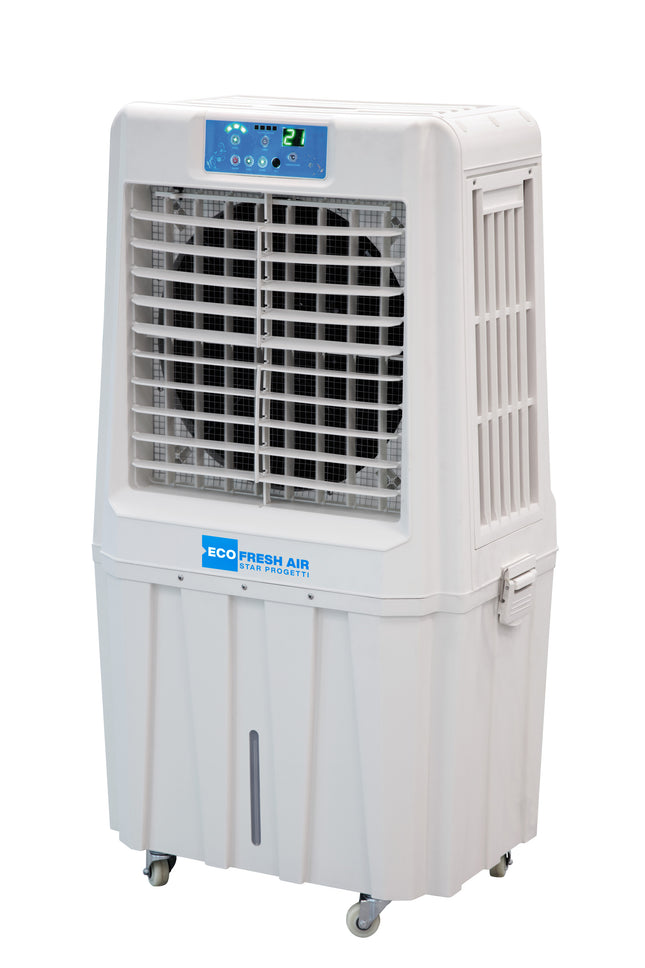
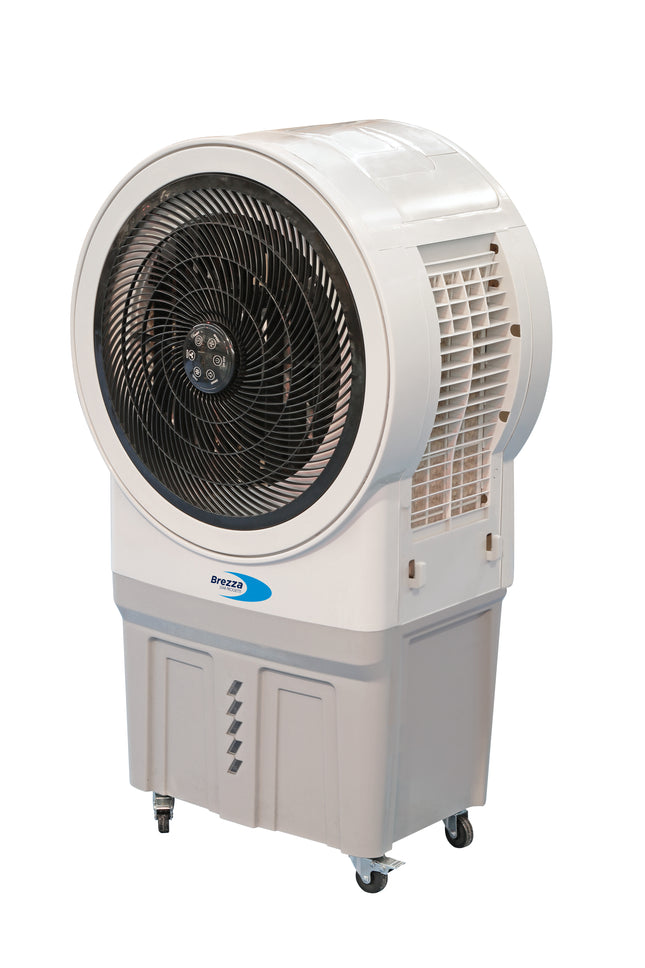

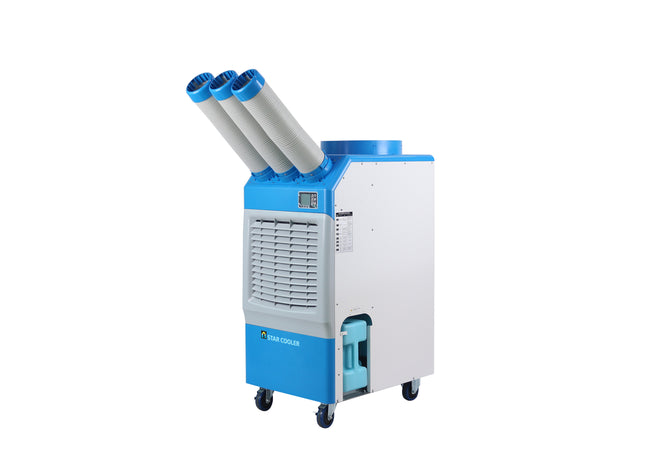

Choosing a patio air conditioner doesn't start with capacity, but with how open your outdoor space is. After all, cooled air dissipates quickly on a fully open patio. In an enclosed veranda or garden room, a compressor air conditioner can effectively lower the temperature. For a semi-open patio, portable outdoor coolers, air circulation, and evaporative cooling are often more practical. Below, you will discover which solution suits your patio, hospitality business, or covered outdoor space in Belgium or the Netherlands.

What is a patio air conditioner?
The term patio air conditioner is used for various systems that improve comfort on or around a patio. A classic air conditioner with a compressor extracts heat from the air and dissipates that heat via an outdoor unit or exhaust hose. Such a system works particularly well when doors, walls, and windows remain largely closed.
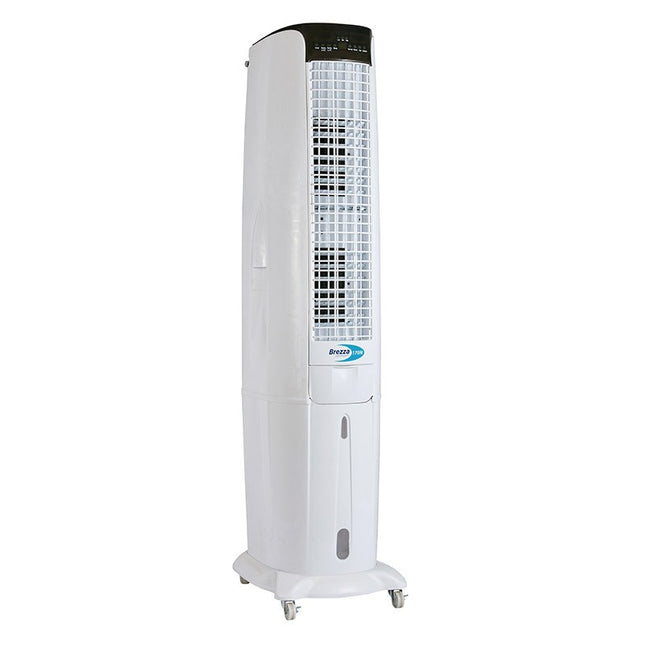
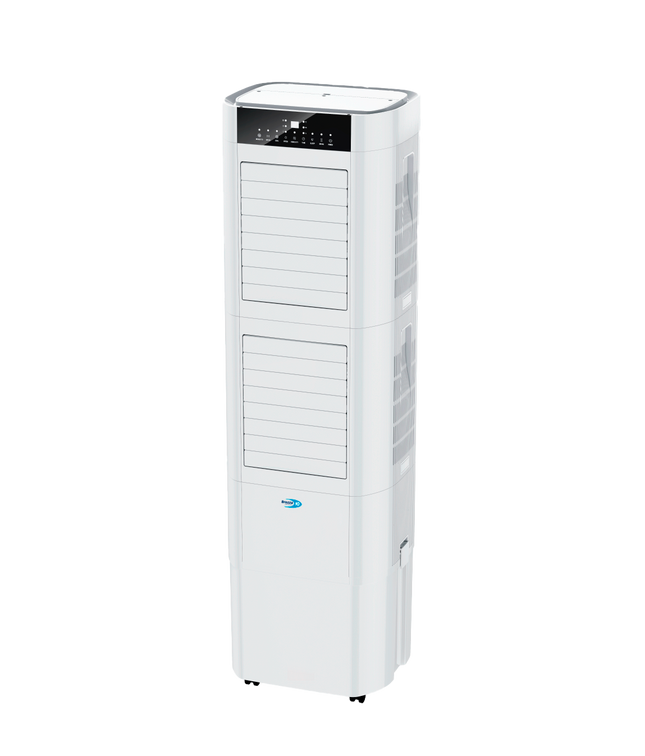
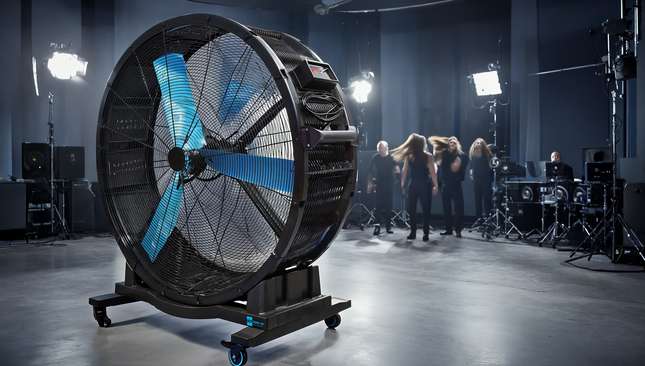
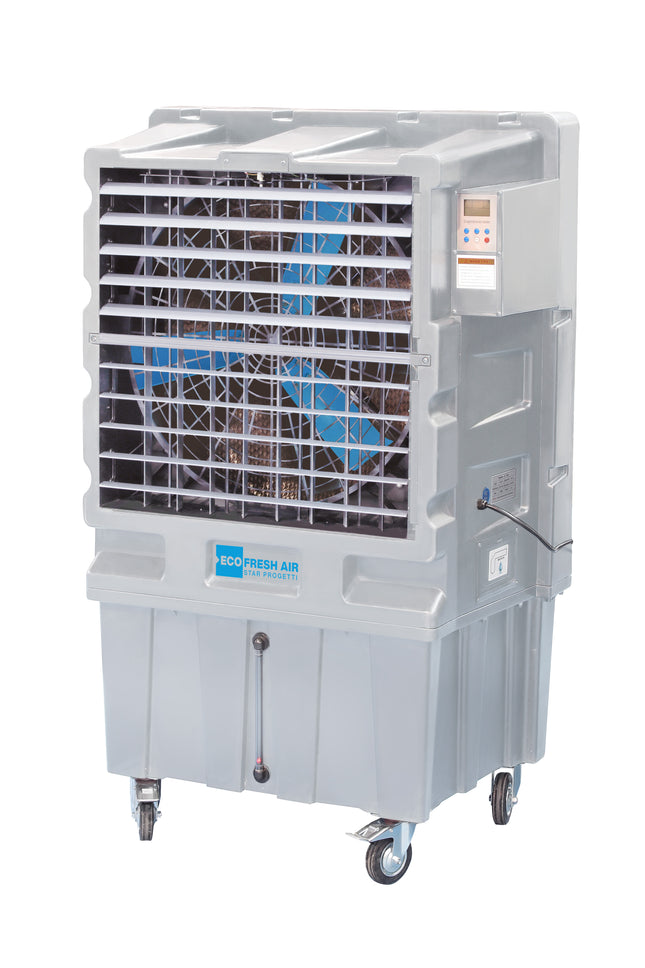
A portable outdoor cooler or air cooler works differently. It directs air past water or a moist cooling element. As a result, the blown air feels cooler, while humidity can rise. This type of patio cooling is most effective with sufficient ventilation. A fan does not lower the air temperature, but the airflow can make the perceived temperature more pleasant.
Which patio air conditioner suits your outdoor space?
First, examine the structural situation. Then, you can make a targeted comparison based on cooling principle, range, and ease of use.
| Situation | Most logical solution | Why? |
|---|---|---|
| Open terrace without fixed walls | Fan, misting or evaporative cooler | Targeted airflow is more effective than trying to cool the entire outside air. |
| Semi-open terrace or canopy | Portable outdoor cooler or powerful air cooler | Ventilation remains possible while creating a comfortable zone around tables or seating. |
| Enclosed veranda or garden room | Mobile compressor air conditioning, mono-split or multi-split | The cooled air remains inside and heat can be vented to the outside in a controlled manner. |
| Large hospitality terrace or event | Multiple purposefully placed units | Zone cooling prevents unnecessary energy consumption and provides more even comfort. |
Do you primarily want to know how to make an open outdoor space more comfortable? Then also check out our explanation on cooling patios. For enclosed business premises with a high heat load, solutions from the industrial air conditioning often more suitable.
Open terrace: cools people and zones, not the outside air
On an open terrace, a standard portable air conditioner has little efficiency. The unit blows out cold air, but warm outside air flows straight back in. Moreover, the absorbed heat has to go somewhere. Without an enclosed space and proper heat dissipation, the effect therefore remains localized and temporary.
Preferably direct the airflow towards the areas where guests or residents are sitting. Combine this approach with sun shading and limit heat buildup around glass, dark facades, and roof panels. Then, position a patio air conditioner or outdoor cooler so that the air can circulate freely and no one is constantly sitting in a strong draft.
Enclosed veranda: when proper air conditioning makes sense
A glass veranda can heat up quickly on sunny days. Because the space can be enclosed, a compressor air conditioner can lower both the temperature and humidity here. A mono-split serves one room with one indoor and one outdoor unit. With a multi-split, multiple indoor units can be connected to a single outdoor unit, for example, for a veranda and an adjacent living space.
A multi-split outdoor unit on the terrace therefore does not automatically cool the terrace itself. The connected indoor units treat the air in enclosed spaces. When making your choice, pay attention to cooling capacity, pipe length, condensate drainage, noise level, and the permitted location of the outdoor unit. It is preferable to have a fixed installation designed and installed by a qualified installer.
Terrace air conditioning for the hospitality industry
A restaurant terrace requires a different approach than a small patio. Occupancy fluctuates, doors are frequently opened, and equipment, lighting, and sunlight add heat. Therefore, divide the terrace into comfort zones. Cool the busiest tables and walkways first, and only expand afterwards.
Check these points before purchasing:
- Openness: is the terrace open, semi-open, or closable?
- Coverage: how many square meters must one unit noticeably serve?
- Airflow: does the cool air reach the seats without causing a draft?
- Sound: is a conversation still possible at the highest usable level?
- Water and condensation: is filling, emptying, or draining safe and simple?
- Electricity: are the connection, circuit, and cable routing suitable for the power consumption?
- Weather resistance: according to the manufacturer, can the device be placed outdoors and is it splash-proof?
- Mobility: can you safely move and store the unit after closing time?
For temporary peak loads, events, and larger commercial applications, a portable industrial air conditioner be a good option. However, always check that the warm exhaust air is discharged outside the zone to be cooled.
How do you determine the required cooling capacity?
Floor area alone is insufficient to size a patio air conditioner. For an enclosed veranda, the volume in cubic meters counts, but glass surface area, sun exposure, insulation, roof type, number of people, and equipment also play a role. A simple watt-per-cubic-meter rule provides at best a first indication. With extensive south-facing glazing, the actual heat load can be significantly higher.
For an open or semi-open terrace, a classic power calculation is even less useful. In that case, focus primarily on air displacement, effective throw length, and the size of the comfort zone. A single very powerful unit in a back corner is often less pleasant to use than multiple quieter units logically distributed across the terrace.
Consumption and efficient use
The power consumption is stated on the rating plate or in the product specifications. Multiply the power consumption in kilowatts by the number of operating hours to estimate the consumption in kWh. A 1.2 kW appliance running at full power for five hours consumes a maximum of approximately 6 kWh. In practice, a thermostat or inverter can reduce the average consumption, depending on the circumstances.
First, use passive measures: sun shading, shade, night ventilation, and closing doors as soon as the air conditioning is running. Next, do not set an enclosed room to an unnecessary cold. On an open terrace, you save energy by cooling only occupied zones and switching off appliances when there are no guests.
Placement, noise and safety
Place a portable patio air conditioner on a flat, stable surface and keep the air intake and exhaust clear. Avoid corners where warm exhaust air is drawn in again. Do not place an outdoor unit directly next to a table, bedroom window, or property line. Additionally, take into account vibrations and local regulations regarding noise and placement.
Not every device is suitable for rain or permanent outdoor use. Therefore, check the manufacturer's protection rating and operating instructions. Do not use an improvised extension cord, avoid tripping hazards, and have fixed electrical connections inspected by a professional. Store mobile equipment in a dry place if the manufacturer does not permit outdoor storage.
Maintenance of your patio air conditioner
Clean filters regularly, as dust and pollen reduce airflow. Empty and clean the air cooler's water reservoir according to the manual. This prevents odors, deposits, and unwanted microbial growth. Also check grilles, hoses, wheels, and cables at the beginning of each season.
A fixed split air conditioner requires periodic professional maintenance. Have the condensate drain, heat exchangers, and cooling operation checked, among other things. Proper maintenance keeps efficiency at a high level and reduces the risk of malfunctions during hot days.
Why choose a patio air conditioner from Warmteshop?
Warmteshop helps private and business customers in Belgium and the Netherlands match technology and application. You compare not only capacity, but also noise, airflow, operation, mobility, and maintenance. This way, you avoid purchasing a system that looks powerful on paper but has little effect in your situation.
Would you like to view models in practice or discuss your terrace plan? Visit one of our showrooms. Additionally, check out our customer reviews for experiences with Warmteshop.
Frequently asked questions about patio air conditioning
Does a standard air conditioner work on an open terrace?
A compressor air conditioner can blow cold air locally outside, but it does not efficiently cool an open terrace as a complete space. For open terraces, targeted airflow, shade, and possibly evaporative cooling usually work better.
Can a patio air conditioner also heat?
Some split and portable air conditioners have a heat pump mode. This is intended for an enclosed space. For an open terrace, choose a heating solution specifically designed for outdoor use.
Is an air cooler the same as an air conditioner?
No. An air conditioner with a compressor removes heat and can lower the measured temperature in a closed room. An air cooler evaporates water and provides a stream of cool air, but usually increases humidity in the process.
Which patio air conditioner is suitable for a veranda?
For a fully enclosed veranda, a well-sized portable compressor air conditioner or split air conditioner are logical options. For a semi-open veranda, a portable outdoor cooler is often more practical. Always take glass surface area, solar load, and insulation into account.
Where should I place a portable patio air conditioner?
Place the unit stably and close enough to the desired comfort zone. Keep vents clear and prevent warm exhaust air from returning. Additionally, check whether the unit is suitable for the chosen outdoor location according to the manufacturer.
View patio air conditioning and matching cooling
Looking to choose a patio air conditioner ? First, determine whether you want to cool an open patio, a semi-open canopy, or an enclosed veranda. Then, compare range, noise level, water usage, power consumption, and maintenance. Also, view our range of patio cooling and our practical solutions for cooling a patio.