
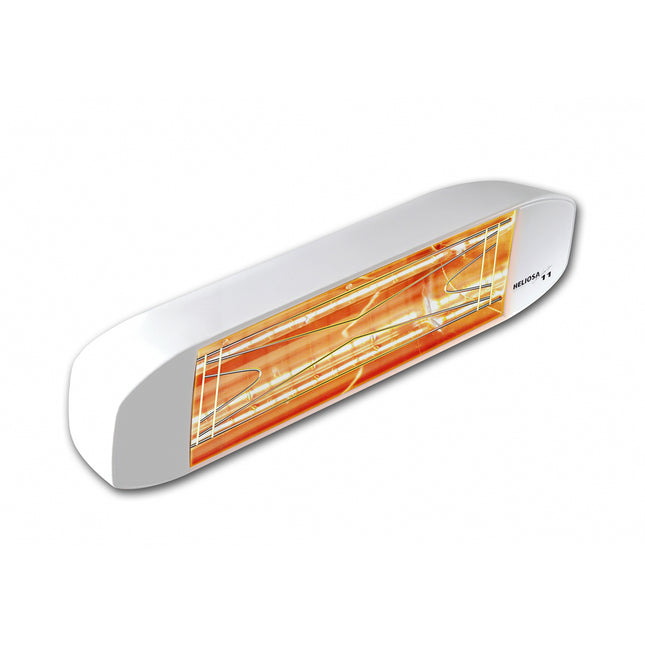
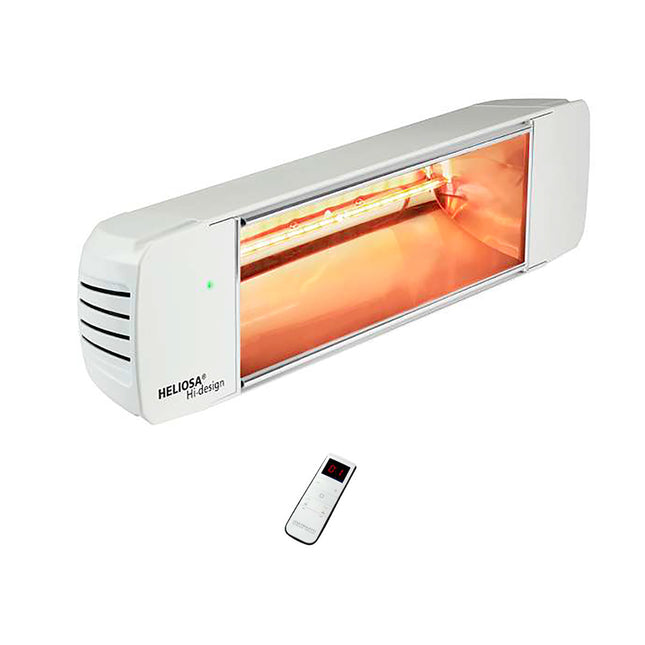
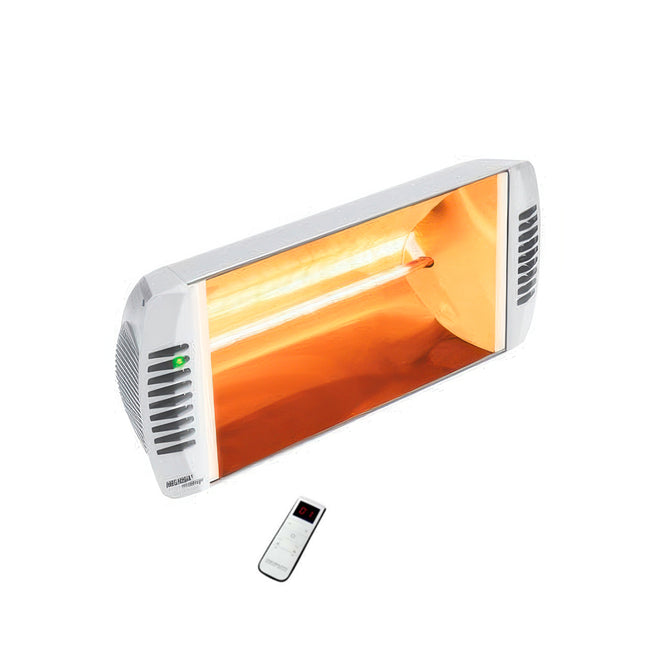
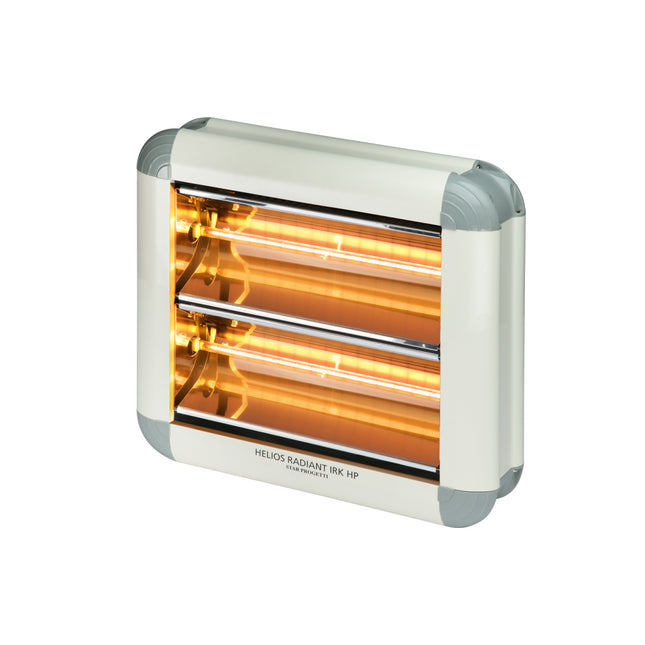
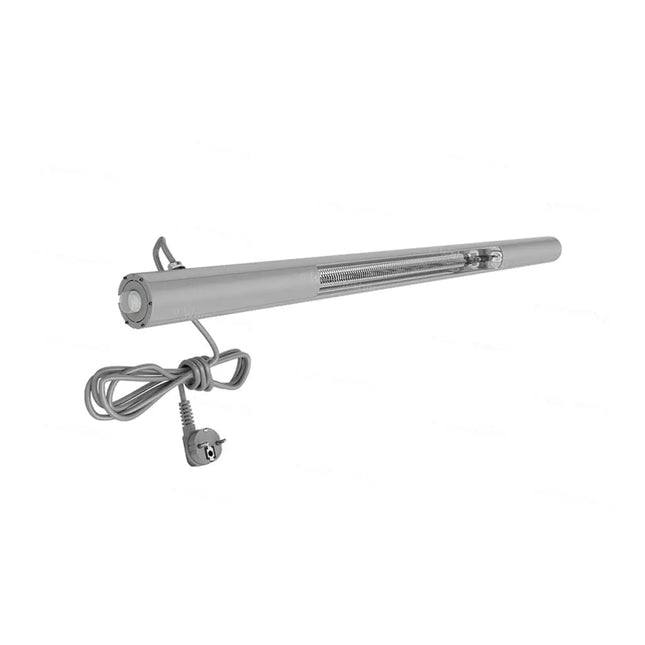
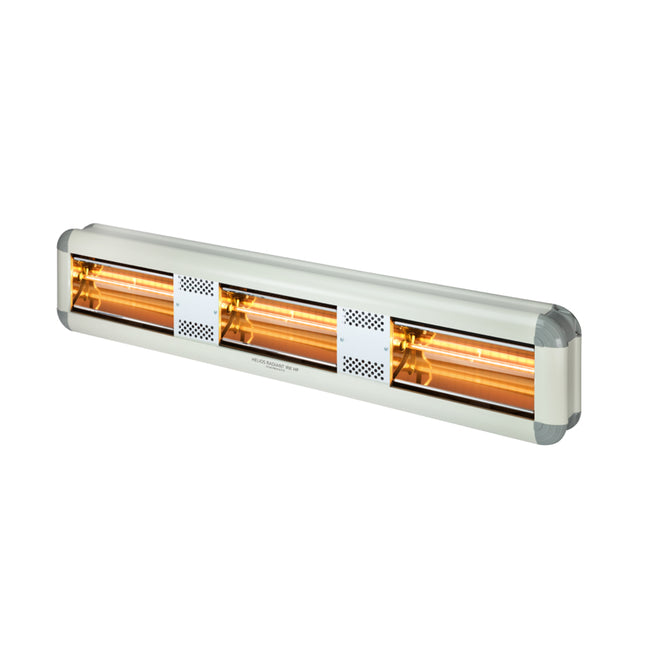
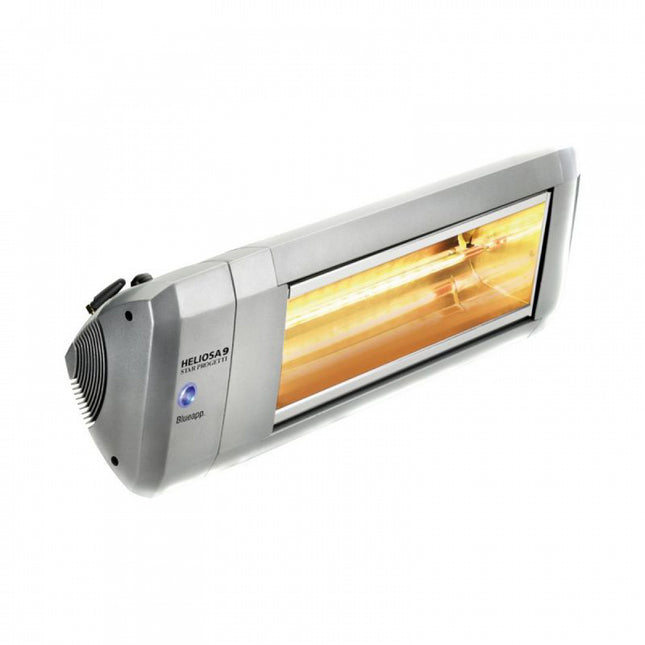
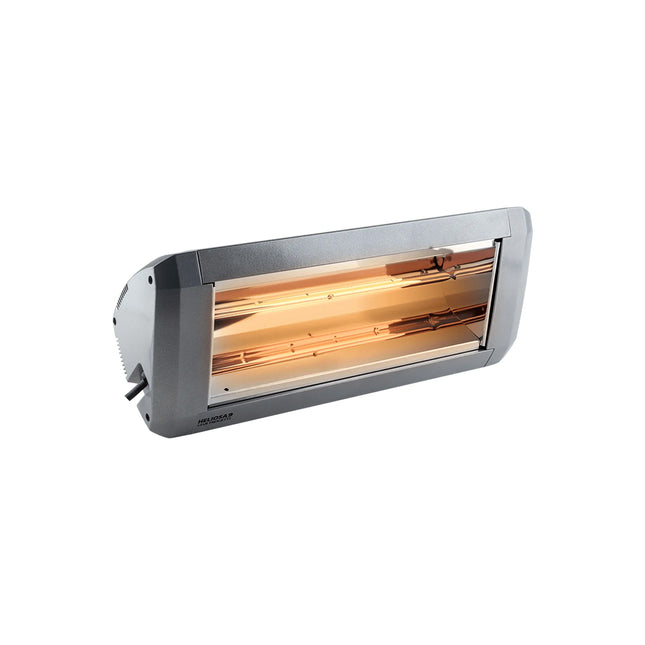
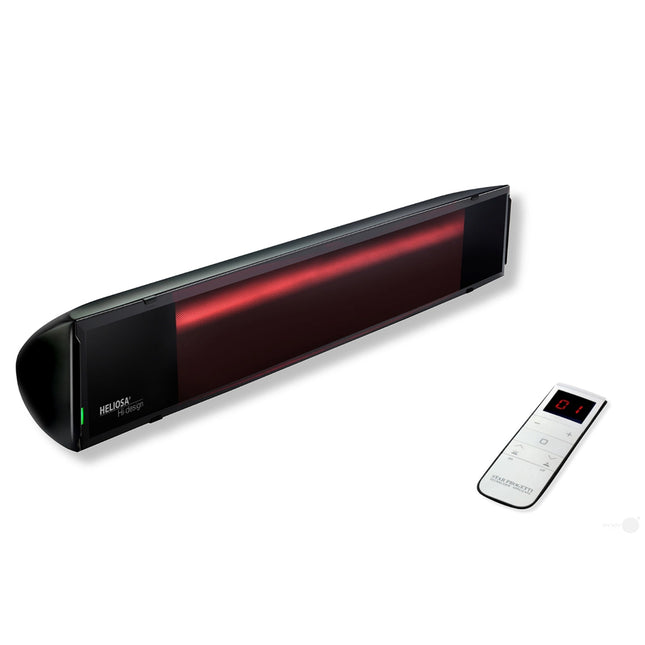
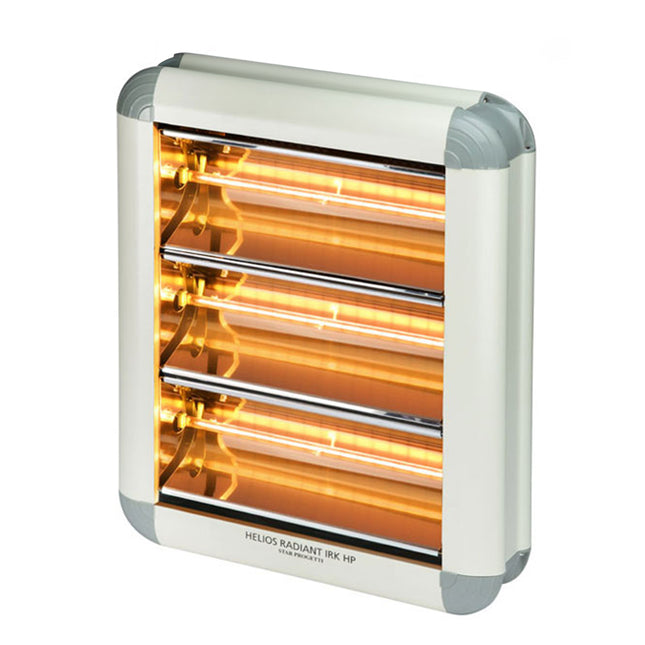
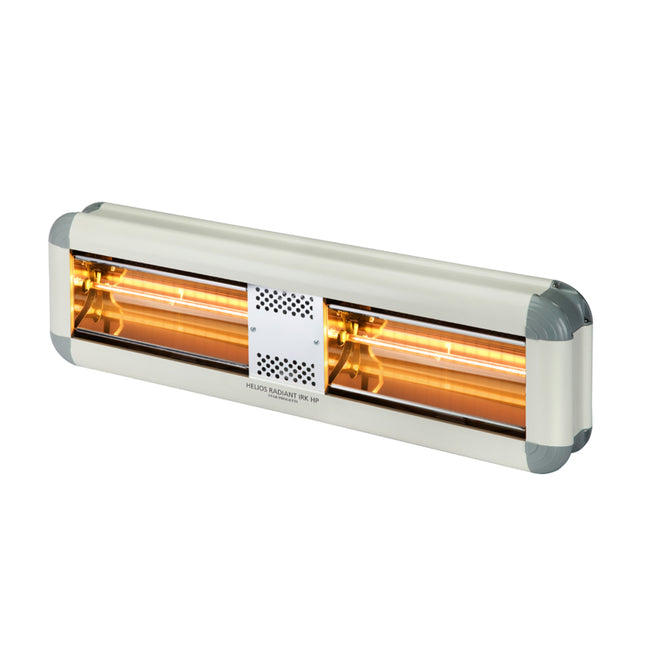
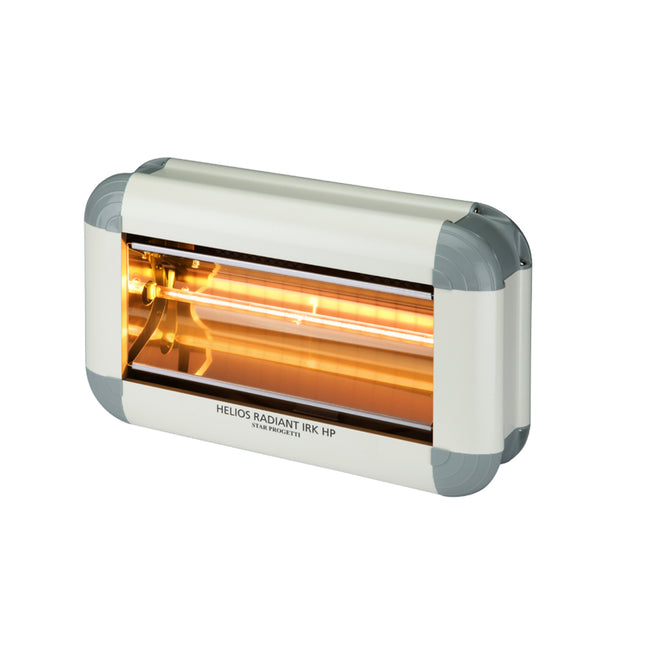

Infrared heating for the garden house for comfortable use all year round
With infrared heating in your garden shed, you can transform a seasonal space into a comfortable place that's usable year-round. While a garden shed is traditionally used only in spring and summer, infrared heating ensures you can also sit, work, or relax comfortably in autumn and winter. Infrared works differently than traditional heaters or convectors. Instead of being released into the air, the heat is emitted directly to people and objects. This makes you feel warmer faster and keeps energy consumption manageable, even in poorly insulated rooms.
How infrared heating works in a garden house
Infrared heating uses radiant heat similar to solar heat. In a garden shed, the panel is mounted on the wall, ceiling, or freestanding, so the heat is directed to the areas where you sit or work. Objects like floors, walls, and furniture absorb this heat and slowly release it into the room. This creates a stable and comfortable climate without drafts or air circulation. This is a major advantage in garden sheds, where temperature loss due to ventilation and wooden structures is often greater than in a home.
Why infrared is so suitable for garden houses
Many garden sheds are poorly or only partially insulated and are used irregularly. Traditional heating is often inefficient in such situations because the space takes a long time to warm up. Infrared heating works instantly. You feel the warmth within minutes, making it perfect for spaces you only use occasionally. Moreover, you do not have to keep the garden shed constantly warm. You only switch on the system when you are using the space. In combination with a smart thermostat or timer, you can easily control when and for how long the heating takes place.
Applications of infrared heating in the garden house
The way a garden house is used determines the ideal infrared solution. In a garden house that functions as a workspace or home office, even, calm heat is important. Wall panels provide pleasant radiant heat without noise or air movement. If the garden house is used as a hobby room or relaxation area, a combination of ceiling heating and a standing infrared heater provide additional flexibility. For garden houses that serve as an extension of the home, for example, next to a conservatory or covered area, infrared is a perfect fit for other heated spaces.
Infrared as main or additional heating
Depending on the insulation and usage, infrared can be used in a garden house as primary or supplementary heating. In well-insulated garden houses, such as modern log cabins or insulated office units, infrared is often sufficient for full heating. In older or less well-insulated garden houses, infrared is often used as supplementary heating to increase comfort. This increases the perceived temperature without incurring high energy costs. For larger or multifunctional spaces, a combination with ceiling infrared heating ensure even heat distribution.
Comfort and livability in all seasons
A well-heated garden house significantly increases the comfort and usability of the space. In winter, the room stays pleasantly warm without condensation problems. In summer, infrared can be used selectively during cooler periods, such as in the evening. Because infrared doesn't create air currents, the indoor climate remains calm and comfortable. This contributes to a pleasant living environment, whether you use the garden house as an office, relaxation area, or hobby space. Compared to traditional heaters, infrared feels more comfortable and natural.
Power and energy consumption in a garden house
The required power for infrared heating in a garden house depends on several factors. The size of the space, the degree of insulation, the material of the walls and roof, and the desired temperature all play a role. In well-insulated garden houses, a lower power output is often sufficient, whereas wooden structures or older garden houses require more power. Warmteshop always performs a custom calculation. As a general guideline, one can assume approximately sixty to one hundred watts per square meter. For background information on consumption and efficiency, it is useful to consult our knowledge articles, such as " is infrared heating economical?".
Combine infrared with other heated spaces
Many garden houses are part of a larger complex, such as a garden with a conservatory, covered area, or adjoining living space. Infrared heating in the garden house can therefore be perfectly coordinated with other applications in the home. For example, anyone already using infrared heating in their living room or officewill find that the same comfort experience can easily be extended to outdoor spaces. By working with separate zones for each room, you maintain maximum control over energy consumption.
Health and indoor climate in a garden house
Infrared heating contributes to a healthy indoor climate because it doesn't displace air. This is especially beneficial in smaller spaces like a garden shed, where dust and moisture can accumulate more quickly. The radiant heat keeps surfaces dry and limits condensation. This reduces the risk of mold and contributes to a pleasant living environment. For people with allergies or respiratory sensitivities, infrared is a comfortable choice because the air quality remains calmer than with convection heating.
Scientific and energetic substantiation
Infrared heating is increasingly mentioned in European energy visions as a suitable solution for spaces with irregular use. According to information published via energy.ec.europa.eu, electric radiant heating, when applied smartly, can contribute to more efficient energy use. This applies in particular to outbuildings, garden sheds, and temporary workspaces where traditional systems are less efficient. The combination of direct heat output and zone heating makes infrared extremely suitable for this type of application.
Advice and experience from Warmteshop
Warmteshop has specialized in infrared heating since 2006 and has heated countless garden houses, log cabins, and outbuildings with custom solutions over the years. With more than 5,000 panels in stock and warehouses in the Netherlands, Belgium, and Germany, we can deliver quickly and think flexibly. In our 30+ showrooms, including locations in Antwerp, Ghent, Hasselt, Kortrijk, Brussels, and Culemborg, we demonstrate how various infrared solutions feel and work in practice. Our service and reliability are supported by independent reviews via Trustprofile.
From idea to detailed heating plan
When choosing infrared heating for your garden shed, we consider more than just the panel. We discuss the space you'll be using, the desired temperature, the available power supply, and the insulation. Based on this, we create a heating plan that outlines the most suitable type of infrared heating and its optimal placement. Whether it's a small garden shed or a fully equipped outdoor workspace, our experience ensures a balance between comfort and efficiency.
Back to the complete overview of infrared panels
Want to discover other infrared solutions? Then browse Warmteshop's full range of infrared panels and perfectly customize your heating for your garden shed and other spaces.

Choosing infrared heating for a garden shed
When it comes to infrared heating for a garden shed, good advice starts with the usage pattern. An occasional hobby room requires rapid zone heating, while a home office is heated for longer periods and more evenly. Next, you assess the insulation, windows, roof, and floor. This prevents you from choosing too little or, conversely, unnecessarily high power.
Insulation makes the difference
An insulated garden house retains radiant heat better. Seal gaps around windows and doors and, where possible, install insulation in the roof and floor. In an uninsulated log cabin, infrared remains useful as targeted heat near a chair or workbench, but do not expect a constant room temperature without structural improvements.
Wall, ceiling or mobile
A wall panel can be directed towards a seating area or desk. Ceiling mounting distributes heat across the entire zone. A portable unit is convenient when the layout changes, but always place it stably and away from flammable materials. Mount cables so that no one trips over them.
Capacity and regulation
Measure the surface area and note ceiling height, glass, and drafts. As a rule of thumb, the power output in a well-insulated garden house is lower than in an open wooden structure. Distribute a large space across multiple panels for even comfort. A thermostat or timer switches off automatically when you leave. As a result, infrared heating for the garden house remains efficient even with varying usage.
- Measure length, width, and height.
- Check insulation and air leaks.
- Determine the desired comfort zone.
- Select power, mounting, and control.
- Have the connection and grounding checked.
Moisture, frost and electrical safety
A garden shed experiences greater temperature variations than a home. Ventilate shortly after use to remove moisture and prevent condensation on cold surfaces. Choose a panel suitable for the environment and place the thermostat in a dry location. Switch off during maintenance, thunderstorms, or water ingress. Have a permanent connection installed by a certified electrician.
Comfort in every season
In the spring, you only heat the workspace. In the autumn, a thermostat extends the evening. In the winter, extra insulation helps retain the heat. In the summer, the panel can remain off, while ventilation provides fresh air. This is how infrared garden shed heating adapts to your schedule.
Maintenance and lifespan
Dust the surface with a soft cloth and check cables, plugs, brackets, and screws annually. Do not use harsh cleaners. An unusual odor, discoloration, or loose part requires immediate shutdown and inspection. Keep the manual and serial number for service.
Frequently Asked Questions
Can infrared fully heat a garden shed?
In a well-insulated garden house, this is possible with sufficient calculated capacity. In an open log cabin, targeted supplementary heating usually works better.
Is infrared economical for occasional use?
Direct heat and zone heating limit warm-up time. Actual consumption depends on power, insulation, temperature, and operating hours.
Where do I place the panel?
Direct it towards the place where you sit or work and maintain clear distances. Ceiling mounting often provides an even distribution.
In short: first, measure the space. Next, improve insulation and select the power output. After that, determine the installation and control. Furthermore, check for moisture and safety. Finally, maintain the panel. This ensures that the infrared heating for your garden shed remains comfortable and reliable.
You set the desired temperature with the thermostat. The control system reduces the power as soon as the room is comfortable. A timer switches off the panel when you leave. Good insulation retains heat longer. Ventilation removes moisture. Regular maintenance extends the lifespan.
You use the garden house as an office, hobby room, or quiet seating area. The thermostat follows your daily rhythm. A sensor detects presence and saves heat when no one is present. The panel heats the table and chair directly. As a result, residents experience comfort quickly. Installers check the circuit and grounding. They also test the control system after installation. Owners keep windows and doors closed during the heating phase. Ventilation then removes moisture. This keeps the structure healthy.
The user selects a comfortable temperature. The thermostat measures the room. The system switches automatically when the limit is reached. An installer securely attaches the brackets. He checks the cable routing and the circuit. The owner tests each zone individually. Afterwards, he records the settings. Regularly removing dust keeps the surface clean. Good ventilation removes moisture. A cover protects the device during storage. These steps support years of use.