
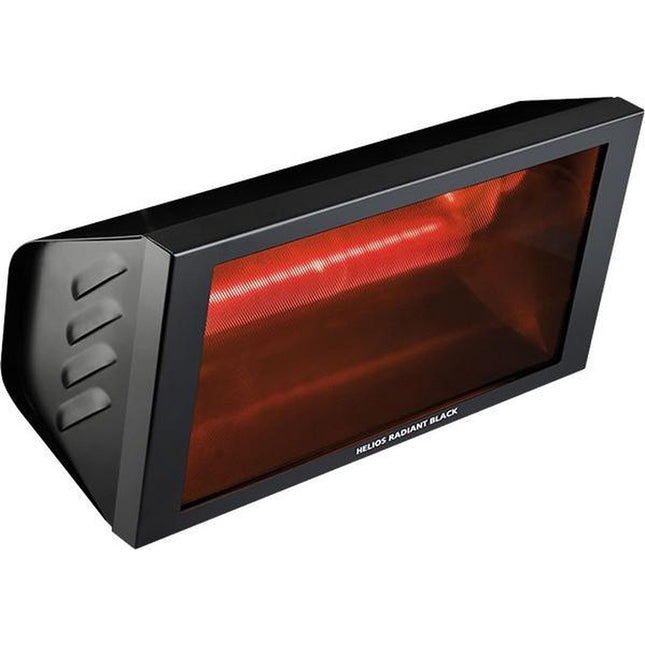
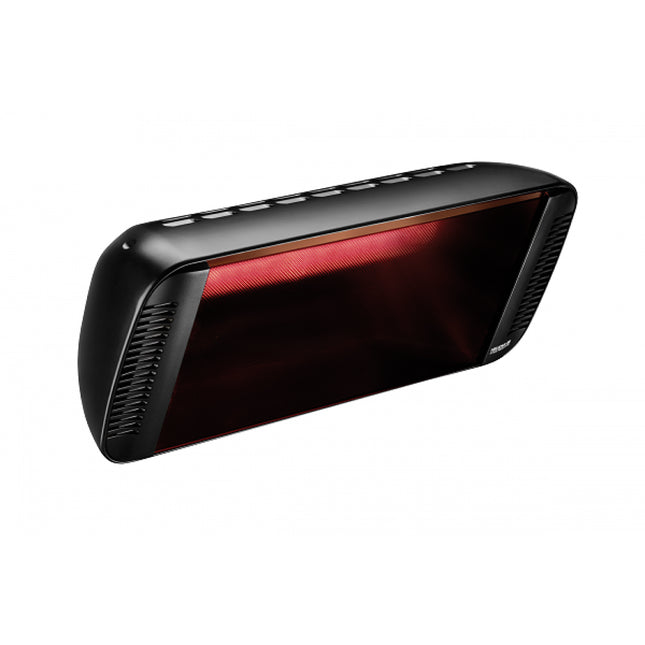
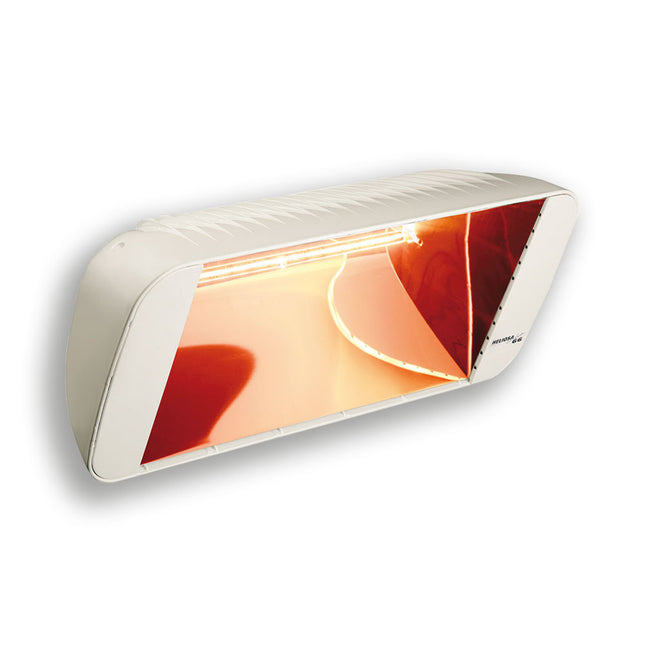
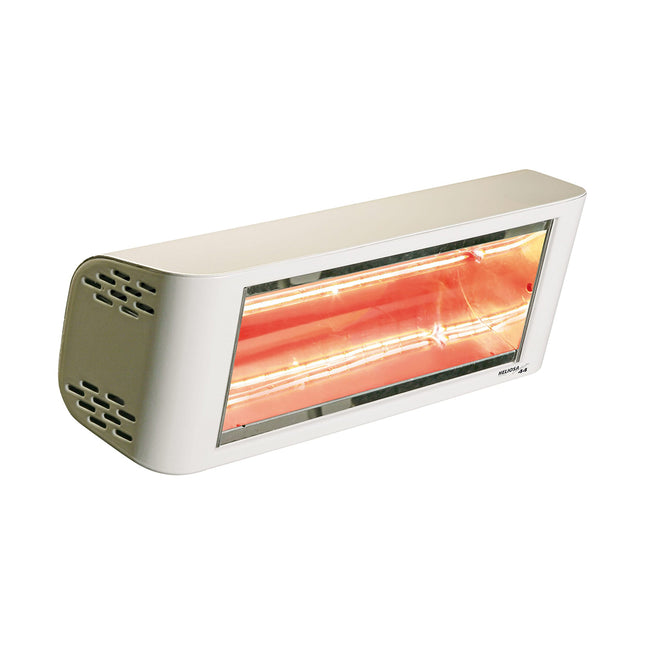

Infrared conservatory heating offers a targeted solution here.
Infrared heating for the conservatory for year-round comfort
With infrared heating for a conservatory, you transform a seasonal space into a comfortable living area for the whole year. Conservatories and glass extensions have a large glass surface area and therefore lose heat quickly. Classic radiators or convectors often struggle to heat these spaces to a comfortable temperature and consume a lot of energy. Infrared heating works differently. The panels do not first heat all the air in the room, but instead direct radiant heat directly to people, furniture, and floors. This ensures a pleasant and stable feeling of warmth, even when the outside temperature is lower or there is a lot of glass present.
Infrared conservatory heating offers a targeted solution here.
How does infrared heating work in a conservatory?
Infrared conservatory heating utilizes long-wave radiant heat. The panels are mounted on the ceiling, on the wall, or freestanding, and direct heat waves into the room. This radiation is absorbed by surfaces such as floors, walls, tables, and chairs. Subsequently, these surfaces slowly release the heat back into the surroundings. Because the heat is immediately perceptible, even at a slightly lower air temperature, a comfortable indoor climate is created without the air being excessively heated. This is a major advantage in conservatories, where the temperature difference between the glass, floor, and seating area is often significant. Infrared reacts quickly, meaning you only need to heat the conservatory when you are actually sitting in it.
Infrared conservatory heating offers a targeted solution here.
Why is infrared so suitable for conservatories and glass extensions?
A conservatory typically features large glass panels and sometimes limited floor insulation. Traditional heating loses a significant amount of heat in such a space through the glass and ventilation. Infrared heating handles this differently. By directly heating people and surfaces rather than the air, less heat is lost. You experience pleasant warmth, even when the air temperature remains lower than in other rooms. This makes infrared particularly efficient in conservatories, garden rooms, or glass extensions. In combination with a smart thermostat, you can easily set a program so that the conservatory is warm when you want it to be, ensuring you do not waste energy when the space is empty.
Infrared conservatory heating offers a targeted solution here.
Applications of infrared heating in different types of greenhouses
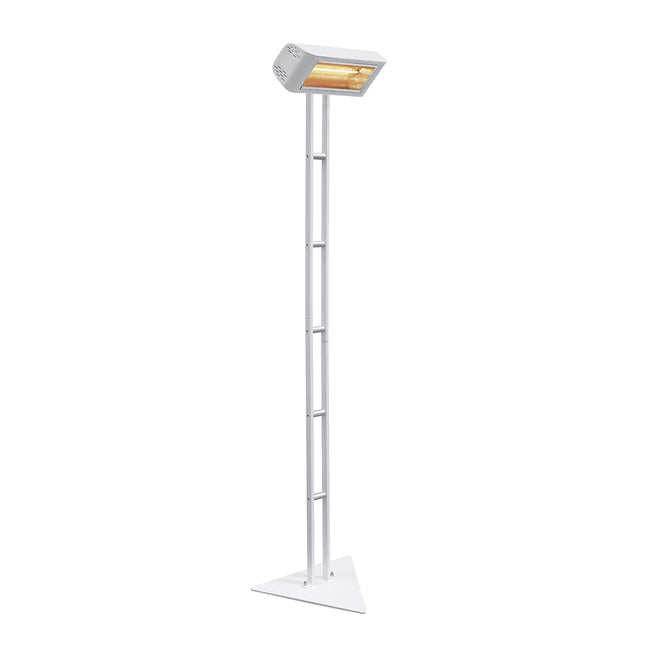
Not every conservatory is the same. Some are used as a cozy seating area or dining room. Others function as a garden room, studio, workspace, or an extension of the living room. Infrared heating solutions can be tailored to all these situations. In a seating area, for example, it is pleasant to place panels on the ceiling so that the heat is distributed evenly throughout the room. In a work or reading nook, an infrared panel on the wall close to the seating area can offer extra comfort. For multifunctional conservatories with a flexible layout, a combination of ceiling panels and a freestanding infrared heater be a good choice. This allows you to create zones with targeted heat without unnecessarily heating the rest of the home.
Infrared conservatory heating offers a targeted solution here.
Infrared as main heating or additional heating in the conservatory
Depending on the insulation and the size of the conservatory, infrared can be used as both primary and supplementary heating. In well-insulated conservatories, it is often possible to use infrared entirely as primary heating. The panels are then strategically placed on the ceiling and optionally supplemented with a wall panel. In older conservatories or with less insulation, infrared is often used as supplementary heating alongside an existing system. For example, you use infrared floor heating or one or more wall panels to increase the perceived temperature in the areas where you sit. This allows you to set the central heating thermostat lower while still keeping the conservatory comfortable.
Infrared conservatory heating offers a targeted solution here.
Comfort experience in conservatory, living room and other living areas
Many people use their conservatory as an extension of the living room. When the temperature in the conservatory drops significantly, the cold creeps into the adjacent rooms, and the living room quickly feels less comfortable. By heating the conservatory with infrared, you prevent cold drafts and the adjacent living room a more stable temperature. The radiant heat is perceived as soft and natural and ensures a pleasant climate without drafts. In combination with good sun protection, you can keep the conservatory comfortably warm in winter and livable in summer. This way, you get the most out of the extra space you have created with a conservatory or garden room.
Consumption, power and dimensions in a conservatory
The required power depends on the size of the conservatory, the amount of glass, the degree of insulation, and the intended use. Well-insulated conservatories with triple glazing often require less power than older extensions with single glazing. Warmteshop calculates the required power based on your specific situation. This takes into account factors such as the floor structure, ceiling height, and the position of the panels. As a general guideline, a power output of between fifty and one hundred watts per square meter can be assumed, depending on insulation and usage. Those wishing to gain insight into consumption and costs can find additional information in knowledge articles on efficiency and energy consumption, such as " is infrared heating economical" and comparative analyses in "comparing infrared heating".
Combinations with other infrared solutions
A conservatory is often part of a larger heating system within the home. Infrared heating in a conservatory combines perfectly with other infrared solutions in the home. For example, infrared heating in the bathroom provide quick and comfortable warmth in damp areas, while wall panels in other rooms offer additional comfort. In conservatories where a lot of time is spent, a combination of ceiling panels and a portion of underfloor infrared can create a very even and luxurious heating experience. By working with zones and smart thermostats, you only heat the rooms that are being used, which keeps total energy consumption under control.
Health and indoor climate in a conservatory
In a conservatory, air quality can fluctuate significantly due to temperature differences, solar radiation, and ventilation. Infrared heating contributes to a stable and healthy indoor climate because forced air circulation is not required. The heat is radiant and creates minimal airflow. This results in less dust movement and a calmer indoor climate, which is beneficial for people with allergies or sensitive airways. The fact that objects like floors and walls heat up instead of just the air also helps limit moisture problems and condensation. This is particularly relevant in conservatories with extensive glass, where temperature fluctuations can quickly cause condensation.
Scientific evidence and energy policy
Infrared electric heating systems are increasingly integrated into modern energy concepts. Various publications on energy platforms, such as energy.ec.europa.eu, describe how electric heating combined with sustainable power generation can play a key role in the energy transition. The fact that infrared provides instant heat and is easily controlled by zone makes it particularly suitable for spaces such as conservatories, garden rooms, and other home extensions. Furthermore, when the electricity is (partly) generated by solar panels, using infrared heating in a conservatory can be a very sustainable choice.
Advice and guidance by Warmteshop
Choosing the right infrared solution for your conservatory requires a combination of technical knowledge and practical experience. Warmteshop guides you step by step through this process. We have specialized in infrared heating since 2006 and have since grown into the market leader in the Benelux. With more than 5,000 panels in stock and multiple warehouses in the Netherlands, Belgium, and Germany, we combine a wide range with fast delivery. In our 30+ showrooms– such as the locations in Antwerp, Ghent, Hasselt, Kortrijk, Brussels, and Culemborg – we display actual working installations so that you can experience for yourself how infrared heating feels in a conservatory. Our expertise is supported by customer reviews and independent verification via Trustprofile, which stands for reliability and high customer satisfaction.
From initial idea to detailed heating plan
If you're considering infrared heating for your conservatory, we'll examine your entire situation together. We'll discuss the space's use, current insulation, floor type, and existing heating. Based on this, we'll develop a heating plan that clearly outlines which panels are suitable, how much power is needed, and the best placement options. We'll also advise on control options, such as a central control system or individual thermostats for each zone. Our experience with residential, office, and commercial projects means we know exactly what works in practice and how to balance comfort and energy consumption.
Learn more about infrared heating in your home
If you want to heat not only your conservatory but also other rooms in your home in an energy-efficient way, it's worth exploring our other applications. For living spaces, infrared heating in the living room considerable comfort and flexibility. In damp rooms, a dedicated bathroom heating create a dry and pleasant climate. If you want to use the floor as the main surface, infrared underfloor heatingprovide very even heat. By combining different solutions, you can create a complete and future-proof heating concept.
Back to the complete overview of infrared panels
View Warmteshop's full range of infrared panels and discover which solution best suits your conservatory, garden room, or glass extension.

Choosing infrared heating for a conservatory
For infrared heating in a conservatory, first determine how often and for what purpose you use the space. A seating area requires targeted heat, while a conservatory used as an office requires a uniform temperature. Next, assess insulation, glass surface area, ceiling height, and drafts. This allows you to choose the right power output without unnecessary consumption.
Wall or ceiling mounting
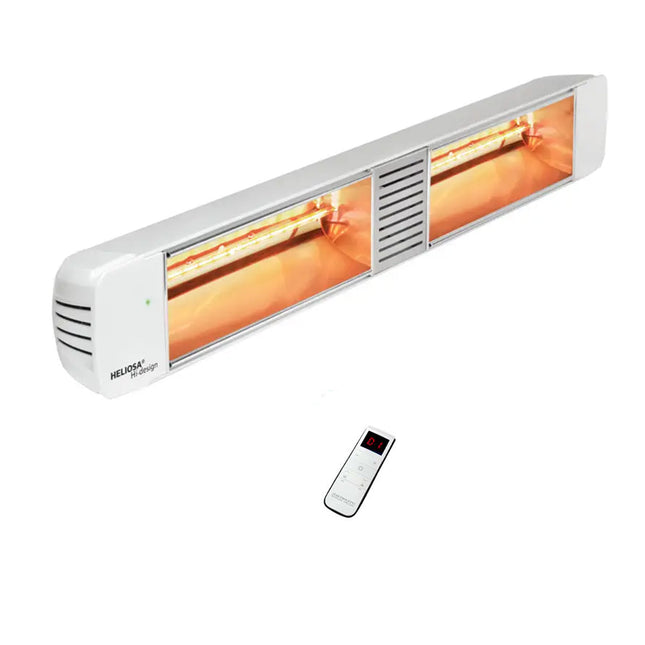
Ceiling panels keep the floor clear and distribute heat downwards. Wall panels direct radiation onto a sofa, table, or desk. Maintain unobstructed distances from glass, curtains, and furniture. In a conservatory with a lot of glass, proper placement prevents cold drafts near the seating area.
Calculate power
Measure the length, width, and height. Note single glazing, sliding doors, open connections, and the desired temperature. A well-insulated conservatory requires less power than an old extension. Multiple smaller panels often provide a more even result than a single heavy unit. If in doubt, have a heat loss calculation performed.
- Measure the net area per zone.
- Check insulation, glass, and air leaks.
- Determine the desired mounting height.
- Select power and thermostat.
- Have the circuit, grounding, and connection checked.
Efficient use in every season
A conservatory is often empty for part of the day. With infrared conservatory heating, you only switch on the heat when you are using the space. First, you heat the seating area; then the thermostat reduces the power. Furthermore, closed doors and good sun shading limit heat loss. In the summer, the panel remains off, while ventilation ensures a pleasant climate.
Moisture and safety
Large temperature differences can cause condensation. Therefore, ventilate briefly and vigorously after use. Choose a panel suitable for the moisture load and place the control unit in a dry location. Switch off during maintenance, thunderstorms, or water ingress. Have fixed wiring and earth leakage protection installed by a certified electrician.
Combining comfort with other spaces
A conservatory often serves as an extension of the living room or garden room. Work with separate zones so that you only heat the areas you are using. A smart thermostat can follow a schedule and automatically lowers the temperature during your absence. This ensures that infrared heating in the conservatory remains comfortable without the rest of the home becoming unnecessarily warm.
Maintenance and lifespan
Dust the panel with a soft cloth and check cables, plugs, brackets, and mounting annually. Do not use aggressive cleaners. An unusual odor, discoloration, or loose part requires immediate shutdown and inspection.
Frequently Asked Questions
Can infrared fully heat a conservatory?
Yes, provided the capacity and insulation are calculated correctly. In very drafty conservatories, targeted zone heating usually works better.
How quickly does it feel warm?
Radiant heat is quickly felt on people and surfaces. The thermostat prevents unnecessarily long operating hours.
Is mounting on glass possible?
Mount on a sturdy wall or ceiling structure and not directly on glass. Maintain the prescribed distance from windows.
In short: first, you measure the conservatory. Next, you assess the insulation and glass. After that, you choose the power output and installation. Furthermore, you check moisture, ventilation, and safety. Finally, you program the thermostat. This ensures that the infrared heating for the conservatory remains pleasant and efficient.
A well-placed infrared heater for a conservatory heats precisely the zone where you are sitting. Even in changing weather, infrared heating for a conservatory remains quickly noticeable. With maintenance, infrared heating for a conservatory remains reliable.