

Infrared patio heater: The complete guide to a warm patio in 2026
, by Warmteshop, 21 min read
, by Warmteshop, 21 min read
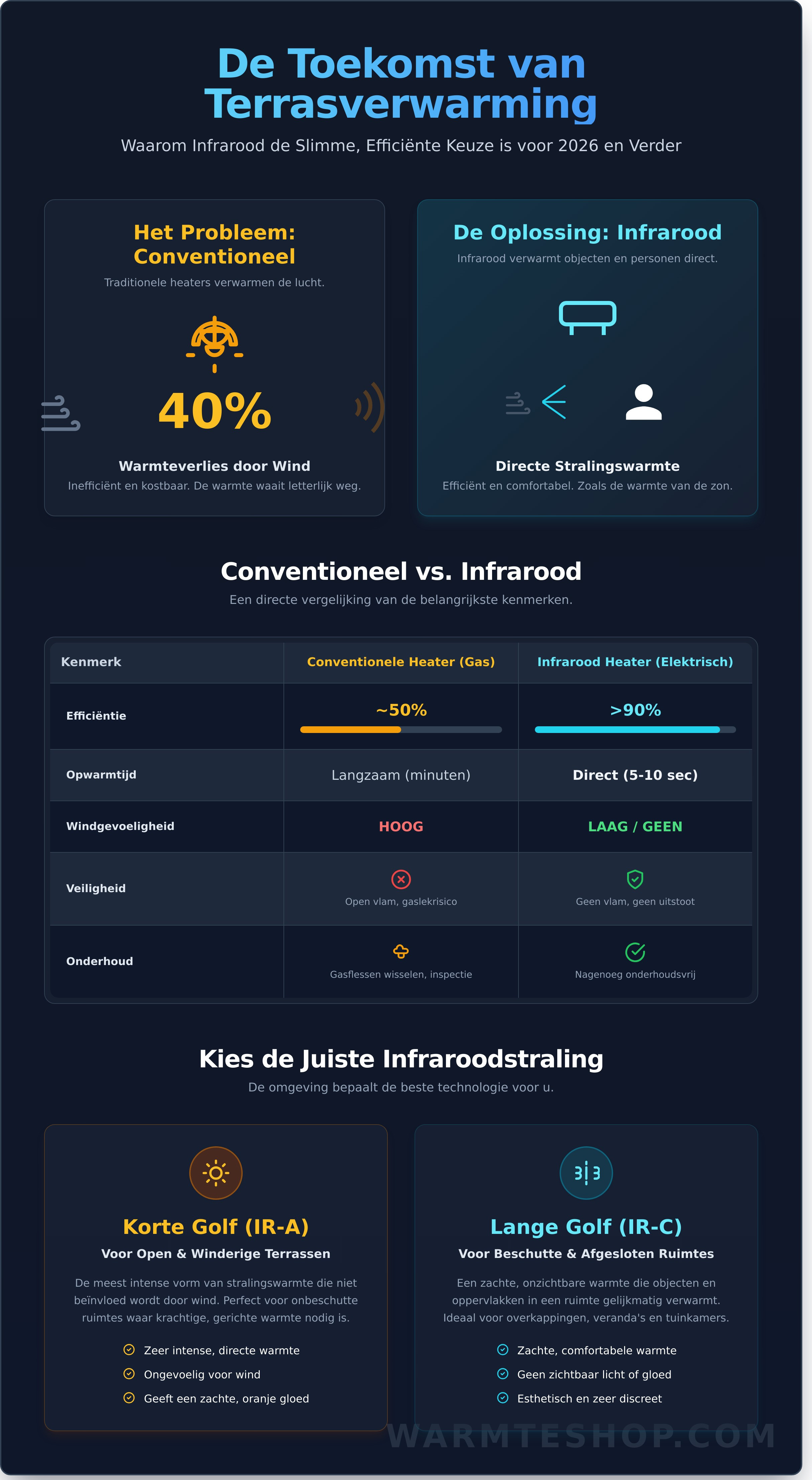
Did you know that up to 40% of the heat from a conventional patio heater is immediately lost to the wind? It's a frustration familiar to many patio enthusiasts: the heat blows away before you can even enjoy it, while..
Did you know that up to 40% of the heat from a conventional patio heater is immediately lost to the wind? It's a frustration many patio enthusiasts know: the heat blows away before you can even enjoy it, while your energy bill rises unnecessarily. This unfairly limits outdoor living to just a few months a year, while your patio should be an extension of your home.
Fortunately, there is a smarter, more sustainable way to guarantee comfort all year round. In this complete guide for 2026, you will discover how infrared patio heating heats not the air, but directly you and your surroundings, similar to the pleasant warmth of the sun. We promise to guide you toward a future-proof solution that transforms your patio into an energy-efficient oasis of comfort. Prepare yourself for an in-depth analysis of the most efficient models, a clear explanation of the required power, and practical tips for an aesthetic installation that perfectly complements your home.
Making evenings on the terrace longer and more pleasant is a wish of many. For decades, noisy gas heaters were the norm, but those days are over. The future of outdoor comfort is quiet, efficient, and based on a principle we experience every day: the warmth of the sun. Electric infrared patio heating is not just an alternative; it is the logical and superior successor that sets the standard for comfort, sustainability, and design.
The core of the technology is direct radiant heat. Traditional convectors or gas heaters attempt to heat the air, an almost impossible task outdoors. As soon as the warm air rises, it is blown away by the slightest gust of wind; a phenomenon known as the "wind effect". This results in an energy waste of more than 50%. Infrared technology approaches this fundamentally differently. It does not heat the air, but emits safe electromagnetic waves that heat objects and people directly. Just as the sun warms your skin on a spring day, even when the air is still cool. But what exactly is an infrared heater ? It is a device that mimics the most natural form of heat transfer, ensuring that no precious energy is lost to the open air.
This technological superiority is reinforced by a societal shift. With a growing number of cities and municipalities restricting the sale of gas-fired patio heaters starting in 2026, switching to electric solutions is becoming a future-proof choice. This transition isn't a limitation, but an upgrade to a smarter, cleaner, and more efficient system.
Switching to electric offers immediate, tangible benefits that significantly increase comfort and ease of use. The technology is designed for the modern user who values efficiency and safety.
A modern patio heater is more than just a functional device; it's an integral part of your outdoor space. The aesthetic possibilities of infrared patio heaters surpass those of traditional systems in every way.
Not every infrared patio heater works the same way. The effectiveness of a heater depends entirely on the wavelength of the infrared radiation it emits. Just like the sun, which produces a broad spectrum of radiation, our heating systems use specific parts of the electromagnetic spectrum. We distinguish three types: short wave (IR-A), medium wave (IR-B), and long wave (IR-C). For outdoor use, short and long waves are particularly relevant, and the choice between these two is determined by one crucial factor: your environment.
The fundamental question is: do you want to heat an open, breezy patio or a sheltered, enclosed outdoor space? The answer to this question determines which technology is not only comfortable but also energy-efficient. The wrong choice leads to heat loss and unnecessarily high energy bills. Let's break down the science behind it to ensure you make the right investment.
Short-wave infrared radiation, produced by halogen or quartz elements that glow to temperatures above 1800°C, is the most intense form of radiant heat. These high-energy waves have a unique property: they do not heat the air, but penetrate it with minimal resistance to directly warm the objects and people within their reach. This direct process is the key to the efficiency of radiant heat in outdoor environments. A gust of wind may blow the heated air away, but the rays themselves reach you undiminished. You feel the heat directly on your skin, comparable to the feeling of the sun on a crisp spring day.
Although traditional short-wave radiators produce clearly visible light, technology is evolving rapidly. The latest Ultra Low Glare models reduce light output by more than 80%, while maintaining the same heat output. The "no-glare" technologies coming to market before 2026 promise a completely invisible yet equally powerful heat experience.
Long-wave radiators, often with ceramic or carbon elements, operate at significantly lower temperatures, usually between 100°C and 400°C. These so-called "dark radiators" emit no visible light and produce a much milder, indirect heat. The longer, less intense waves heat not only objects but also the surrounding air. This is ideal in an enclosed space, such as a conservatory, garden room, or covered veranda. The air is gradually heated, creating a very comfortable and even feeling of warmth.
However, if you place a long-wave radiator on an open patio, the heated air is immediately blown away by the wind. The heat never reaches you, and the energy is literally lost in the outside air. This technology is therefore perfect for completely wind-tight spaces and is technically comparable to the panels we offer in our range of infrared heating . Choosing the right wavelength is the first step towards a sustainable and comfortable outdoor space. Not sure which solution is best for your patio? Ask our team for a customized analysis.
Choosing the right infrared patio heater is more than just a matter of design. It's a balancing act between power, environmental factors, and practical installation. A well-considered choice guarantees not only comfortable warmth but also efficient and safe operation. Follow this step-by-step guide to find the perfect match for your patio, balcony, or covered area.
A successful installation starts with four crucial considerations:
Determining the correct wattage is key to efficient heating. As a rule of thumb, Warmteshop recommends a required wattage of 175 watts per square meter for sheltered locations, increasing to 250 watts per m² for open, windy patios. For a 10 m² covered patio, a heater of approximately 1800 watts is therefore an excellent starting point. The mounting height plays a direct role in this; the higher the heater is hung, the more wattage is needed to effectively concentrate the heat on the seating area. It's often strategically smarter to install two smaller 1500 watt heaters than one large 3000 watt unit. This ensures more even heat distribution and prevents cold zones on your patio.
The influence of wind is a factor you shouldn't ignore. Because infrared radiation directly heats objects and people, not the surrounding air, the system is significantly less sensitive to wind than traditional gas heaters. However, a strong gust of wind can reduce comfort. For fully open patios, we therefore recommend short-wave infrared heaters (IR-A). These provide intense, direct heat that is hardly affected by air movement. For a sheltered balcony or conservatory, a medium-wave heater (IR-B) is often a better choice, as it provides a softer, more diffused heat.
Before purchasing a powerful infrared patio heater , a look at your fuse box is essential. A standard circuit in a Dutch home is fused at 16 Amperes (A). Using the formula Amperes = Watts / Volts, you can easily calculate the load a heater places on your system. For example, a 2500-Watt model on a 230-Volt connection consumes 10.9 A. This leaves little room for other appliances on the same circuit. For heaters above 2500 Watts, a separate, dedicated circuit is often the safest and most reliable solution.
The final step is choosing between a mobile or fixed model. Freestanding models offer ultimate flexibility. You can easily move the heat source to wherever you are sitting at the time, ideal for changing layouts or rental properties. Fixed wall or ceiling mounting, on the other hand, offers a permanent, space-saving, and sleek solution. Once installed, these models are perfectly integrated into your outdoor space and do not pose an obstacle. For safe and correct installation, it is crucial to carefully follow the manufacturer's manual and respect the official Installation Safety Guidelines , particularly regarding the distance to flammable materials. Whether you choose flexibility or a sleek look, you will find a suitable patio heater that meets your needs.
An infrared patio heater only reaches its full potential when its installation and positioning are meticulously taken care of. Just like the sun, which is most effective when its rays fall at the right angle, your heater requires strategic placement. This not only guarantees comfortable and even heat distribution but also ensures safety and energy efficiency. A well-thought-out installation is the key to years of worry-free enjoyment.
The effectiveness of the radiant heat is largely determined by the mounting angle. A 45-degree angle is generally recommended as ideal. This angle ensures that the infrared rays cover the largest possible surface area without losing heat intensity. Too steep an angle primarily heats your guests' heads, while too shallow an angle spreads the heat over an excessively large and inefficient area. Think of the sun at midday; direct and intense. That's the effect you want to recreate on your patio.
Safety is paramount. Because the heaters generate significant radiant heat, it's crucial to maintain the prescribed minimum distances from other objects. This prevents overheating and fire hazards. As a rule of thumb, use the following distances:
From an electrical perspective, an infrared patio heater careful attention. Due to the high peak power when switched on, a dedicated circuit breaker in the meter box is strongly recommended. This prevents overload. Also, use a slow-blow fuse (C-characteristic). These fuses are designed to handle the brief, high inrush current without tripping immediately, which can happen with a standard fuse (B-characteristic).
These principles of safe electrical installation aren't unique to patio heaters; they apply to all powerful outdoor systems. Consider, for example, the installation of electric fencing, for which specialized online stores like villanypasztor.hu offer comprehensive solutions.
The location determines the required protection class, indicated by an IP rating. This rating indicates the degree of protection the device offers against dust and moisture. For a completely uncovered patio exposed to rain, an IP65 rating (completely dust- and splash-proof) is the absolute minimum requirement. If the heater is installed in a sheltered location, such as under a veranda or canopy, an IP24 rating (splash-proof) may suffice.
For optimal warmth on a larger patio, it's recommended to use two or more heaters that radiate across the patio. This eliminates "radiant shadows"—cold spots behind objects like table legs or chairs—and creates a blanket of warmth. Consider your patio's layout; a large parasol base or planter can block the heat. Mount the heater so that the rays can reach the seating area unobstructed.
Modern comfort goes hand in hand with smart energy management. By equipping your patio heater with a dimmer, you can adjust the heat intensity to the outdoor temperature, which can save up to 30% on your energy costs. Motion sensors ensure that the heater only switches on when someone is actually on the patio. For ultimate convenience and efficiency, integrate the system with smart thermostatsthat regulate the temperature fully automatically. Many systems can now even be controlled via a smartphone app, allowing you to create the perfect atmosphere from your lounge set.
Proper installation may seem complex, but it's essential for performance and safety. Our experts are happy to help you with a personalized installation plan. Request a free consultation and get the most out of your patio heater.
A conscious choice for comfort and sustainability requires more than just a product. It requires a partner who understands your situation and offers a solution that seamlessly matches your needs. At Warmteshop, we view the transition to electric heating as a complete package. From the initial consultation to the final installation, we guide you towards a future-proof patio heater. Our network of more than 30 showrooms in the Benelux is the heart of this service, where our experts are ready to translate theory into tangible comfort.
The foundation of every effective solution is a precise analysis. That's why we offer customized heat calculations for both private individuals and hospitality businesses. We analyze the surface area, the shelter, the height, and your specific purposes. The result is a clear plan that guarantees that every kilowatt-hour of energy is converted directly into pleasant radiant heat, without waste. This precision is the key to maximum efficiency.
Our vision extends beyond simply saving on your current energy bill. We believe in a completely carbon-neutral future. The ultimate step in this direction is connecting your infrared patio heating to your own solar panels. During the day, you generate free, green electricity, which you use in the evening to heat your patio. This is no longer a futuristic vision; it is a feasible and smart investment in comfort and independence that we help you realize.
For hospitality operators, a comfortable terrace means a direct improvement in profitability. Guests stay longer, consume more, and return more often. Our infrared solutions are up to 65% more efficient than traditional gas heaters, resulting in significantly lower operating costs. For covered terraces or large event spaces, our industrial air heaters offer a robust and powerful solution. The investment often pays for itself within just two seasons through the combination of energy savings and increased revenue. This focus on operational efficiency is a trend across the entire sector, where digital tools such as E-Étterem 's restaurant software also help to streamline processes behind the scenes.
Heat should be felt, not just read. In our showrooms, you'll experience the difference between various models and the unique, direct heat of infrared. Our experts will provide personalized advice, tailored to your photos or building plans. They'll translate your wishes into the most suitable solution, ensuring you make the right choice. A visit is the crucial step from orientation to implementation.
Are you ready to make the switch to smart, sustainable heating? Our specialists are happy to take the time to help you. Schedule your free, no-obligation heating consultation today at a Warmteshop in your area and discover the perfect infrared patio heater for your needs.
To complete the experience, we offer a professional installation service. Our certified technicians ensure expert and safe installation, perfectly concealed and fully compatible with your electrical system. This way, you can enjoy a worry-free journey to optimal patio comfort from start to finish.
The choice for future-proof outdoor comfort is clear. You now know that radiant heat, just like the sun, warms objects and people directly without wasting energy on the wind. The right technology, whether short-wave or long-wave, and strategic positioning are crucial for maximum efficiency and that pleasant atmosphere on chilly evenings.
Switching to the right heating solution is an important decision. At Warmteshop, we're here to guide you with over 15 years of experience in infrared technology. Our experts in more than 30 showrooms are happy to help you find the ideal infrared patio heater that perfectly suits your needs, while our certified installers throughout the Benelux guarantee a flawless installation.
Are you ready to extend your evenings and enjoy your outdoor space all year round? Discover our collection of infrared patio heaters and extend your outdoor season.
Of course, the right atmosphere is not determined solely by warmth. Good company and delicious food are at least as important. For those who want to take the culinary experience on the terrace to the next level, purchasing a monolith kamado BBQ an excellent investment in outdoor enjoyment.
Make your patio the warmest and most cozy place in your home.
A 2000-watt infrared patio heater consumes 2 kWh per hour at full power. At an average energy rate of €0.30 per kWh, this equates to €0.60 per hour. Because the radiant heat is immediately noticeable, the heater doesn't need to run continuously. This makes it a very efficient choice compared to gas heaters, which often cost over €2.50 per hour and lose a lot of heat to the outside air.
Yes, most modern patio heaters can be left outdoors year-round thanks to their IP rating. A model with an IP65 rating is completely dust- and water-jet-proof and can therefore withstand all weather conditions. Models with a lower rating, such as IP24, are only splash-proof and should ideally be installed under a canopy. Always check the specifications of your model for a durable and safe installation.
The ideal mounting height for a patio heater is generally between 2.10 and 2.50 meters from the ground. This height ensures optimal heat distribution across the seating area, without the radiation feeling too intense. For higher-output models (2500 watts and above), a slightly higher height of up to 2.70 meters may be desirable. Correct installation ensures the most comfortable and efficient heating experience.
No, the long-wave infrared radiation (IR-A) from a patio heater is completely safe and harmless. This radiation is comparable to the heat of the sun and is even used therapeutically in infrared cabins. The heat penetrates only a few millimeters into the skin and warms your body directly, which is experienced as very pleasant and relaxing. There is no harmful UV radiation.
The main difference is the amount of visible light the heater emits. A heater with red light (low-glare) produces not only heat but also an atmospheric orange-red glow. A "no-glare" or dark heater uses a ceramic element that emits virtually no light but delivers very intense heat. The choice depends on your personal preference: ambient lighting with warmth, or just a discreet and powerful heat source.
Yes, most patio heaters with a capacity up to 2200 watts can be safely connected to a standard 230V socket. It's important that the circuit in question isn't being loaded by other large consumers at the same time. More powerful models, from 3000 watts, often require a separate, fused 16-amp circuit. If in doubt, consult a certified electrician to safely install your infrared patio heater.
An infrared heater with a 2000 watt output effectively heats an area of approximately 12 to 16 square meters. This range is optimal on a sheltered patio or under a canopy. Because infrared radiation directly heats objects and people instead of the surrounding air, you feel the heat immediately, and hardly any energy is lost, even in a light breeze. This guarantees high efficiency.
The lifespan of a high-quality infrared lamp is on average 5,000 to 7,000 hours. This means that with an average use of 200 hours per year, you won't need to replace the lamp for another 25 years. The quality of the components is crucial in this regard. This makes infrared patio heater not only a comfortable but also a very sustainable and smart long-term investment.


