





Buy a towel radiator: warm towels and bathroom comfort
A towel radiator combines a place to dry towels with electric heat for the bathroom. However, the function varies significantly by model. A compact towel warmer is primarily intended for textiles, while a more powerful radiator can also heat the room. Therefore, you should not choose based solely on color or dimensions. Power output, controls, towel capacity, IP rating, and mounting location determine whether the unit suits your bathroom.
At Warmteshop, you will find electric models from various brands and in multiple finishes. This allows the radiator to operate independently of the central heating system, so you can use it outside the heating season as well. Furthermore, a timer or thermostat helps to heat only around the desired times.

What is a towel radiator?
A towel radiator has rods, rails, or recesses on which you hang towels. The heated surface radiates heat to the textiles and the surroundings. As a result, towels dry faster than on an unheated rack. However, the actual drying time depends on the amount of textile, ventilation, humidity, and the method of hanging.
Not every appliance provides enough heat to bring the entire bathroom up to temperature. Therefore, check two goals separately: how many towels do you want to dry and how much space heating is needed? For primary heating, the output power must cover the calculated heat loss of the room.
Towel radiator or towel dryer: what is the difference?
Webshops often use both terms interchangeably. In practice, a “towel dryer” usually describes an appliance with a relatively low output that primarily heats textiles. A towel radiator places more emphasis on heat output to the bathroom. However, only the technical data sheet provides certainty.
Therefore, check the nominal power, the controls, and the intended use. A 50 or 100-watt model can provide pleasantly warm towels, but is rarely a full-fledged room heater. For a cold bathroom, additional heating is then required.
Compare electric, central heating, or hybrid
- Electric: operates independently of central heating pipes. This allows you to use the appliance in the summer or during the transitional seasons as well.
- CV model: connects to the central heating circuit. The heat output depends on the supply and return temperatures, among other things.
- Hybrid: combines a water connection with an electric element. This allows the radiator to operate electrically outside the central heating season.
This collection focuses primarily on electric towel heating. Before purchasing, check whether you require a plug, fixed connection, or external control. Adding an electric element to just any central heating radiator is not automatically permitted.
Which electric towel radiator suits you?
Ecaros towel dryers
The Ecaros towel dryers combine a heated surface with space for towels. Compare the power, size, number of rails, and type of control for each model. This way, you can see whether the model primarily dries textiles or can also serve as supplementary bathroom heating.
Welltherm towel dryers
Welltherm towel dryers are available in various colors and sizes. Some models divide the surface into zones for room heat and towel comfort. Check the surface temperature, rail position, and clearance specified in the manual.
Termofol towel dryers
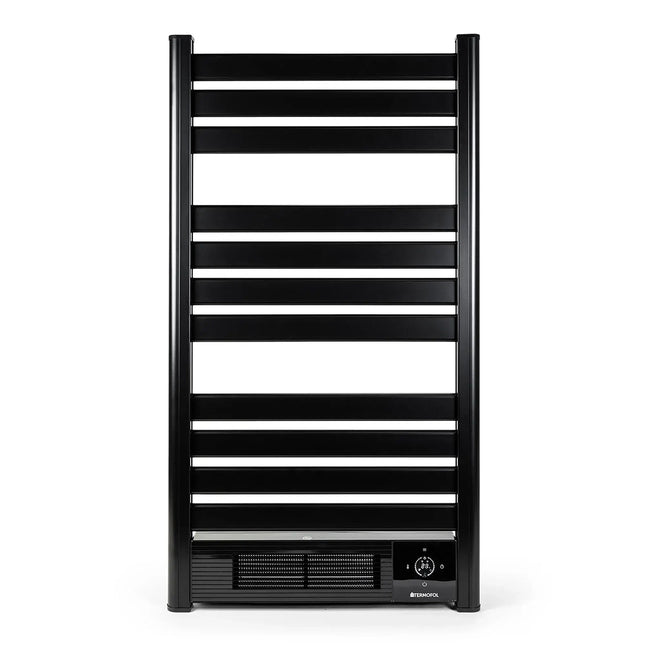
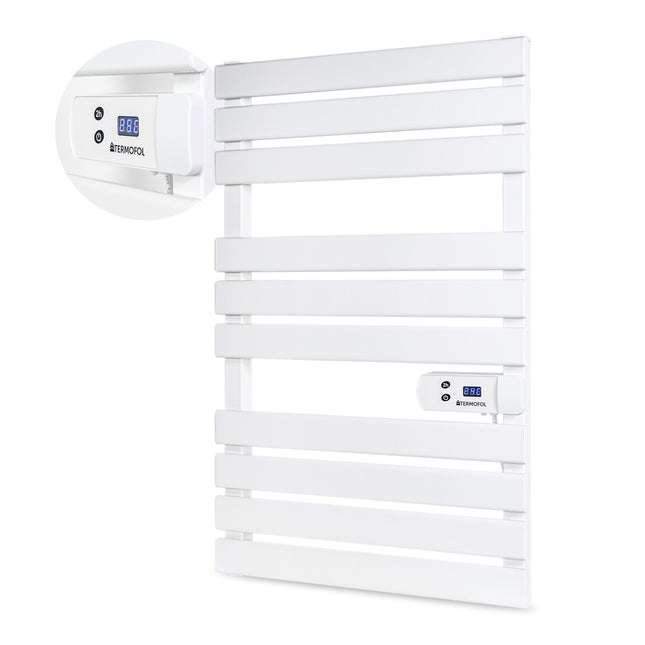
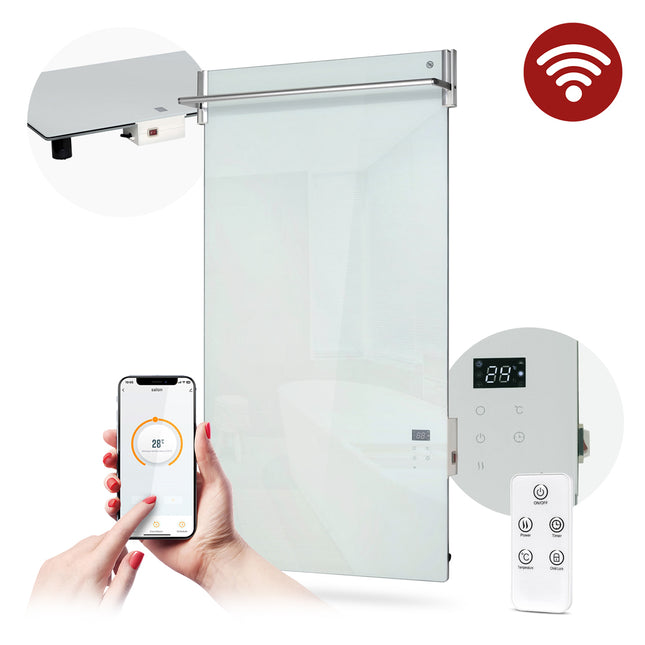
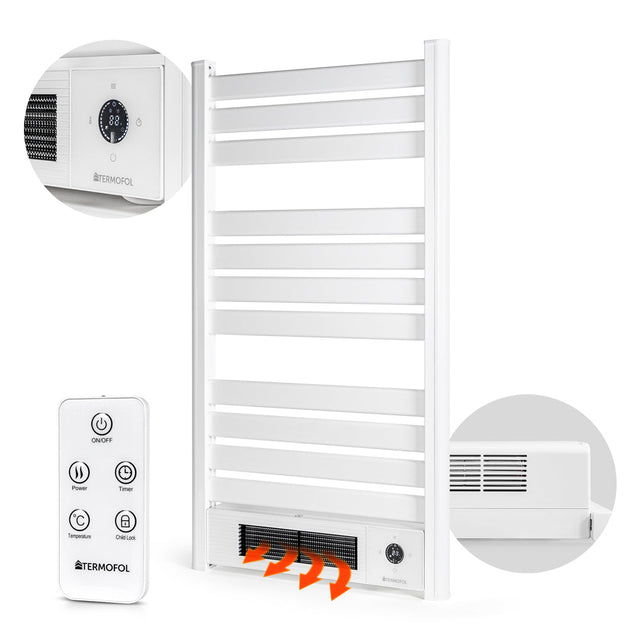
Termofol towel dryers offer smart control on certain models. This allows you to set a schedule or control the unit remotely. Features vary by version. Therefore, please check whether the thermostat, timer, and app are actually included with the selected model.
How much power does a towel radiator need?
The correct capacity depends on the purpose. You need less capacity to heat only towels than for the entire bathroom. If you want to use the towel radiator as the primary heating source, have the heat loss calculated first.
A simple watt-per-m² or watt-per-m³ rule is only a first indication. Exterior walls, window surface area, ventilation, insulation, desired temperature, and adjacent rooms have a significant influence. Moreover, bathrooms are often set to a warmer temperature than bedrooms.
Data for an accurate heat calculation
- length, width and height of the bathroom;
- dimensions and type of glass of windows;
- number of exterior walls and insulation level;
- mechanical or natural ventilation;
- desired room temperature;
- existing underfloor heating, radiator or other heating device.
Only deduct the capacity of existing heat sources if you will actually continue to use them. Then choose a model that can compensate for the remaining heat loss. This prevents an undersized radiator from heating for extended periods without achieving the desired comfort.
Dimensions and available wall space
Do not just measure the free wall width. Also note skirting boards, sockets, switches, door movements, and the distance to the bath or shower. Then check the total product dimensions and the position of the wall brackets. The mounting points may be narrower than the outer dimensions.
A narrow, tall model uses vertical space efficiently. A wider model often offers more room to hang towels side by side. However, the usable space between the rails is what matters most. A beautiful design with little space between them may be less practical for thick bath towels.
How many towels fit on the radiator?
Product photos often show a single thin towel, but daily use can vary. Therefore, look at the number of openings, the distance between the bars, and the accessibility of the rails. Large bath towels require more free space than towels for hands or the face.
Do not hang textiles in thick layers on top of each other. This causes the inner layer to dry more slowly and can reduce heat transfer to the room. Furthermore, follow the manual regarding which parts you may cover with textiles. Some warm surfaces must remain partially uncovered.
Material: glass, metal, steel or aluminium
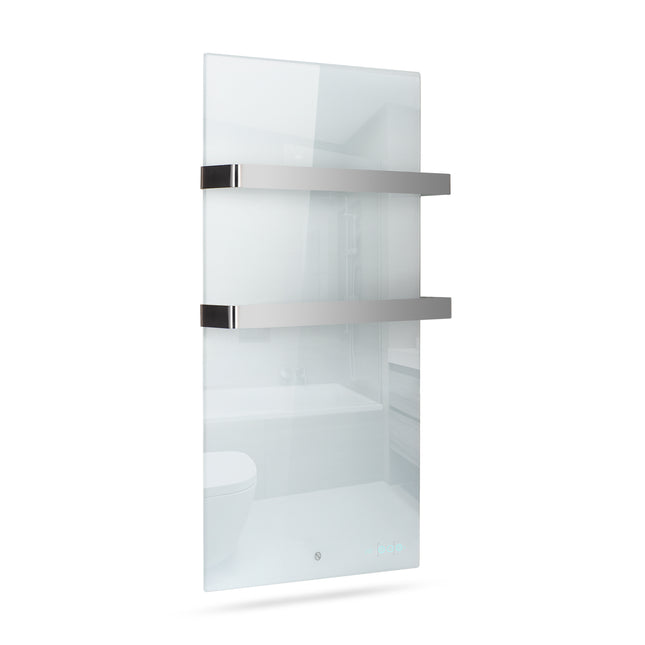
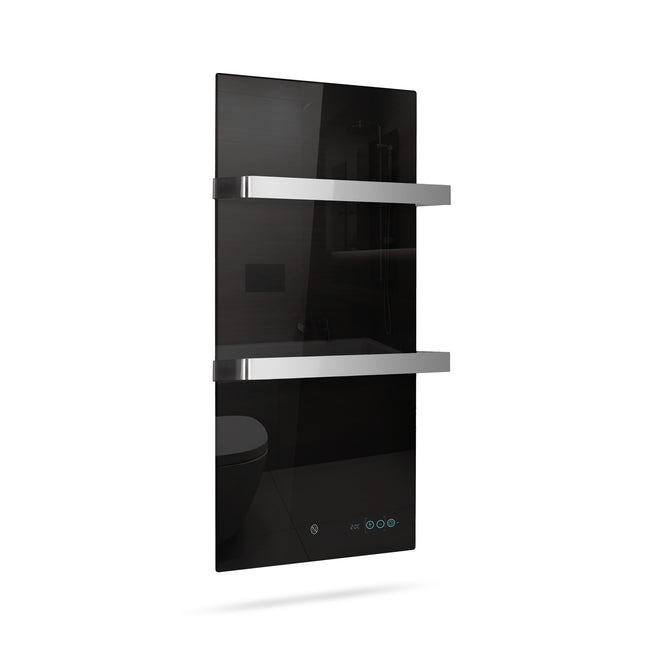
Material and construction influence appearance, weight, heat behavior, and maintenance. Metal and steel models feel solid and are available in many colors. Aluminum is generally lighter and responds quickly to temperature changes. Glass surfaces provide a sleek, flat appearance.
However, do not compare only the base material. The coating, welds, fasteners, and electrical components also determine durability. For cleaning, use only agents permitted by the manufacturer. Abrasive products can damage a matte or colored finish.
Color and design in the bathroom
White looks calm and combines easily with sanitary ware. Black, graphite, or sand, on the other hand, can complement taps, profiles, and furniture. Please note that texture, gloss level, and shade may appear different on different screens. Therefore, if possible, view a color sample or showroom model.
A towel radiator becomes a visible part of the interior. However, design should not overshadow practical placement. Ensure that you can reach the rails without having to reach over the bath, toilet, or furniture.
IP rating and electrical safety
Electrical safety zones apply around baths and showers. The permitted equipment, connection method, and required IP rating depend on the exact location and the applicable national installation regulations. Therefore, do not rely solely on a general online zone table.
The IP code describes the protection of the housing against contact, solid particles, and water. A higher IP rating does not automatically make a device suitable for every location. Check the product manual and have the planned installation assessed by a qualified electrician.
Are you looking for supplementary heating for a damp spot? Then take a look at our waterproof infrared panels after checking the installation area .
Thermostat, timer and WiFi control
A thermostat regulates the room temperature, while a timer primarily limits the operating time. Both functions are useful, but they do not do the same thing. Therefore, check whether the model includes a true room thermostat, surface control, timer, or a combination.
With a weekly program, you heat the bathroom around fixed routines. Wi-Fi is convenient for varying usage times, but a well-configured local program also works without internet. If external control is permitted, please view our thermostats.
How much does an electric towel radiator consume?
Calculate the maximum consumption using: power in kilowatts × duty cycle in hours. A 0.5 kW model consumes a maximum of 0.5 kWh per hour at full power. Multiply this by your current electricity price for a cost estimate.
The actual operating time may be lower when a thermostat switches off the element. However, this depends on heat loss, temperature setting, and the amount of textiles. Therefore, do not use a fixed cost claim without taking your own electricity tariff and usage pattern into account.
Practical ways to limit unnecessary consumption
- program only the times when the bathroom is used;
- Hang towels out with plenty of room instead of in thick layers;
- Keep the ventilation functional, but prevent unnecessary drafts;
- lower the setting when the radiator only needs to dry towels;
- Check whether a separate main heating system can heat the entire room more efficiently.
Towel radiator as primary heating
A powerful model can heat the bathroom provided the output matches the calculated heat loss. However, covering it with wet towels temporarily reduces direct heat transfer to the room. Therefore, leave sufficient space clear or choose additional capacity based on expert advice.
In a larger bathroom, a combination can be more comfortable. Consider, for example, an infrared heating panel for targeted heat. Additionally, an infrared mirror utilizes the wall above the washbasin. View all the options within our bathroom heating range.
Prepare for assembly and connection
- Measure the radiator, wall brackets, and required clearances.
- Check if the wall and fasteners can support the weight.
- Determine the electrical zone and the permitted position of the power supply and controls.
- Mark pipes and electrical cables in the wall before drilling.
- Mount the device level using the prescribed brackets.
- Have a permanent electrical connection carried out by a qualified installer.
- Test thermostat, timer, and shut-off before daily use.
“Plug-and-play” does not mean that every socket in the bathroom is suitable. The location of the socket and the protection of the circuit remain subject to electrical regulations.
Maintenance and safe daily use
Switch off the device and let it cool down before cleaning. Use a soft cloth and the recommended cleaning agent. Regularly check the cable, plug, wall brackets, and coating for damage.
Do not cover electrical controls or ventilation openings. Hang textiles only on the designated rails or zones. In case of discoloration, loose fastening, or damaged wiring, discontinue use and have the device checked.
Common mistakes when buying
- only look at the external dimensions and forget the rail spacing;
- choose a low-power towel warmer as the main heating;
- confusing the IP code with automatic suitability for each bathroom zone;
- do not take into account door, furniture or shower screen;
- consider thermostat, timer, and WiFi as the same function;
- compare heat output without checking test conditions or system type;
- Carrying out a fixed connection yourself without assessment of the electrical installation.
Buy a towel radiator at Warmteshop
First, decide whether you primarily want to dry towels, heat the bathroom, or both. Then, compare power output, usable rail space, dimensions, controls, and a safe mounting location. This way, you select a towel radiator that not only looks good but also fits your daily routine.
Frequently asked questions about towel radiators
Can a towel radiator heat the entire bathroom?
Yes, provided the output power covers the calculated heat loss. A compact towel warmer may have insufficient capacity for this. Have a heat calculation performed first if using it as primary heating.
How many watts do I need?
That depends on room dimensions, insulation, windows, ventilation, and the desired temperature. A general wattage rule is merely an indication. For primary heating, use a calculation based on heat loss.
What is the difference between a thermostat and a timer?
A thermostat responds to temperature. A timer switches off after a set time or follows a schedule. Some models combine both functions.
Is an electric towel radiator allowed next to the shower?
Only if the appliance, IP rating, connection method, and mounting position comply with the applicable bathroom zones. Have the exact location assessed by a qualified electrician.
How do I calculate the operating costs?
Multiply the power in kW by the duty cycle and your electricity price per kWh. A thermostat can reduce the actual duty cycle once the set temperature is reached.
Can I install a towel radiator myself?
Mechanical installation may be possible if you follow the manual and the wall is suitable. However, have the electrical zone and any fixed connection checked by a qualified professional.
How do I prevent towels from drying slowly?
Hang towels out with plenty of room and do not stack thick layers on top of each other. Furthermore, ensure good bathroom ventilation. Always follow the instructions regarding which parts of the radiator may be covered.