
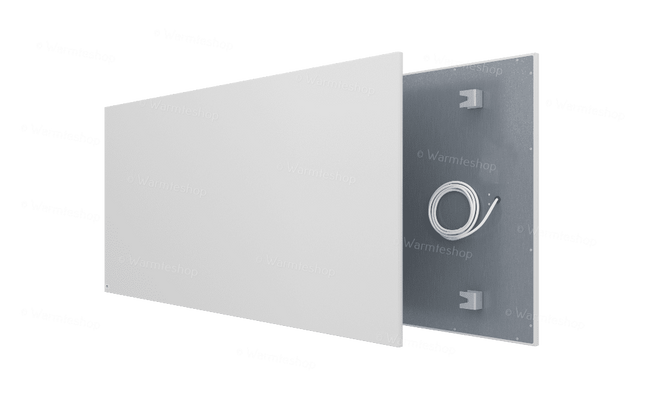
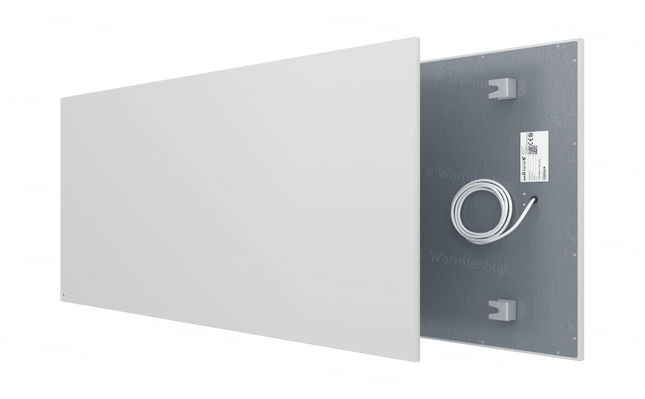
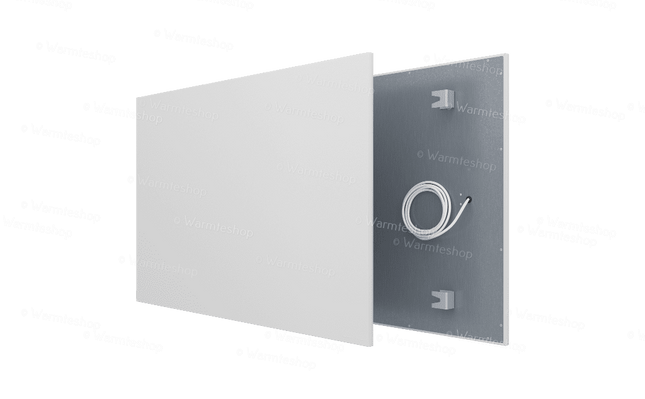
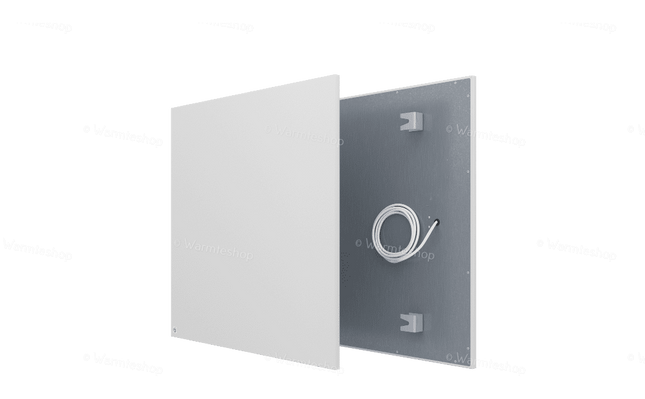

Infrared ceiling panel: free and even radiant heat
An infrared ceiling panel heats from above, keeping walls and floors completely clear. The radiation reaches people and surfaces beneath the panel without a cupboard or sofa directly obstructing the view. This makes ceiling mounting an attractive option for living rooms, bedrooms, bathrooms, shops, and offices. However, the right level of comfort depends on power output, mounting height, panel position, and heat loss.

At Warmteshop, you will find metal models and versions with integrated LED lighting. Furthermore, you can view the various heating experiences in our showrooms in the Netherlands and Belgium. Below, you can read what to look for regarding selection, installation, and control.
How does ceiling infrared heating work?
An electric infrared panel converts electricity into radiant heat. This radiation heats not only the air, but primarily the people and surfaces within the effective range. Subsequently, the floor, walls, and furniture return a portion of the absorbed heat to the room.
Warm air rises, but infrared radiation is not dependent on that airflow. The radiation travels downwards and sideways from the panel according to the characteristics of the model. However, the range is not unlimited. Height, power, surface temperature, and placement together determine how much heat reaches the usage zone.
A panel without a fan generally operates quietly. Moreover, the system itself generates little air movement. This makes ceiling heating attractive in a bedroom or work environment. However, always check the technical data sheet, as operation, connection method, and surface temperature vary by product.
Advantages of ceiling mounting
- Bare walls and floors: furniture, decoration, and walkways are retained.
- Targeted heat from above: the radiant zone can reach a seating, working, or living area.
- Calm appearance: a thin white panel is often barely noticeable against a light ceiling.
- Reduced accessibility: the warm surface is normally out of direct contact.
- Room-by-room control: a suitable thermostat controls each zone separately.
- Combination with lighting: LED models combine light and heating in a single ceiling solution.
However, ceiling mounting is not automatically the best solution for every room. A very high ceiling may require more power or a different heat source. In addition, the ceiling structure must be able to safely support the weight and the fixings.
How do you choose the right capacity?
Do not use a single fixed wattage per square or cubic meter for every building. First, calculate the heat loss. Surface area, ceiling height, insulation, glazing, ventilation, and outside temperature all play a role in this. The desired room temperature and the usage schedule also count.
A well-insulated interior room generally requires less power than a corner room with large windows. A bathroom often has a temporarily higher demand for comfort. Therefore, a heat loss calculation provides a more reliable starting point than a general rule of thumb.
Insufficient power leads to long operating times and potentially insufficient heat. Conversely, a lot of extra power is not automatically more efficient. While the thermostat can switch off an oversized system sooner, the electrical load and purchase costs remain higher. Therefore, choose an appropriate margin and, if necessary, distribute larger rooms across multiple panels.
Multiple panels can also provide a more even radiation pattern. This results in fewer cold zones than with a single panel that only covers part of the room. Therefore, have the positions determined in conjunction with the total power output.
Ceiling height and radiation zone
The permissible mounting height is stated in the product manual. An infrared panel ceiling at standard living height requires different characteristics than a panel in a high shop or atrium. The greater the distance, the more the radiation spreads before reaching the usage zone.
Therefore, do not look solely at wattage. Panel surface area, surface temperature, and beam angle are equally important. A model designed for a home is not automatically suitable for a hallway with a four-meter ceiling. In high spaces, a different type of heater or a zone system might be a better fit.
Also plan around obstacles. Tall cabinets, partitions, and recessed elements can shield part of the area. Furthermore, place the panel above the zone where heat is desired, not exclusively geometrically in the center of the room.
Installation: check ceiling and mounting
- Check whether the selected model is explicitly approved for ceiling mounting.
- Determine the ceiling material, the load-bearing capacity, and the appropriate fasteners.
- Locate pipes and electrical cables before drilling.
- Respect all clearances in the product-specific manual.
- Use the prescribed bracket and all attachment points.
- Plan the cable route, receiver, and any maintenance access in advance.
- After installation, check that the panel hangs flat and securely.
Plasterboard, for example, requires a different fastening method than concrete or wood. Sometimes, anchoring to the underlying structure is necessary. If in doubt, consult an installer. This prevents the ceiling finish alone from bearing the entire weight.
Metal ceiling panels
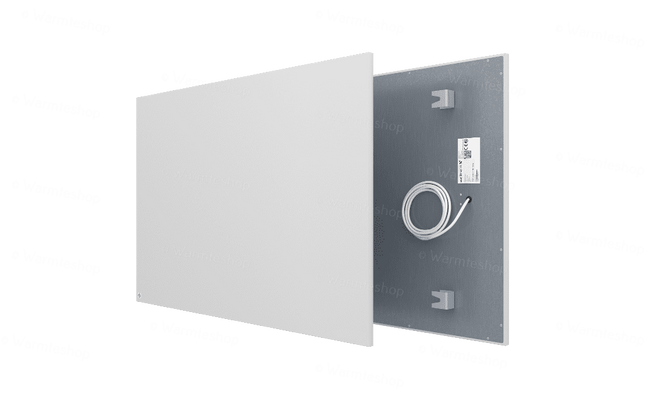
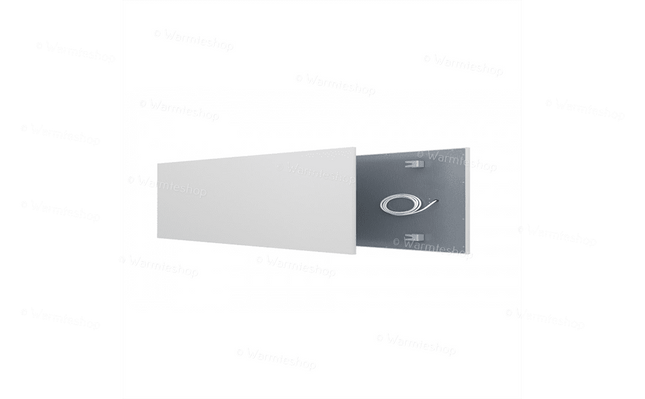
A metal infrared panel ceiling usually features a sleek, lightweight design. A white powder coating complements a standard ceiling well, while black versions create a visible accent. In addition to color, compare dimensions, weight, wattage, and connection method .
Not every metal panel can be mounted on both the wall and the ceiling. The internal structure and mounting may be designed for a single direction. Therefore, follow the permitted orientation specified in the manual. Also, do not use an alternative bracket without the manufacturer's approval.
Infrared ceiling panel with LED lighting
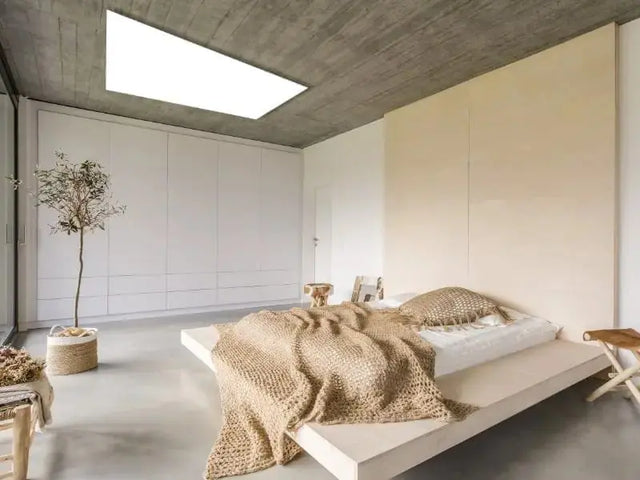
An LED infrared panel combines heating with general or ambient lighting. As a result, a separate ceiling light does not always need to be installed in the same location. However, do check whether heat and light can be controlled separately. Light intensity, color temperature, and dimmability also vary by series.
Some models have built-in lighting. Other systems work with a separate light frame, such as the LED frames for Ecaros or LED frames for Welltherm. Check the exact size and product compatibility before choosing a frame.
Furthermore, compare the controls. A remote control can regulate light color and dimming level, while the heater uses a separate thermostat. With other models, functions are controlled via a single app or receiver. Therefore, first choose which control method you find convenient for daily use.
Electrical connection and installation service
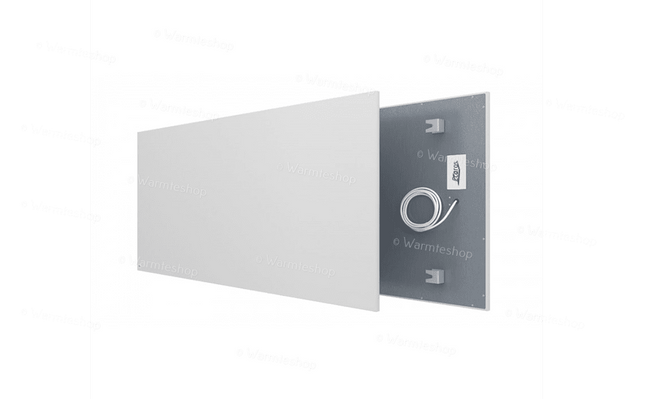
An infrared ceiling panel can use a visible cord, a ceiling socket, or a fixed connection. The options depend on the product and the room. For a neat fixed installation, preparation in the ceiling is often required. Furthermore, the electrical circuit must have sufficient capacity.
Consider the installation service for infrared panels if you want to have mounting and connection carried out. An installer can assess the surface, cable routing, and protection in advance. This is especially useful for multiple panels, suspended ceilings, or damp rooms.
Do not connect a high-power heating panel to just any extension cable or smart plug without checking. Always check the maximum switching capacity. Use only accessories that are suitable for prolonged load and the specific system.
Thermostat, timer and Wi-Fi
A room thermostat switches the heating on according to the set temperature. This prevents the panel from remaining switched on continuously unnecessarily. A programmable thermostat adds time schedules. With Wi-Fi control, you can adjust settings remotely, provided the network and receiver are working correctly.
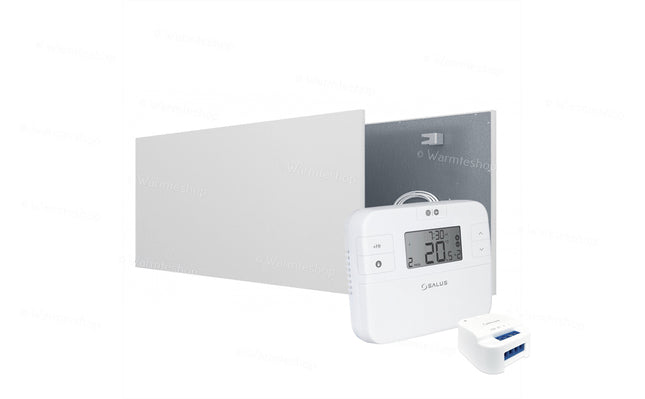
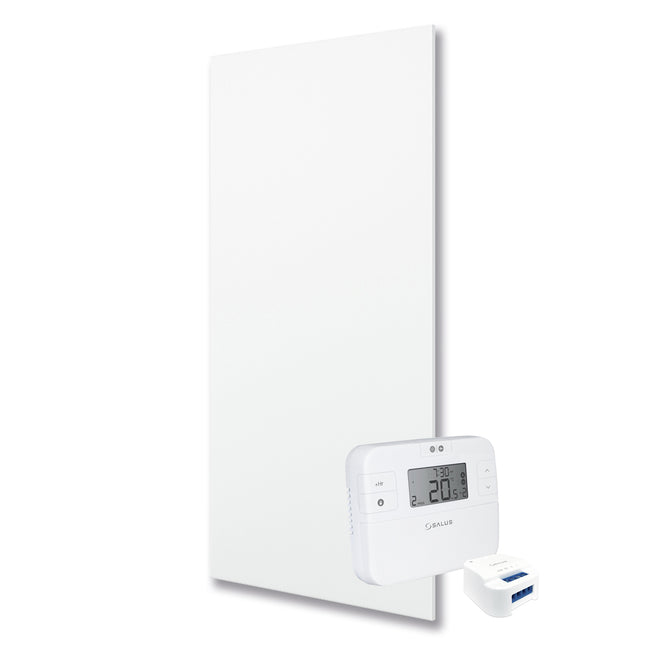
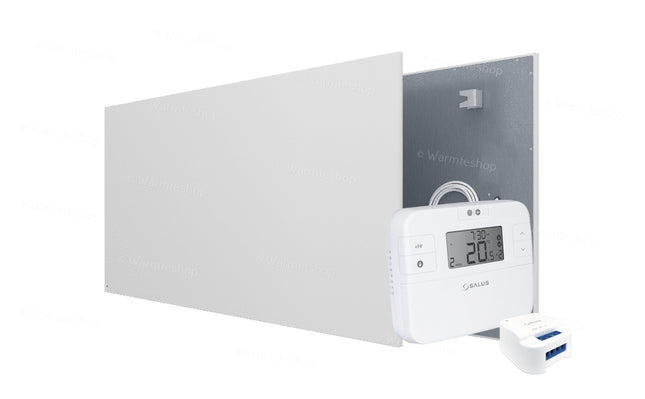
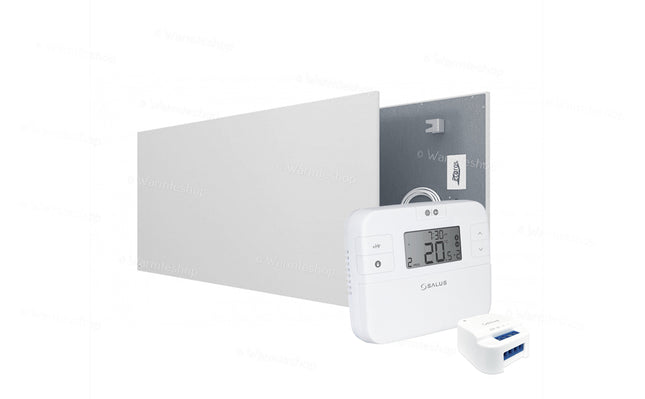
View our thermostats and check compatibility, switching load, and number of zones. For ceiling mounting, a wireless temperature sensor is often practical. The receiver can be located near the panel, while the sensor measures at a prominent spot in the room.
Do not place the sensor directly under the warm panel, near a window, or in the sun. Otherwise, the measured temperature may deviate from the rest of the room. Therefore, choose a location with normal air circulation and without a direct heat source.
Applications per room
An infrared panel ceiling in the bathroom allows for ceiling mounting, leaving the walls free for mirrors and cabinets. However, only a model with an appropriate IP rating may be installed in the intended zone. Additionally, take into account the connection method and local electrical regulations.
For bedroom heating, quiet operation and precise control are important. A schedule can heat the room before use and then switch back down. Do not direct the panel at one small part of the bed for extended periods without advice.
With infrared heating in the office, you can control work zones separately. As a result, an unused meeting room does not have to follow the same schedule. Furthermore, pay attention to the positioning above desks, lighting, and acoustic ceiling panels.
A ceiling panel can also fit in a living room, kitchen, or practice room. Always check that cabinets, fixtures, or ventilation grilles maintain sufficient distance. This ensures the radiation zone remains clear and the installation complies with the instructions.
Ceiling panel or wall panel?
A ceiling-mounted model keeps all wall space free and radiates from above. A wall-mounted infrared panel, other hand, can aim directly at a seating area or workspace. Wall mounting does make the surface more accessible and it can be shielded by furniture.
The best choice therefore depends on the room layout. If you have free ceiling space but solid walls, ceiling mounting is the obvious choice. If you want localized heat at body level, a wall-mounted model may be more practical. Sometimes a combination provides the best distribution.
Safety and use in damp areas
With an infrared ceiling panel, the front can become hot during use. The exact temperature varies by model. Ceiling mounting reduces accidental contact, but does not automatically make a product suitable for every location. Therefore, maintain safe distances from fixtures, cables, and flammable materials.
An IP code indicates how well the enclosure is protected against contact, dust, and moisture. The required class depends on the installation zone. Check both the product documentation and the regulations for the room. If in doubt, have a bathroom installation carried out by a professional.
Never cover the panel or hang clothing on it. Switch off the system in case of damage, discoloration, a loose bracket, or an unusual odor. Clean only when the panel is cool and de-energized. Follow the manufacturer's maintenance instructions.
How much does an infrared ceiling panel consume?
For an infrared ceiling panel, you can easily calculate the maximum energy per hour. Divide the wattage by 1,000. A 900-watt panel consumes a maximum of 0.9 kWh during one hour of continuous operation. Next, multiply this by your electricity rate.
In practice, a thermostat switches off the panel as soon as the set temperature is reached. The actual running time therefore depends on insulation, outside temperature, ventilation, and user behavior. A lower wattage does not automatically mean lower costs if it provides insufficient heat and has to run longer.
Therefore, compare systems based on the same heat demand and comfort level. Also take into account private solar panels, dynamic tariffs, and schedules. These factors change the operating costs, but not the required thermal output of the room.
Main heating or targeted supplementary heating?
As supplementary heating, an infrared ceiling panel make a single zone more comfortable. Think, for example, of a dining table, bathroom, or workspace. For primary heating, all heat losses must be covered. Moreover, a large room usually requires multiple radiant zones.
When opting for a complete home solution, also have the electrical installation assessed. Multiple panels together place a significant load. A zone plan with separate thermostats then provides more control per room. This allows you to tailor the heating to actual usage.
Buying checklist for ceiling heating
- Required total power based on heat loss.
- Suitable mounting height and effective radiation zone.
- Dimensions, weight, and load-bearing capacity of the ceiling.
- Permitted mounting orientation and included bracket.
- Thermostat, timer, Wi-Fi and maximum switching load.
- IP rating and installation zone in case of moisture.
- Built-in LED or compatible separate light frame.
- Electrical circuit, cable routing, and desired finish.
- Warranty, manual, and available installation service.
This is how you choose an infrared panel ceiling based on more than just price and wattage. You primarily assess whether the panel is technically suitable for the room. This way, you choose a system that is safe to install, easy to adjust, and sufficiently powerful.
Frequently Asked Questions
How many ceiling panels do I need?
This follows from the heat loss and the desired distribution. One large panel may provide sufficient power, but multiple smaller panels sometimes result in a more even radiation pattern. Therefore, have both the total power and the position calculated.
Can an infrared panel be installed on any ceiling?
No. The ceiling must bear the weight and the fixings. Concrete, wood, and plaster require different anchors. Sometimes reinforcement or attachment to the underlying structure is necessary.
Is an LED ceiling panel also suitable as main lighting?
That depends on light output, room size, and desired atmosphere. Compare lumens, color temperature, dimmability, and light distribution. Heat output and light output are separate specifications.
Can I install an infrared ceiling panel myself?
Mechanical installation is possible provided the manual permits it and the substrate is suitable. However, have a permanent connection, complex wiring, or bathroom installation assessed by a qualified professional.
Is a ceiling panel getting dangerously hot?
The surface can become hot. The temperature varies by model. Ceiling mounting limits direct contact, but you must still follow all clearances, mounting rules, and safety instructions.
Does a ceiling panel work with a ceiling higher than three meters?
That depends on the specific panel and the heat demand. At a greater distance, the radiation spreads further. Therefore, ask for product-specific advice or choose a system designed for greater mounting heights.