
Industrial cooling for a stable indoor climate
Industrial cooling keeps production halls, warehouses, workshops, and technical rooms at a manageable temperature. This is important for employees, machines, raw materials, and finished products. Warmteshop helps companies in Belgium and the Netherlands select a suitable cooling solution based on room volume, heat load, and operating hours. In this guide, you will read what to look for in industrial cooling, from the initial calculation to daily management.
A professional system operates continuously and in a controlled manner. It removes warm air, distributes cooled air evenly, and prevents bothersome temperature fluctuations. This creates a pleasant workplace and a more consistent production process.

Industrial cooling at a glance
In short: first, you map out the heat sources. Next, you determine the desired temperature. Additionally, you check the humidity. Furthermore, you examine the available electrical capacity. After that, you choose between zone cooling and half-wide cooling. The location of outdoor units also matters. Furthermore, air distribution deserves attention. Finally, you establish maintenance and monitoring. This keeps the installation predictable, thereby preventing unnecessary consumption. At the same time, you increase comfort. Moreover, you limit the risk of product loss. That is why professional advice pays off. Subsequently, you can compare quotes fairly. Additionally, you take noise into account. Service and parts are also important. Furthermore, a clear control system makes a difference. Finally, you check the performance after commissioning.
For a reliable start, first measure the current temperature. Then, note peaks during the hottest hours. Next, discuss the results with your installer. Furthermore, check the condition of the insulation and the roof. This makes the calculation more realistic, thereby avoiding an oversized installation. Additionally, you can take growth plans into account. Expanding machinery also affects cooling demand; a modular design is therefore beneficial. Finally, plan space for service. This ensures the installation remains accessible. Moreover, good air distribution reduces drafts, which is why adjustable air outlets are useful. Next, test each zone individually. Additionally, set alarm limits so you detect deviations early, keeping production stable. In short, measuring and adjusting ensures optimal performance.
When is industrial cooling needed?
In a large space, the air heats up quickly due to machines, lighting, people, and solar radiation. Moreover, an open door or high ridge makes natural ventilation less predictable. Industrial cooling is therefore beneficial in, among other things:
- production and assembly halls;
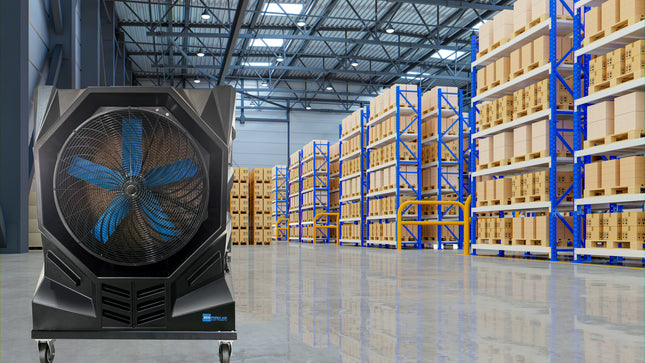
- warehouses, distribution centers and dispatch areas;
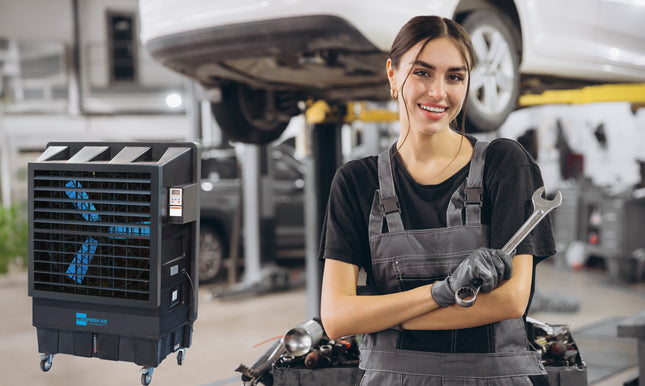
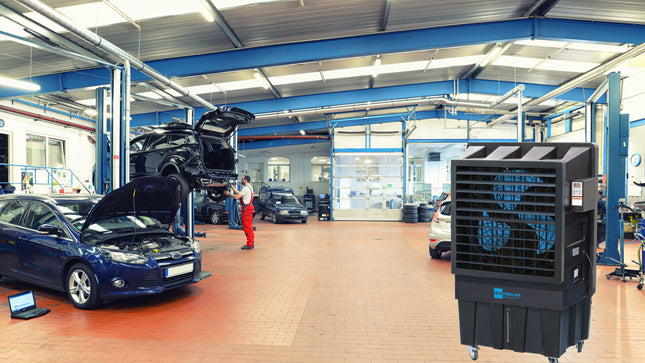
- workshops and garages;
- server, electrical and technical rooms;
- retail spaces, showrooms and catering kitchens;
- rooms where temperature-sensitive materials are stored.
Not every application requires the same temperature. For comfort cooling, a pleasant operating temperature is often sufficient. However, products, electronics, or processes may require a much narrower range. Therefore, determine in advance the temperature, relative humidity, and operating hours that are actually required.
Determining the correct cooling capacity
An appliance that is too small runs continuously at maximum power and fails to reach the desired temperature. An appliance that is too large cools quickly but may start and stop more frequently, produce more noise, and consume unnecessarily high amounts of energy. The required capacity is therefore calculated based on the volume and the total heat load.
Factors that determine the heat load
An installer looks at, among other things:
- length, width and clear height of the room;
- insulation, roof structure and glazing;
- solar orientation and heat of the roof;
- machines, ovens, compressors and lighting;
- the number of employees present;
- open doors, gates and air leaks;
- the desired temperature and the operating time.
A quick rule of thumb can help with an initial estimate, but it does not replace a heat load calculation. The difference can be significant, especially in high halls or rooms with many machines. For new construction or a permanent installation, have the capacity checked by a recognized refrigeration company.
What industrial cooling systems exist?
Split and multi-split systems
A split system consists of an indoor unit and an outdoor unit. The compressor and condenser are located outside, resulting in less noise and heat inside. With a multi-split system, multiple indoor units can be connected to a single outdoor unit. This is practical when different zones need to be cooled separately.
Rooftop and air conditioning systems
Rooftop units are installed on or next to a building and combine cooling with air distribution. They are suitable for large volumes and can be coupled with ventilation, filtration, and heat recovery. An air handling unit offers additional control over temperature, humidity, and fresh air.
Evaporative cooling
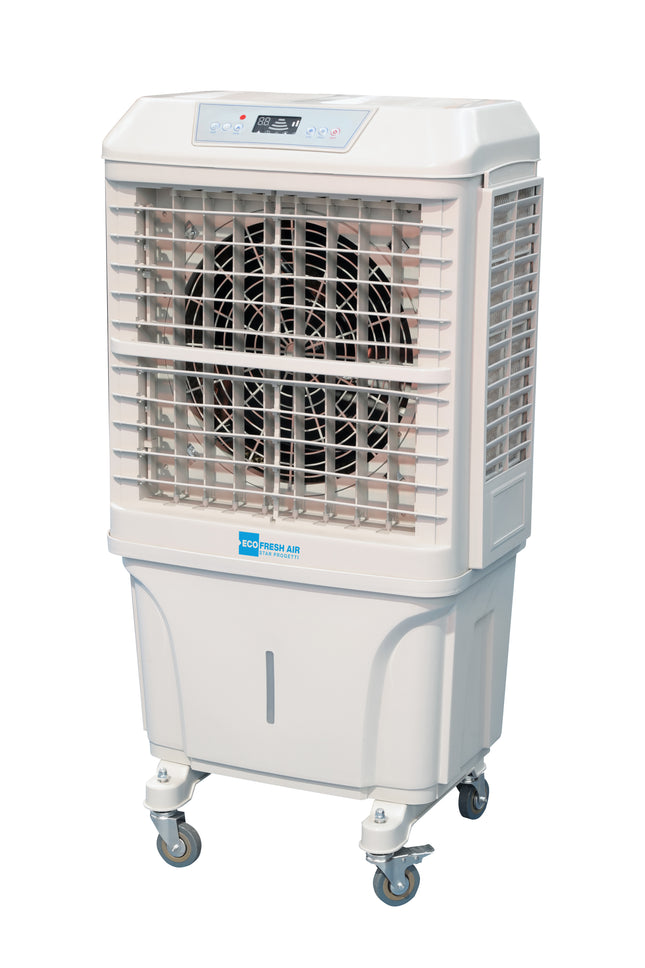
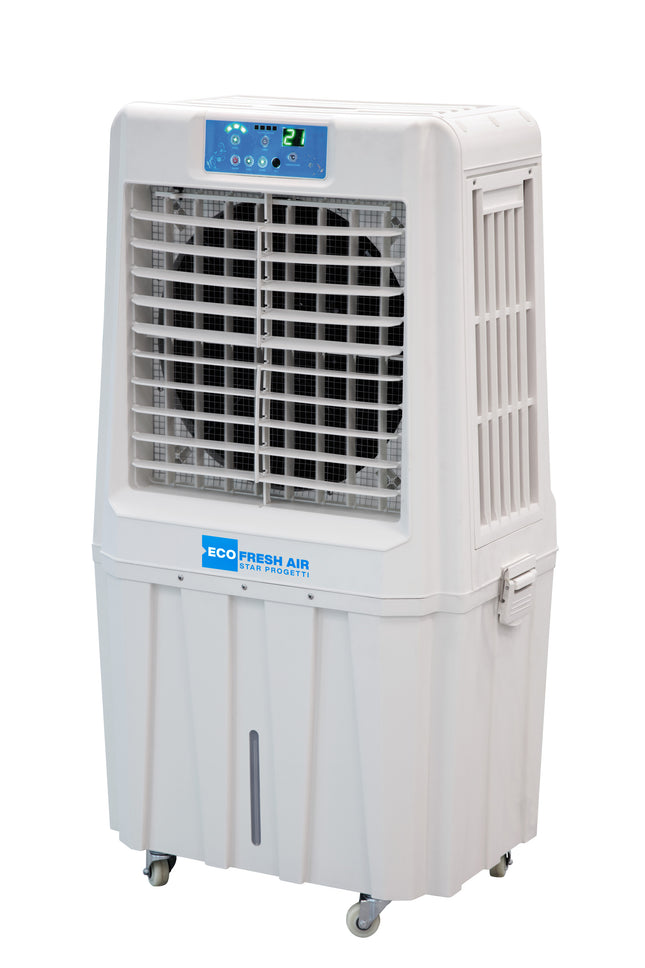
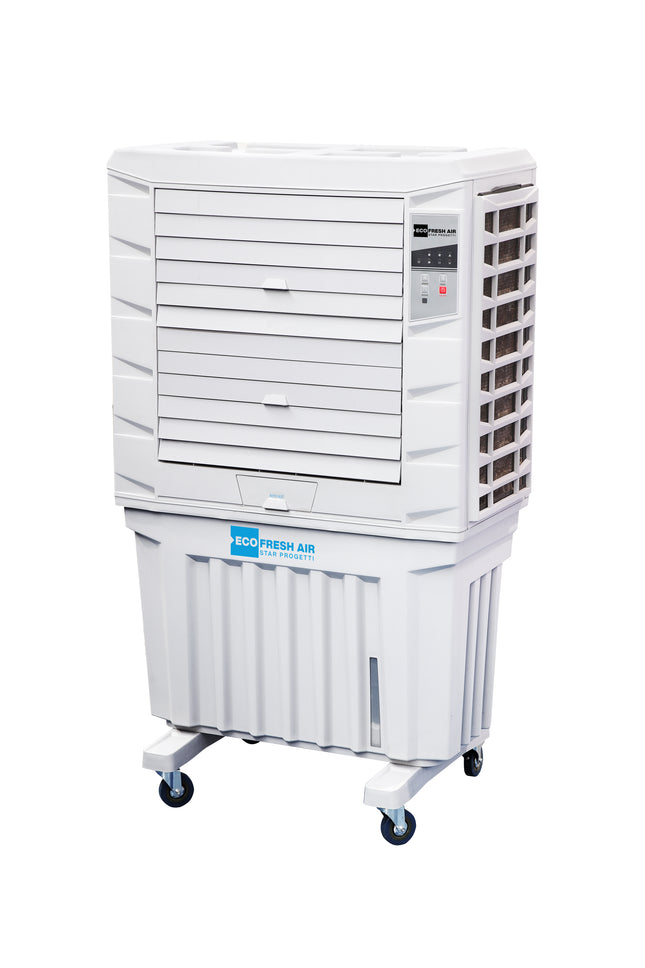
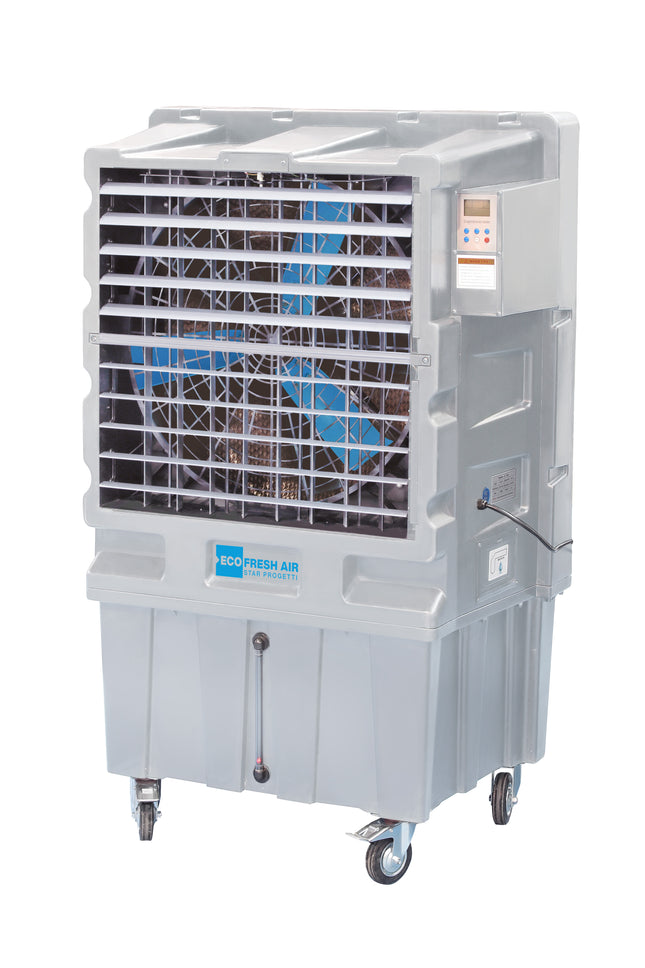
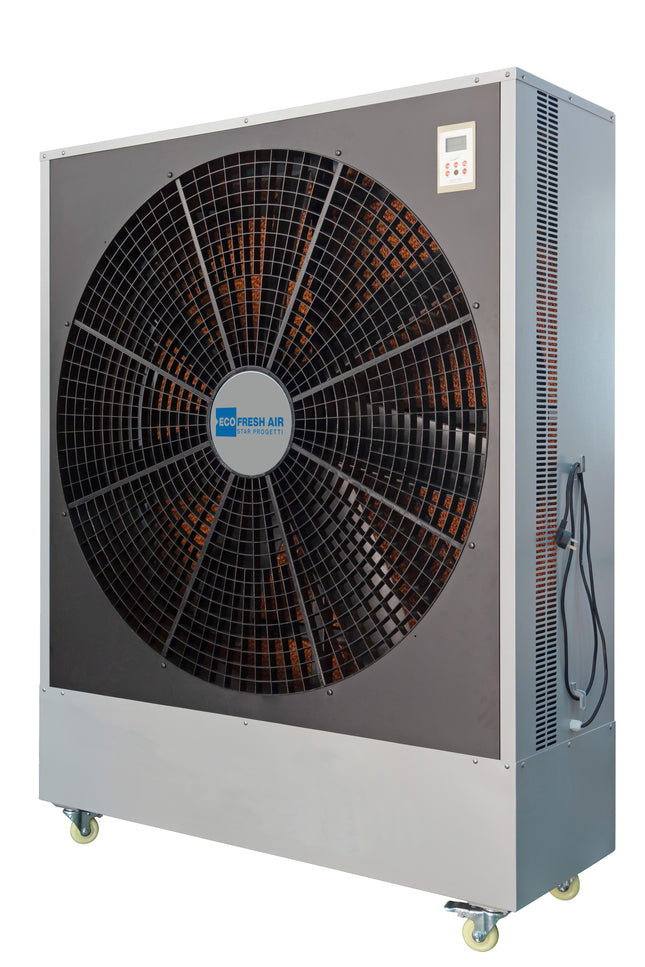
Evaporative coolers lower the temperature by evaporating water. They generally consume less electricity than a conventional compressor system, but operate best in dry conditions and with a sufficient supply of outside air. For humid production processes or completely enclosed spaces, a different system is often more suitable.
Mobile industrial coolers
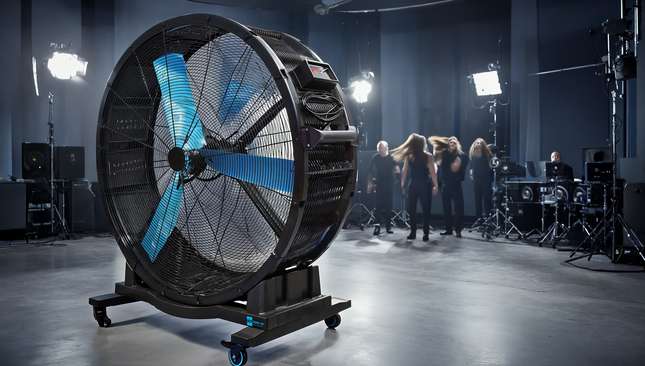
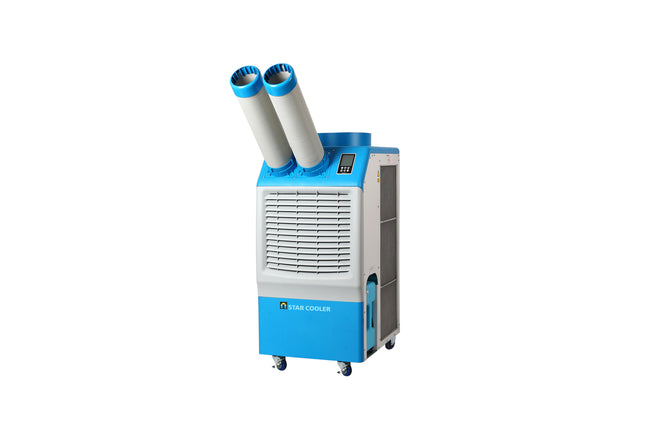
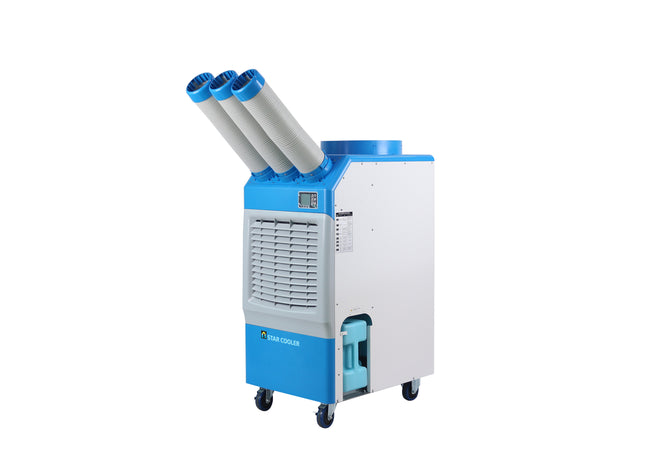
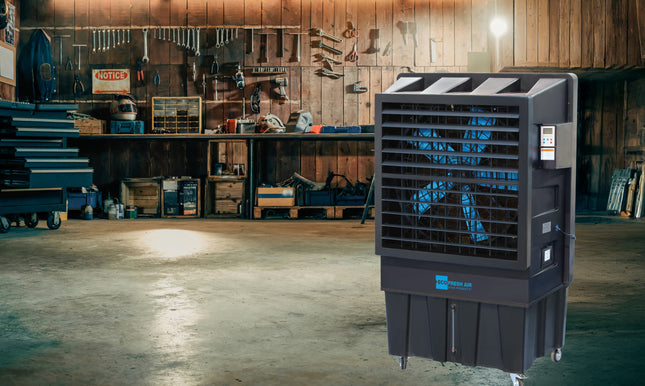
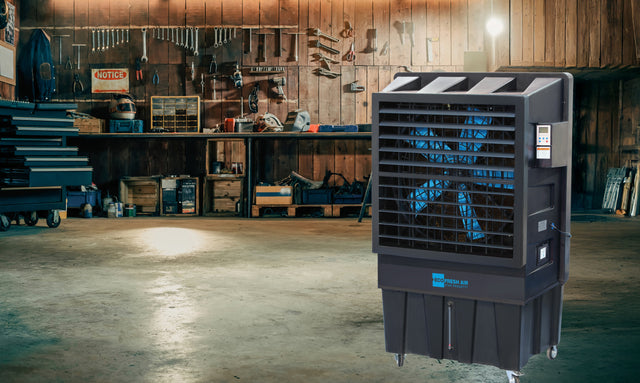
A mobile unit is useful for temporary projects, maintenance work, or local cooling requirements. Think of a server room, a temporary production line, or a work zone where a fixed installation is insufficient. Pay attention to the extraction of warm air, the noise level, and the electrical connection. For permanent cooling of an entire hall, a fixed installation is more efficient.
Zone cooling or cooling the entire hall?
It is not always necessary to bring the entire building to the same temperature. Zone cooling focuses capacity on workstations, machines, or storage zones where cooling has the greatest effect. This reduces the investment and can limit energy consumption. Cooling an entire hall makes more sense when products require the same conditions everywhere or when employees move throughout the entire space.
A combination is often beneficial: general air circulation for a uniform climate and additional capacity near heat sources. With sensors and control valves, each zone can be controlled according to its occupancy and process.
Managing energy-efficient industrial cooling
The efficiency of industrial cooling does not depend solely on the energy label. The control system, installation quality, and maintenance also determine how much power is required. With these measures, you keep costs manageable:
- Set a realistic target temperature. Every degree of extra cooling increases the load.
- Cool only zones and times that are actually in use.
- Keep doors, loading docks, and windows closed as much as possible during cooling.
- Use schedules, presence detection, or a building management system.
- Clean filters and heat exchangers according to the maintenance plan.
- Check the refrigerant, fans, and condensate drain on time.
- Combine cooling with sun shading, roof insulation, and controlled ventilation.
A properly balanced system provides more comfort at the same power output. When considering a new installation, ask about seasonal performance, power consumption, noise level, and monitoring options.
Regulation and monitoring
A central controller makes visible which zones are cooling and how much power is being required. Furthermore, you can set setpoints, schedules, and alarms per zone. As a result, the system responds more quickly to occupancy and process changes. Where possible, opt for integration with the building management system.
Air quality, humidity and comfort
Cooling is more than just lowering the temperature. In a production environment, dust, fumes, and odors can affect air quality. A cooling system with suitable filters helps purify the air but does not replace source extraction or mandatory ventilation. Therefore, always ensure the ventilation concept is tailored to the activities taking place in the room.
Air that is too dry can cause health problems, while excessive relative humidity promotes condensation and corrosion. Measure the humidity when materials or electronics are sensitive. A control system with humidity measurement prevents the installation from reacting solely to temperature.
Installation, safety and regulations
Industrial cooling requires professional installation. The outdoor unit requires free airflow and sufficient distance from walls. Indoors, the air discharge, return air, and service zones must remain accessible. Condensate must be safely drained, and the electrical power supply must match the required power.
In Belgium and the Netherlands, F-gas refrigeration systems may only be opened or filled by authorized and certified technicians. Retain the commissioning file, maintenance reports, and any leak checks. Additionally, check local requirements regarding noise, fire safety, roof penetrations, and environmental permits. A recognized installer can indicate which obligations apply to your building.
Maintenance prevents downtime
Dust on filters or fins reduces airflow and increases energy consumption. A maintenance plan includes at least periodic filter cleaning, inspection of fans, heat exchangers, condensate drain, and electrical connections. Have the system tested before the cooling season and record malfunctions and temperature measurements.
Preventive maintenance extends lifespan and makes wear visible before a production line comes to a standstill. For critical processes, a spare parts or breakdown contract can offer additional security.
Choosing industrial cooling: a practical checklist
Use these questions during a quotation or consultation meeting:
- Which room(s) need to be cooled and what is the volume?
- Which machines and heat sources are installed?
- What are the minimum required temperature and humidity?
- Is continuous cooling necessary or only during certain shifts?
- Is zone cooling sufficient, or is a central system desired?
- Where will the outdoor units, pipes, drains, and service points be located?
- What noise and emission requirements apply at the location?
- How are consumption, malfunctions, and performance monitored?
Do not compare quotes based solely on purchase price. Also consider installation, control technology, maintenance, warranty, parts availability, and the total cost over the lifespan.
Frequently asked questions about industrial cooling
Can industrial cooling also heat?
Many heat pump systems can operate in reverse and heat in the winter. Check whether the capacity, outdoor temperature, and control system are suitable for this.
Is one large unit better than multiple small units?
That depends on the layout and heat distribution. Multiple units offer more zone control and redundancy; a central installation can be easier to manage. A calculation makes the choice objective.
How much noise does an industrial refrigeration system make?
The noise level varies by type and load. Ask for the indoor and outdoor dB(A) values and preferably have a noise plan drawn up for workplaces and property boundaries.
Can I use a portable cooler as a permanent solution?
For temporary or local cooling, that works fine. For daily use of a large hall, permanent systems are generally quieter, more efficient, and easier to control.
How quickly can an installation be placed?
The lead time depends on capacity, electrical modifications, piping, and any necessary permits. A site visit provides the most reliable schedule.
Advice for industrial cooling in Belgium and the Netherlands
A suitable cooling solution begins with a clear analysis of space, process, and comfort. Warmteshop collaborates on capacity, zone distribution, control, and maintenance for companies in Belgium and the Netherlands. Request advice and discuss your building, desired temperature, and operating hours. This way, you invest in industrial cooling that performs reliably and aligns with your daily operations.