


Electric underfloor heating: comfortable warmth from the floor
Electric underfloor heating heats a room evenly from the floor. As a result, the floor feels pleasant and the walls remain free of radiators. The system works without central heating pipes or a boiler and is well-suited for both renovation and new construction. At Warmteshop, you will find solutions for tiles, laminate, parquet, PVC, vinyl, and carpet. Furthermore, you can choose from individual mats, heating foil, and complete sets with a thermostat. Would you like to discuss the system first? Then visit one of our 32 stores in the Netherlands and Belgium.

Which electric underfloor heating suits your floor?
The correct construction depends primarily on the floor finish, the available height, and the intended use. Therefore, do not choose based solely on capacity. Also check the maximum floor temperature and the thermal resistance of the complete floor structure.
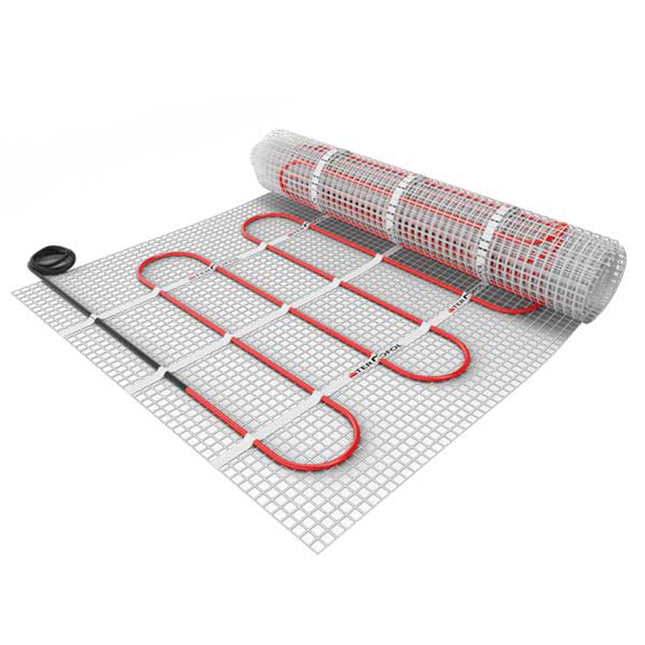
Heating mats for tiles and natural stone
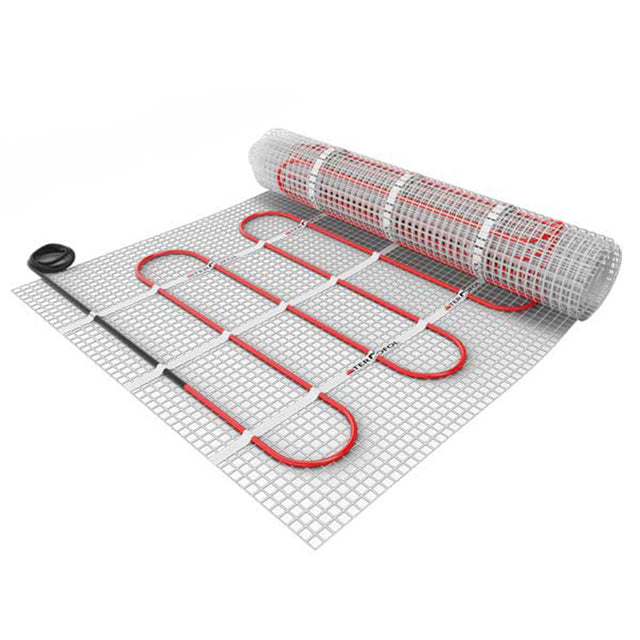
A thin heating mat fits well under tiles, natural stone, and many poured floors. You embed the mat in a suitable leveling compound or tile adhesive. This keeps the build-up height limited and allows the floor to react relatively quickly. This is a practical solution, especially in a bathroom, kitchen, or hallway. View our heating mats for tiles.
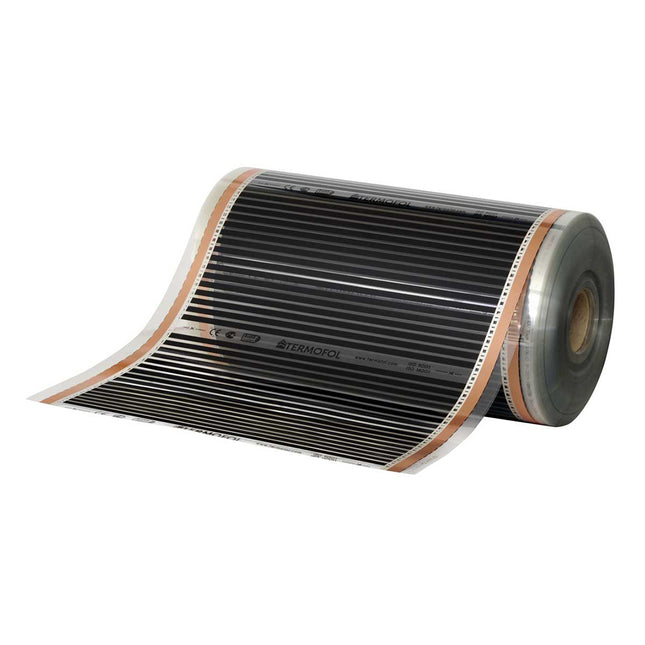
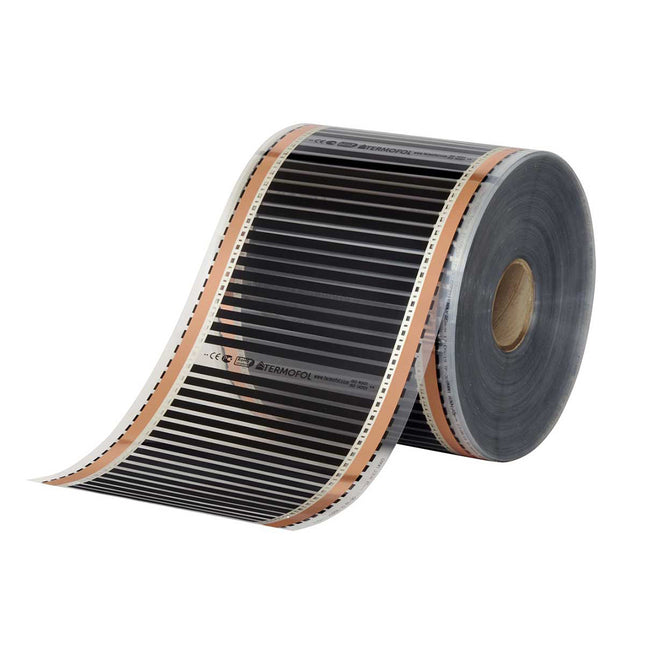
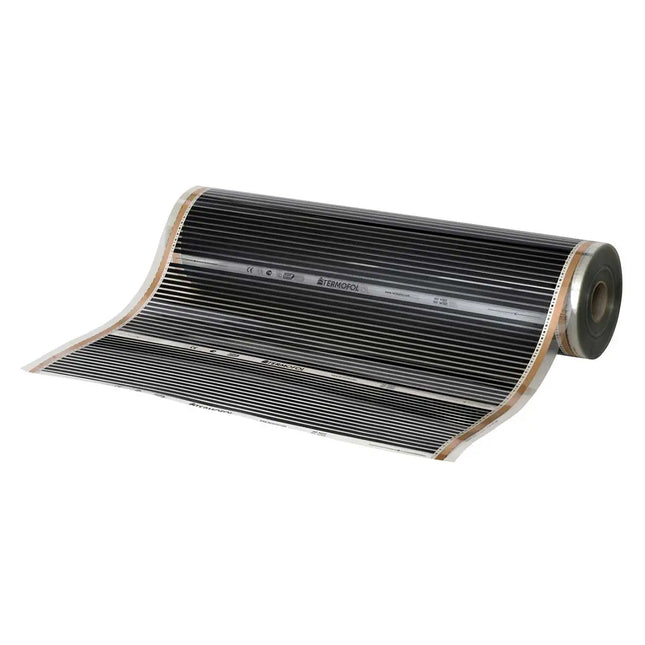
Heating foil for laminate, parquet and wood
Heating foil lies dry beneath a floating floor. Therefore, this system is suitable for many types of laminate and engineered parquet. However, do check whether the manufacturer approves the floor for underfloor heating. Additionally, use a suitable underlay and monitor the floor temperature with a sensor. View our heating foils for laminate and parquet.
Underfloor heating for PVC, vinyl, and carpet
Soft floor finishes can also be combined with electric underfloor heating. However, this combination requires extra attention. The total thermal resistance of the subfloor and finish must not be too high. Furthermore, the floor supplier must approve the application. Therefore, first view our complete underfloor heating collection and compare the product specifications.
Choosing a heating mat, cable, or foil
- Mat: handy for a regular surface under tiles. The fixed cable spacing supports even heat distribution.
- Loose cable: flexible around corners and obstacles. This system is particularly suitable for a new screed or a thicker leveling layer.
- Foil: a low, dry structure beneath suitable floating floors. As a result, you usually do not need to apply a wet layer.
A complete set ensures that essential components are not missing. Think, for example, of a thermostat, floor sensor, insulation, and connection materials. View our complete underfloor heating sets. Do you want to supplement an existing system? Then choose individual heating foils or individual heating mats.
How many square meters do you need to heat?
Do not measure the entire room, but the net heatable floor area. Subtract fixed kitchen cabinets, a bathtub, a shower tray, and other enclosed furniture. Do not place a mat or foil under elements that retain heat. This limits the risk of localized overheating.
Next, make a simple layout sketch. Note the net surface area, the location of the thermostat, and the routing of the power cable. Also take expansion joints and the manufacturer's instructions into account. This will help you select the correct size set more quickly.
What power per m² is suitable?
The required power depends on the heat loss of the room. Insulation, glass surface area, outside temperature, and ventilation play a major role in this. A fixed wattage per m² is therefore only an indication. Always have a heat loss calculation performed for primary heating.
For many tile applications, mats around 150 W/m² are common. However, a well-insulated room may require less, while a bathroom or poorly insulated room sometimes needs more capacity. Never choose based solely on the highest power output. First, check what the floor finish, adhesive, and subfloor allow.
Insulation and subfloor make the difference
A cold or poorly insulated subfloor absorbs a lot of heat. As a result, it takes longer for the top surface to feel comfortable. Suitable insulation beneath the system often shortens the warm-up time and limits heat loss downwards. However, the exact construction varies depending on the mat, foil, and floor finish.
Therefore, use only components that together form a single approved system. For example, view our individual components. Additionally, follow the installation manual of the chosen product and the floor manufacturer's instructions.
Thermostat and floor sensor for precise control
A programmable thermostat only controls the electric underfloor heating when heat is needed. This allows you to plan your comfort around your usage times. Furthermore, a model with Wi-Fi offers remote control, while a simple wall thermostat is often sufficient for a fixed weekly schedule.
The floor sensor monitors the temperature in the floor. Install it according to the manual between two heating strips and preferably in an empty conduit. This allows you to replace the sensor later without breaking open the floor. Compare our thermostats.
Electric underfloor heating in the bathroom
In a bathroom, underfloor heating quickly provides extra comfort after showering. However, stricter regulations regarding electrical zones and safety apply there. Therefore, have the electrical final connection checked by a qualified installer. Furthermore, use only products that are suitable for the planned zone and application.
Plan the mat only on the free floor surface. Therefore, take sanitary fixtures and fixed furniture into account. Also test the resistance before, during, and after applying adhesive or leveling compound. This way, you will detect damage before the tile floor is laid.
Installation in clear steps
- Check the surface. Make it flat, dry, stable, and dust-free.
- Create a layout plan. Draw in the furniture, free floor space, thermostat, and sensor.
- Measure the resistance. Compare the value with the product specification and record the result.
- Lay down the mat, cable, or foil. Follow the minimum distances and never cut a heating cable.
- Install the floor sensor. Place it between two strips and not against the cable.
- Finish the floor. Use materials suitable for underfloor heating.
- Allow everything to cure. Only switch on the system when the adhesive, leveling compound, or screed is completely ready.
Installing heating foil under laminate
Start with a flat and suitable subfloor. Then lay the insulation layer and heating foil according to the installation plan. Next, place the protective layer that comes with the system. Finally, check all connections before laying the laminate. An electrician can assess the mains connection and protection.
Installing a heating mat under tiles
Roll out the mat on the calculated clearance area. Turn the mat by cutting only the support mesh; never damage the cable. Then completely cover the mat with suitable leveling compound or tile adhesive. Measure the resistance again and wait for the prescribed drying time.
Calculate consumption and costs
The connected load does not indicate how much the system consumes continuously. This is because the thermostat switches off as soon as the set temperature is reached. For a practical estimate, use this formula: installed power in kW × actual duty cycle × electricity price per kWh.
A 1.5 kW system that heats actively for three hours a day consumes approximately 4.5 kWh that day. However, the actual operating time depends on insulation, outside temperature, floor construction, and the set temperature. Therefore, scheduling at a lower level during absence helps to limit unnecessary consumption.
Main heating or comfortable supplementary heating?
Electric underfloor heating can make a cold tiled floor comfortable as supplementary heating. As primary heating, the available floor surface must be able to emit enough heat to cover the calculated heat loss. This is achieved primarily in well-insulated rooms with a suitable floor finish.
Have the required capacity calculated in advance. This prevents an undersized system from continuing to heat for a long time without reaching the desired room temperature. Using too much power without proper control is also not a smart choice.
Outdoor antifreeze heating
Separate anti-freeze mats and cables are available for driveways, stairs, and pipes. These products differ from standard indoor electric underfloor heating. Therefore, use a system that is explicitly suitable for outdoor use and local conditions. View our anti-freeze mats and cables.
Buy electric underfloor heating at Warmteshop
A good choice starts with floor finish, net surface area, and heat requirement. Take this information into account when seeking advice. In our 32 stores in the Netherlands and Belgium, you can compare options and discuss your floor construction. Additionally, take a look at our infrared underfloor heating if you are considering a foil system.
Frequently asked questions about electric underfloor heating
Can I install electric underfloor heating myself?
A handy do-it-yourselfer can carry out many preparatory steps. Think of measuring, preparing the subfloor, and laying a mat or foil according to the manual. However, have the fixed electrical connection and bathroom safety installed or checked by a qualified professional.
How many watts per m² do I need?
That depends on the heat loss, the net heatable surface area, and the floor construction. Around 150 W/m² is common for tile mats, but this is not a universal standard. Always have a calculation performed for primary heating.
Can the system be installed under any floor?
No. The floor manufacturer must permit the combination with underfloor heating. Furthermore, check the maximum floor temperature and the total thermal resistance of the floor and subfloor.
Is a floor sensor necessary?
A floor sensor helps limit and accurately regulate the surface temperature. Therefore, it is particularly important for wood, laminate, and other temperature-sensitive floors. Always follow the instructions of the system and floor manufacturer.
How quickly does electric underfloor heating heat up?
A thin mat directly under tiles usually reacts faster than a cable in a thick screed. Insulation, floor finish, and the set temperature determine the actual time. Smart scheduling therefore allows the system to start slightly before the desired comfort moment.
Is electric underfloor heating energy-efficient?
Electric resistance heating converts electricity into heat at the point of use. The final costs depend primarily on the heat demand, electricity price, and operating time. Good insulation and proper thermostat scheduling limit unnecessary heating hours.