


Cooling increases comfort at home, supports concentration in the office, and can be necessary for hospitality venues, workshops, or technical rooms. The right solution depends on the environment: an enclosed bedroom requires something different than an open terrace or a production hall. On this page, you can compare active air conditioning, displacement cooling, evaporative coolers, and professional systems for Belgium and the Netherlands.

What forms of cooling exist?
Not every device lowers the air temperature in the same way. An air conditioner moves heat to the outside. A fan only moves air and primarily improves the perceived temperature. An evaporative cooler uses water to extract heat from the air. Additionally, industrial solutions focus on large volumes, high heat loads, or specific processes.
| Solution | Operation | Typical application |
|---|---|---|
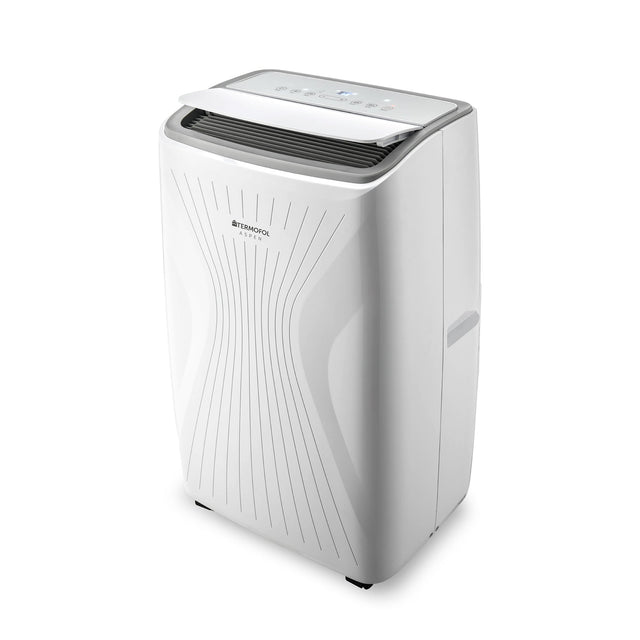
| Portable air conditioner | Active cooling with compressor and drain hose | Bedroom, living room, temporary office |
| Split air conditioning | Indoor and outdoor units move heat | Structural climate control in fixed spaces |
| Fan | Moves air without lowering the temperature | Personal comfort and air circulation |
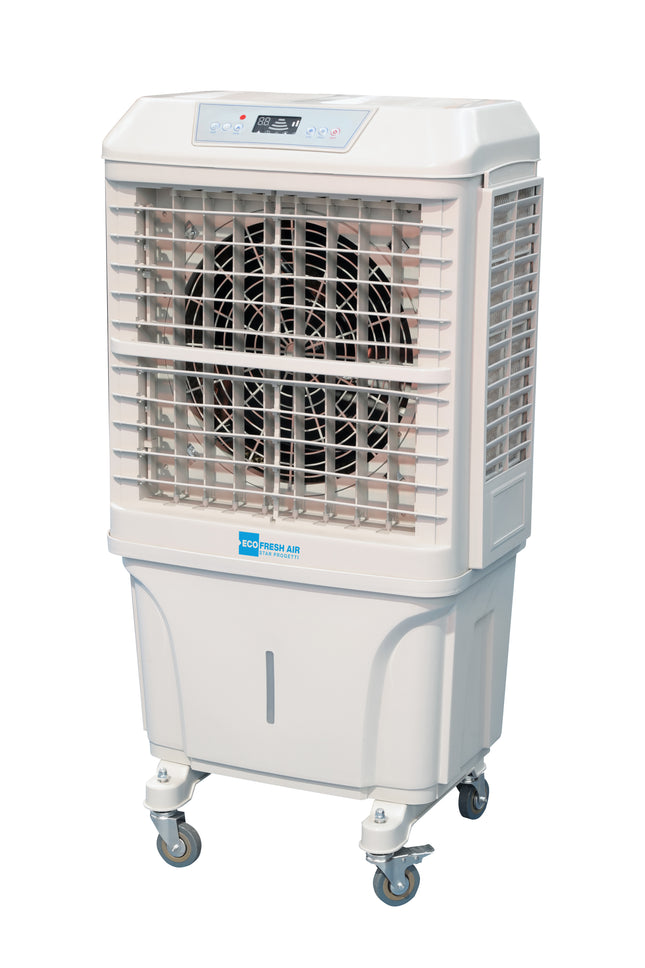
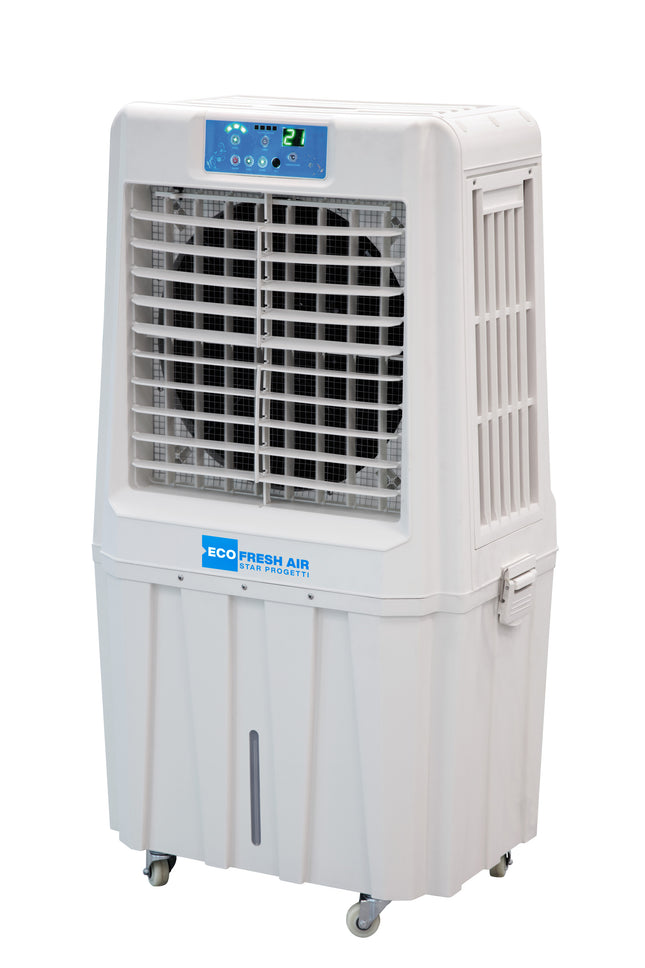
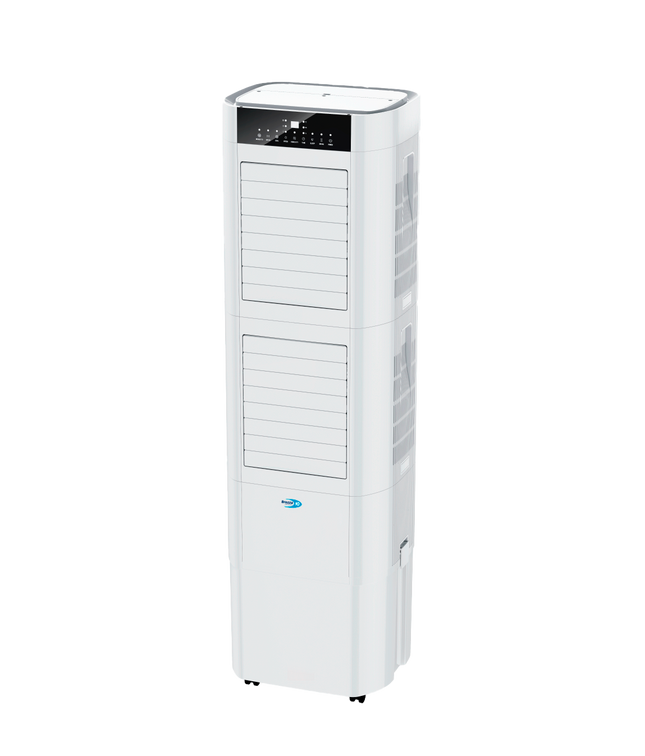
| Evaporative cooler | Cools by evaporating water | Dry, well-ventilated or open environment |
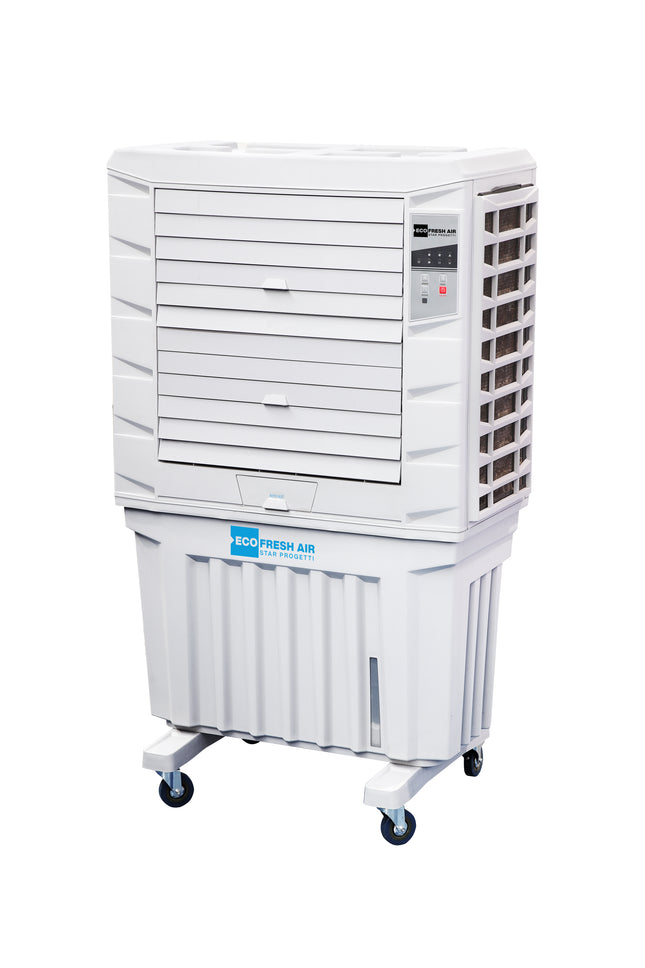
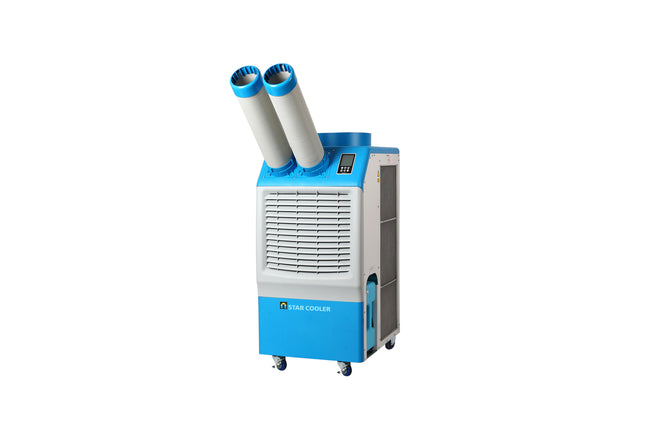
| Industrial unit | High capacity and robust air handling | Hall, warehouse, workshop or event |
Active air conditioning versus air displacement
A compressor air conditioner lowers the room temperature within its capacity. To do this, the absorbed heat must be expelled to the outside. With a portable unit, this happens via a hose; with a split system, via the outdoor unit. Therefore, active air conditioning works particularly well in an enclosed space with closed doors and windows.
A fan does not cool the air, but accelerates evaporation along the skin. This can be comfortable in moderate heat. Power consumption is generally lower, but the room temperature remains virtually the same. Therefore, choose based on the desired effect, not just on purchase price.
Evaporative cooling and humidity
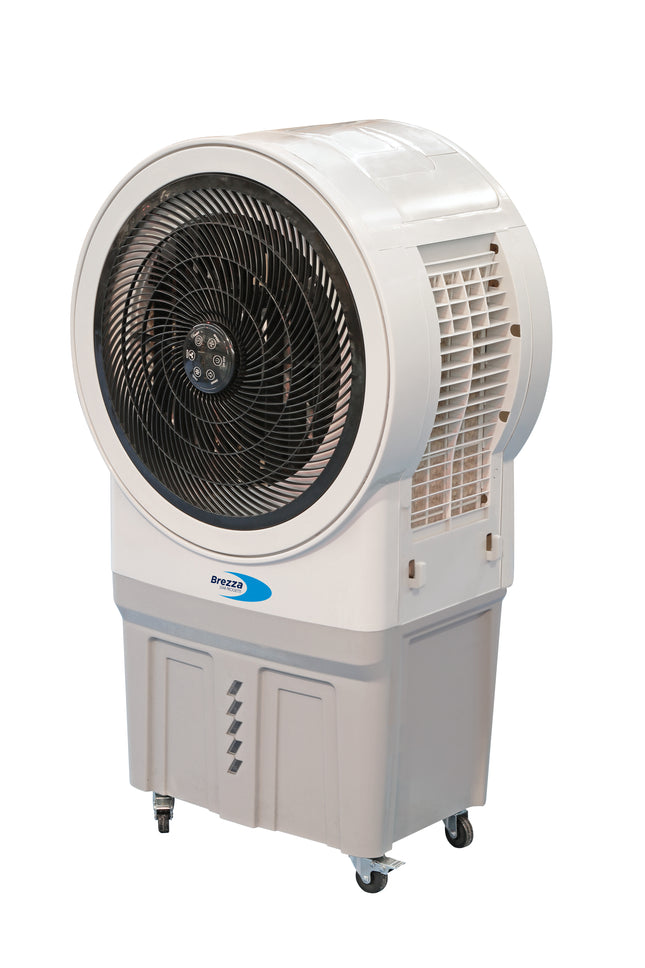
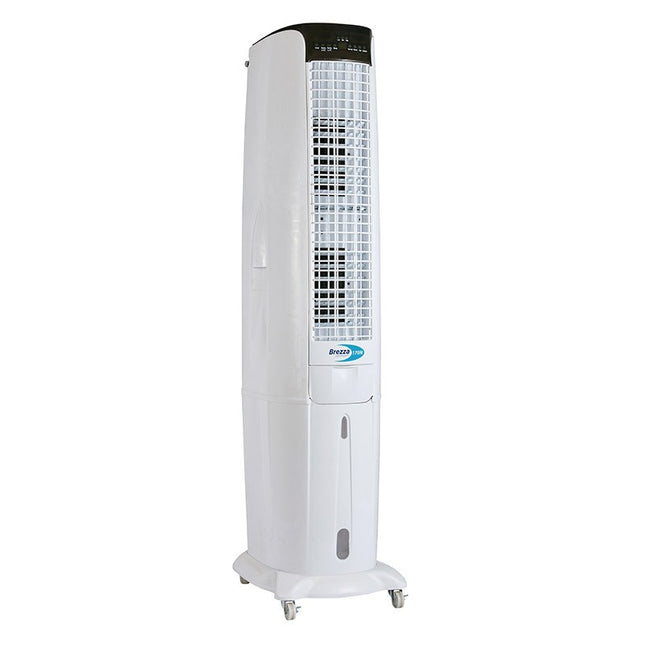
An air cooler or mist fan uses water. Heat is absorbed during evaporation, which can make the airflow feel fresher. However, performance depends on the relative humidity. Warm, dry air can absorb more moisture than humid air.
In an enclosed, already humid room, evaporative cooling can become less effective and increase the clammy feeling. Therefore, ensure adequate ventilation and follow the instructions for water quality, cleaning, and storage. For terraces, evaporation is often more attractive because the environment is open.
Determining the correct capacity
For air conditioning, cooling capacity is specified in kW or BTU per hour. Approximately 1 kW corresponds to 3,412 BTU per hour. However, capacity alone is not sufficient. The actual heat load is determined by room volume, insulation, sunlight, glass, people, lighting, and equipment.
- Measure the length, width, and height of the room.
- Assess roof, facade, windows, and insulation.
- Note the orientation and hours of direct sunlight.
- Include the number of people present and heat sources.
- Choose extra margin for an attic, flat roof, or large glass area.
An undersized system runs at maximum setting for extended periods and may not achieve the desired result. Conversely, an excessively heavy unit can be unnecessarily large, loud, or expensive. Therefore, a targeted heat load provides a better choice than simply comparing square meters.
Cooling for house and apartment
At home, comfort, noise, and flexibility play a major role. In a rental property, portable air conditioning can be attractive because no fixed refrigerant installation is required. However, proper window sealing remains essential. For prolonged daily use, a fixed split air conditioner can be quieter and more efficient.
Combine technical cooling with passive measures. External sun shading, night ventilation, closed curtains, and fewer heat-producing appliances reduce the load. Those who wish to keep a home comfortable all year round can supplement heat in the winter with underfloor heating.
Cooling for bedroom
A bedroom requires a low noise level, limited airflow along the bed, and a dark display. Preferably cool the room before going to sleep. As soon as the walls, floor, and furniture retain less heat, the device often does not have to work as hard.
Compare minimum and maximum dB(A) and check whether the lowest value applies during active cooling. A timer, sleep mode, and multiple fan speeds can increase comfort. Do not direct cold air directly at the body and choose a moderate temperature.
Cooling for office and practice space
Furthermore, computers, lighting, and multiple people increase the heat load. As a result, an office often requires more capacity than a bedroom of the same surface area. Additionally, take into account background noise during conversations and focused work.
A programmable control system therefore prevents unnecessary use outside office hours. Furthermore, smart thermostats and control systems can help better manage temperature and schedules when used with compatible climate solutions.
Terrace and open outdoor space
You cannot condition a completely open terrace like a room. Cold air blows away immediately. Outdoors, cooling primarily around targeted air movement, shade, and fine water mist. A mist fan or high-pressure system can create a local comfort zone around tables or workspaces.
Wind, humidity, and droplet size determine the effect. Additionally, check the outdoor classification, water hygiene, and electrical safety. A system must be set up so that guests, the floor, and furniture do not get unnecessarily wet.
Hospitality and events
In the hospitality industry, not only temperature matters, but also reliability during peak hours. A mobile unit is flexible, whereas a fixed setup, on the other hand, can serve a larger area evenly. Therefore, consider noise, range, maintenance, storage, and operation by staff.
For events, the setup must also be compatible with temporary power supply, walkways, and safety zones. Therefore, always check whether the equipment is suitable for the environment and the intended operating time.
Industrial and professional cooling
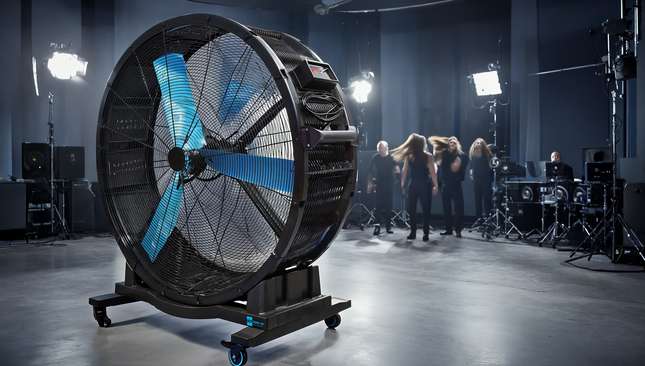
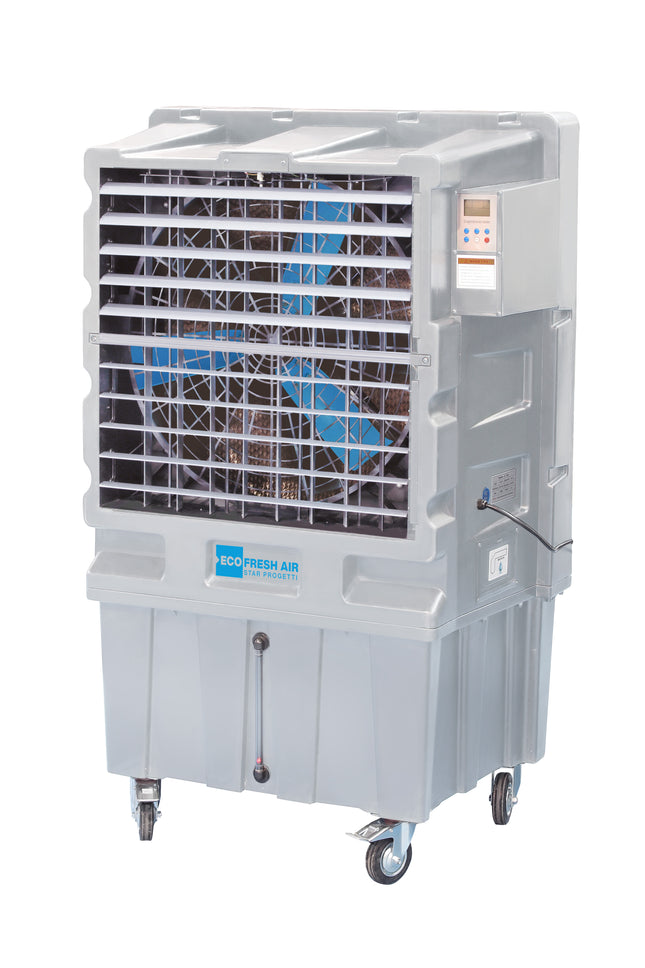
In a hall, warehouse, or production environment, large air volumes and high internal heat loads can occur. Therefore, a consumer unit is often insufficient. Moreover, professional systems are designed for heavier operating times, greater air displacement, and more robust applications.
First determine whether comfort cooling, process cooling, spot cooling, or ventilation is required. Dust, moisture, machinery, doors, and extraction also influence the choice. Always have critical business processes dimensioned by a specialist.
Power consumption and efficiency
Cooling capacity is not the same as electrical power. For a simple cost estimate, use: power consumption in kW × operating hours × electricity price per kWh. A unit that consumes 1.2 kW and runs continuously for three hours consumes a maximum of approximately 3.6 kWh.
Actual consumption varies because a compressor can switch off or reduce its operating speed. Insulation, outside temperature, settings, and operating time determine how much the system operates. Therefore, compare energy data, but always evaluate it in conjunction with the delivered capacity.
Sound and placement
Compressors, fans, pumps, and airflow produce noise. Compare minimum and maximum dB(A) under the same measurement conditions. Position equipment stably, keep air vents clear, and avoid contact with walls or furniture that may resonate.
In a bedroom or office, indoor noise is decisive. In the hospitality industry, however, noise from outside or from neighbors can be important. The right location prevents nuisance while simultaneously supporting free airflow.
Humidity and condensation
Active air conditioning extracts moisture from the air. Depending on the unit, this condensate is automatically evaporated, collected, or drained via a hose. Check what happens when a reservoir becomes full.
For evaporative coolers, the reverse is relevant: they add moisture. Clean tanks regularly, prevent stagnant water from accumulating for extended periods, and follow the hygiene instructions. This ensures reliable and safe operation.
Maintenance and lifespan
Therefore, clean filters according to the maintenance schedule. A clogged filter reduces airflow, can increase energy consumption, and potentially makes the fan louder. Additionally, check hoses, grilles, condensate drain, and electrical cables.
Furthermore, never open a refrigerant circuit yourself. Therefore, have malfunctions or leaks assessed by a qualified professional. Finally, provide professional installations with a periodic inspection and maintenance plan.
Combining cooling with heating
A reversible air conditioner can also heat in certain cases. However, cooling and heating capacity, efficiency, and operating limits are not always the same. Therefore, compare both operating modes separately.
For local heating in other rooms, a convector or a complete composite kit be suitable. The best combination depends on insulation, usage patterns, and desired control.
Buying a refrigerator: practical checklist
- Determine whether you want to lower the temperature, the perceived temperature, or the process heat.
- Choose between air conditioning, ventilation, and evaporation.
- Calculate room volume and heat load.
- Compare capacity, energy consumption, and noise level.
- Check the drainage of heat, condensation, or water.
- View power supply, placement, and exterior classification.
- Plan filter cleaning, water hygiene, and seasonal storage.
- Choose controls and functions that are truly necessary.
Why cooling from Warmteshop?
Warmteshop has been a specialist in climate and heating solutions for Belgium and the Netherlands since 2006. The range supports residential, commercial, and professional applications. By assessing technology, capacity, and operating environment together, you choose a solution that not only looks powerful but actually fits the situation.
Frequently Asked Questions
Which cooling system is best suited for a bedroom?
An active air conditioning system lowers the temperature. Pay particular attention to appropriate capacity, noise level, window sealing, and sleep functions.
Can a fan cool a room?
A fan does not lower the air temperature, but air movement can improve the perceived temperature.
Does an air cooler work in high humidity?
The effect usually diminishes when the air already contains a lot of moisture. Therefore, ensure adequate ventilation.
How do I calculate power consumption?
Multiply the power consumption in kW by the operating hours. Then multiply that result by your kWh price.
When do I need industrial cooling?
For large volumes, high internal heat loads, prolonged loading, or critical processes, professional dimensioning is advisable.