
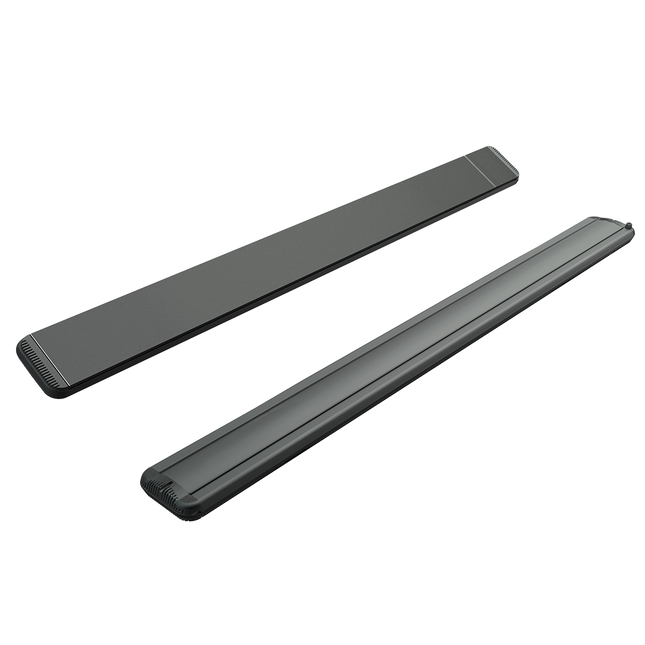
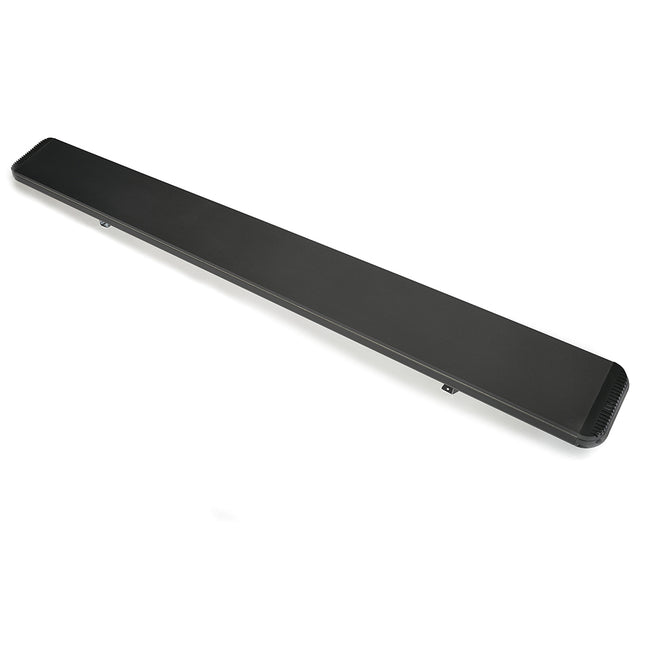
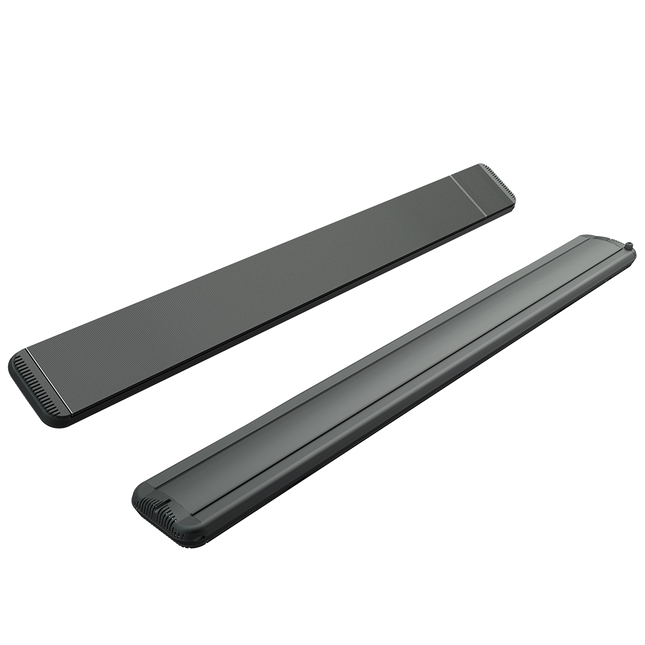
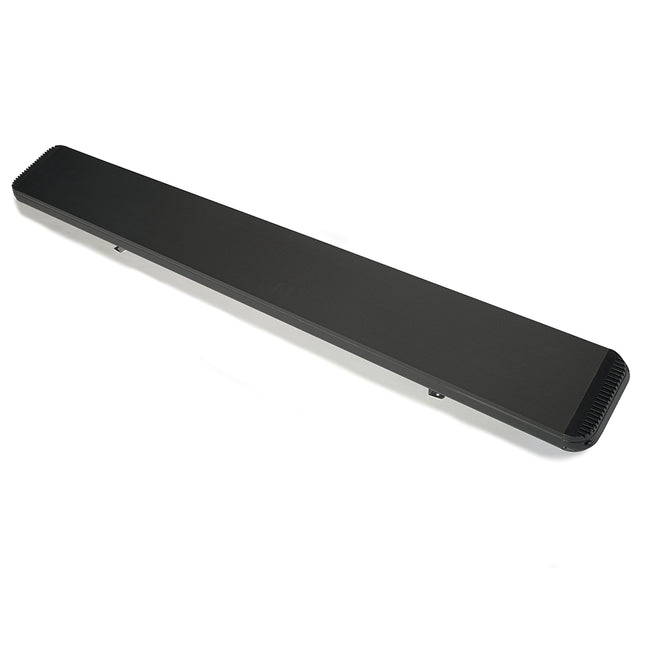
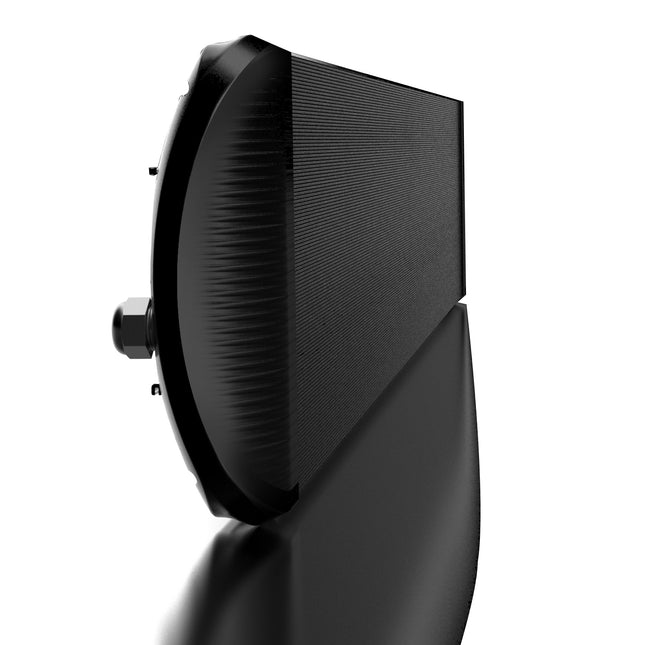
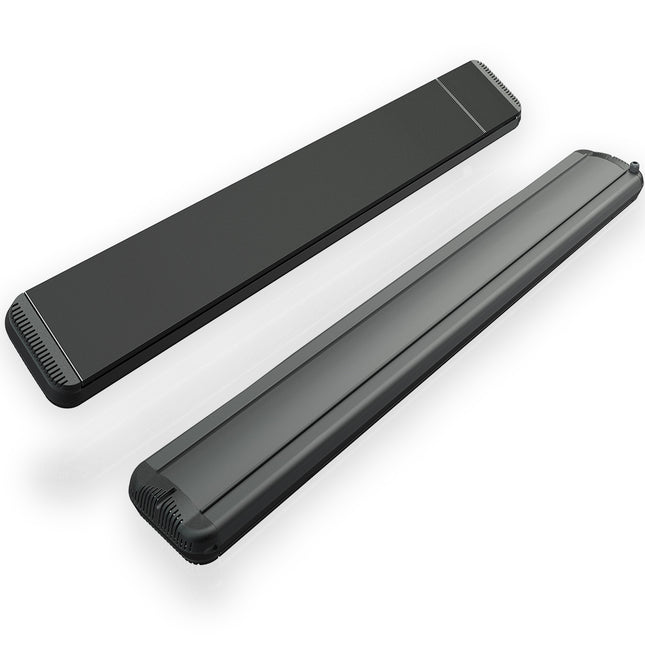


An aluminium infrared panel combines focused radiant heat with a sleek and timeless design. The panel converts electricity into infrared heat. As a result, people, walls, floors, and furniture within the radiation range are primarily heated. No fan is required. Consequently, operation is quiet and causes hardly any additional air circulation.
Aluminium can be incorporated into the housing, the surface, or just the frame. This varies by series. Power, warm-up time, IP rating, thermostat, and mounting method are also model-dependent. Therefore, this page helps you compare more than just color and size. This way, you choose a panel that truly suits the space and the intended use.
Why choose an aluminium infrared panel?
Aluminium is relatively lightweight, dimensionally stable, and easy to process into thin panels. As a result, an aluminium heating panel looks unobtrusive on the wall or ceiling. Moreover, a white or neutral finish fits into many interiors. The material also allows for a wide range of dimensions, from compact square models to wide panels.
However, aluminium alone does not determine the heating quality. The heating element, the insulating back, the radiant surface, and the controls are at least as important. Therefore, always compare the complete technical data sheet. Pay particular attention to the nominal power, the surface temperature, the protection class, and the permissible mounting position.
How does long-wave infrared heating work?
Many indoor panels use long-wave infrared. The heated surface radiates energy towards people and objects in the field of view. These absorb the heat and gradually release it. As a result, the heat feels different from that of a convector, which primarily heats the ambient air.
For good results, the panel requires an unobstructed view of the comfort zone. A tall cabinet, thick curtains, or a large piece of furniture can block the radiation. Therefore, do not place the panel only where there is free space. Above all, choose a position from which the heat reaches the used zone.
Aluminium panels for office and home workspace
A quiet panel is pleasant in a room where concentration is important. That is why an aluminium infrared panel is often considered for infrared heating in the office. With a thermostat and schedule, you heat the workspace only during working hours.
Do you primarily want localized heat around a single workspace? Then also compare an infrared panel at the desk. Targeted heating can prevent an entire room from becoming unnecessarily warmer. However, take into account the minimum distance and the maximum surface temperature of the chosen model.
Suitable for living room and bedroom
In a living space, a flat panel can replace or complement a visible radiator. The design remains clean and uncluttered, while the heat is directed towards the seating area. For this application, also take a look at our solutions for infrared heating in the living room. A proper heat loss calculation remains important when the system serves as the primary heating source.
In the bedroom, quiet operation and precise temperature control are particularly relevant. Therefore, compare models for infrared heating in the bedroom. Program a lower night temperature and heat only around the desired hours. This prevents unnecessary energy consumption.
What power do you need?
The required wattage depends on more than just the floor area. Ceiling height, insulation, glazing, outside temperature, and the number of exterior walls influence heat loss. The purpose also plays a role. Targeted supplementary heating requires a different calculation than full primary heating.
Therefore, preferably use a heat loss calculation. As a first indication, you can combine the volume of the room in cubic meters with an estimated loss per cubic meter. A modern, well-insulated room usually requires less power than an older room with drafts or a lot of glass. However, the result remains a guideline.
For a medium-sized zone, a model around 700 watts be a logical point of comparison. Larger rooms or higher heat loss may require more power. In that case, also consider models up to 1500 watts. Do not automatically choose the most powerful model. A suitable thermostat and correct placement contribute to comfort.
Compare size, wattage, and radiating surface area
Competitors often offer aluminum panels in multiple power ratings and dimensions. Common variants, for example, range between approximately 350 and 900 watts. This does not mean that every size has the same efficiency or mounting method. Therefore, check the exact power rating, dimensions, and recommended application area for each product.
A larger surface area can radiate heat over a wider plane. Conversely, a compact high-power model may have a higher surface temperature. Therefore, do not judge solely on watts per square meter of panel. Also consider distance, beam angle, operating time, and the location of the occupants.
Thermostat, Wi-Fi and zone heating
A thermostat switches off the panel as soon as the desired room temperature is reached. This prevents unnecessary overheating. Some models have a built-in controller or receiver. Others work with a separate plug-in thermostat, wireless receiver, or wired control system. Compare our infrared panels with thermostats.
Wi-Fi can be useful for weekly schedules and remote control. However, not every aluminum infrared panel supports an app. Also, check whether a Wi-Fi thermostat is included with the product or needs to be ordered separately. For multiple rooms, zone control is usually the most efficient. Each room then receives its own temperature and schedule.
Wall mounting or ceiling mounting?
Wall mounting provides focused radiation to a seating, work, or sleeping zone. Ceiling mounting distributes heat from above and keeps the walls clear. Both options can work well, but only if the manufacturer permits them for the chosen model. Some aluminium panels must be mounted exclusively on the wall.
Therefore, check the installation manual before drilling. Use suitable plugs or anchors for concrete, stone, wood, plaster, or a suspended ceiling. Additionally, maintain the prescribed distance from furniture, curtains, the floor, and the ceiling. Have a fixed electrical connection installed in accordance with the applicable regulations.
IP class and use in the bathroom
The IP code describes the protection of the housing against contact, dust, and water. For example, competitors offer panels with IP44 or IP54. However, you should not automatically attribute this class to every panel in this collection. Always check the product data sheet for the specific model.
For a bathroom, the electrical zone where the panel will be installed is also important. The IP rating, mounting height, and distance to the bath or shower must match. If in doubt, ask an installer for advice. This prevents a suitable panel from being mounted in an unsuitable location.
Safety and surface temperature
An operating panel can become hot. Therefore, never cover it and do not hang clothing or towels over it. Keep flammable materials away. Also, position a wall-mounted model so that children and pets cannot easily touch the hot surface.
Many models feature thermal protection, but this remains product-dependent. Also check the power supply voltage, cable length, plug, and maximum load of the circuit. Do not use an unsuitable extension cord. This ensures the aluminium heating panel remains safe and can release its heat freely.
Aluminium, glass, or mirror: which fits better?
Aluminium panels are often relatively lightweight and have a minimalist appearance. A glass infrared panel is more likely to be chosen if the heating system is also allowed to be a distinctive design element. Glass is generally heavier and may have different installation requirements.
A mirror panel combines heating with a functional mirror. This can be useful in a bathroom, hallway, or dressing room. Aluminium is particularly interesting when a neutral, flat, and relatively lightweight panel is desired. The best choice therefore depends on space, weight, appearance, and desired function.
How much power does the panel use?
The calculation starts with the connected load. Divide the number of watts by 1,000 and multiply this by the actual operating hours. A 700-watt panel consumes a maximum of 0.7 kWh during one hour of continuous heating. A thermostat interrupts the power as soon as the set temperature is reached.
Actual consumption therefore depends on insulation, outside temperature, settings, and usage patterns. Placement also plays a role. A well-oriented aluminium infrared panel can heat an occupied zone without bringing the entire home to the same temperature. However, this advantage only arises when the control and power output are properly matched.
Practical buying checklist
- Will the panel be the primary heating or targeted supplementary heating?
- What power results from the heat loss calculation?
- Is the entire panel made of aluminum or only the frame?
- What are the dimensions and surface temperature of the model?
- Is wall mounting, ceiling mounting, or freestanding placement permitted?
- Which mounting materials and cable are included?
- Is a thermostat integrated, included, or required separately?
- Does the model support Wi-Fi, an app, or a weekly schedule?
- Does the IP rating match the selected room and bathroom zone?
- Which warranty and safety instructions apply?
With this checklist, you compare models based on features rather than just price. This prevents a stylish model from having insufficient power or being unsuitable for the desired location. Moreover, you know in advance which accessories are still needed.
Buying an aluminium infrared panel at Warmteshop
Warmteshop has specialized in infrared heating since 2006. Our advisors compare power outputs, mounting systems, and controls daily. This allows them to assess which panel suits the space and intended use. You can also check our reputation via Warmteshop's independent Trustprofile.
Would you like to experience the warmth and finish first? Then visit one of our 30+ showrooms in Belgium and the Netherlands. Preferably bring dimensions, photos, and information about the insulation. Our specialists can then provide a targeted heat calculation and installation advice.
Frequently asked questions about aluminum infrared panels
Is aluminum better than steel?
Not automatically. Aluminium is relatively light and easily formable. However, performance also depends on the element, insulation, surface, and control. Therefore, compare complete products rather than a single material.
Can any aluminum panel be mounted on the ceiling?
No. Some models are only suitable for wall mounting. Always follow the installation manual and use the prescribed brackets and spacing.
Is an aluminum infrared panel suitable for the bathroom?
Only if the IP rating and installation instructions are suitable for the bathroom zone. Check this for each model. If in doubt, have the electrical connection assessed by a qualified installer.
Do I always need a thermostat?
For comfortable and controlled space heating, a thermostat is highly recommended. The controller prevents unnecessary overheating. Check whether it is built-in, included, or available separately.
How quickly does the panel heat up?
That varies by construction, power, and model. Aluminium conducts heat well, but the element and surface determine the total heating time. Therefore, consult the technical data sheet.
Can the panel serve as primary heating?
Yes, provided the total output covers the calculated heat loss and the panels are properly installed. For primary heating, a professional heat loss calculation is therefore important.