

Preventing condensation in the bathroom: The definitive guide to a mold-free home in 2026
, by Warmteshop, 20 min read
, by Warmteshop, 20 min read
The persistent battle against fogged-up mirrors and those dreaded black specks in the grout won't be won by increasing ventilation. Effectively preventing condensation in the bathroom requires a smarter approach than simply..
The persistent battle against foggy mirrors and those dreaded black specks in the grout won't be won by increasing ventilation. Effectively preventing condensation in the bathroom requires a smarter approach than simply opening the window. You've probably experienced this: after a comfortable shower, you step into a humid room, the mirror is unusable, and all that precious heat escapes. The result is an unnecessarily high energy bill, while the moisture problem simply returns the next day.
Forget treating the symptoms. In this definitive guide for 2026, we reveal how to break the cycle of damp and cold for good by combining the science of surface temperature with innovative infrared technology. We tackle the root cause of the problem, so you can enjoy a permanently clear mirror, a healthy indoor climate free of mold, and a bathroom that feels like a warm, safe oasis of calm.
Those annoying droplets on the mirror and the damp walls after a hot shower; it is a familiar phenomenon in almost every household. This is condensation, a natural process in which water in gaseous form (water vapor) turns into liquid water. This happens when warm, humid air comes into contact with a surface that is colder than its own dew point. The air cools down and can no longer hold the moisture, causing it to 'release' in the form of droplets. Although this is a fundamental physical principle, understanding the science behind condensation in the context of a home is crucial. After all, it is the first step to permanently preventing condensation in the bathroom and ensuring a healthy indoor climate.
The bathroom is the perfect incubator for this process. During a mere ten-minute shower, an average person can release up to 0.5 liters of water vapor into the air. In a small, enclosed space, this causes the relative humidity to rise rapidly from a comfortable 50% to over 90%. The warm, moisture-saturated air then seeks out the coldest places, inevitably leading to wet surfaces.
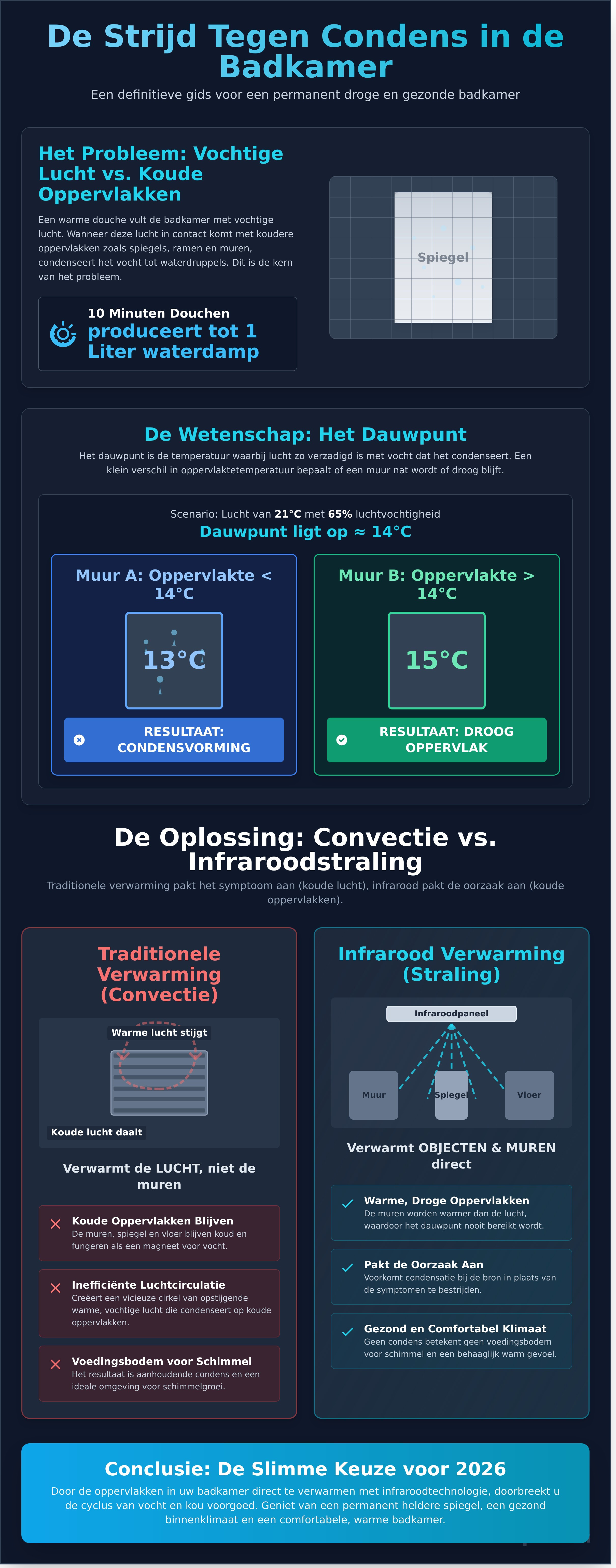
The dew point is the critical temperature at which the air is so saturated with water vapor that it begins to condense. This point isn't fixed; it depends on the air temperature and the amount of moisture in the air. In your bathroom, the coldest surfaces, such as windows, mirrors, and especially exterior walls, are the first places where this happens. They act as magnets for moisture. For example, at a room temperature of 21°C and a relative humidity of 65%, the dew point is around 14°C. A wall at 13°C will then become wet, while a wall at 15°C will remain dry. A difference of just 2 degrees can therefore determine whether you have a moisture problem.
A little mist on the mirror may seem harmless, but persistent condensation is a serious threat to both your health and the structure of your home. It creates a permanently damp environment that is an ideal breeding ground for problems. Ignoring the consequences is not an option; effectively preventing condensation in the bathroom is essential for your comfort and the value of your home.
These problems highlight the importance of proper moisture control throughout the entire house, not just in the bathroom. A professionally maintained climate control system plays a key role in this. Companies such as RMI Heating and Air Conditioning explain how an integrated approach to heating and ventilation is essential for the preservation of your home and your health.
Many people think the solution to a damp bathroom is simply turning up the thermostat. Unfortunately, this is a persistent misconception. The way a traditional radiator heats your bathroom can actually perpetuate or even worsen the condensation problem. The crucial difference lies in the type of heat: convection versus radiant.
A standard radiator works based on convection. It heats the air flowing directly around it. This warm air rises, cools against the colder ceiling, sinks back down, and is reheated by the radiator. This process creates constant air circulation. The result? A bathroom where the air feels warm, but the walls, floor, and ceiling remain cold. And it is precisely this temperature difference that is the crux of the problem.
After a hot shower, the humidity in the bathroom is extremely high; a 10-minute shower can release up to 1 liter of water vapor into the air. This warm, humid air circulates through the room and inevitably comes into contact with the cold surfaces. At that moment, the air cools down rapidly and can no longer hold the large amount of moisture. The water vapor condenses on your walls, mirror, and tiles. This creates a vicious cycle that is not only annoying but also provides a serious breeding ground for mold. As the U.S. Environmental Protection Agency (EPA) emphasizes, effective moisture control is the key to preventing mold through moisture control.
So, should you just open the window? In winter, this is a costly and often ineffective method. You're immediately letting all that expensive, heated air escape, resulting in an energy loss of up to 40%. Moreover, the cold outside air cools the walls even further, making the problem even faster the next time you shower. Effectively preventing condensation in your bathroom requires a smarter approach than just ventilation.
Warm air transports moisture. For example, air at 20°C can hold almost twice as much water vapor as air at 10°C. The air circulation of a convection radiator efficiently distributes this moist air, including any mold spores, throughout the entire room. So you're not just heating the air; you're also creating a perfect distribution system for moisture problems.
Stone walls and tiles have a high 'thermal mass', which means they absorb and release temperature changes slowly. The air in the bathroom can heat up within minutes, but it takes hours for this heat to penetrate the mass of the walls. To bathroom condensation , you should not heat the air, but the objects and surfaces in the room. Infrared panels do exactly that: they emit healthy radiant heat that is directly absorbed by the walls, floor, and furniture. By directly activating the mass of the room, the temperature difference with the air is minimized, a principle that forms the basis of our energy-efficient bathroom heating. The walls themselves become a warm, pleasant heat source, giving condensation no chance whatsoever.
A damp bathroom is more than just an inconvenience; it is a breeding ground for mold and can damage the structure of your home. Fortunately, preventing bathroom condensation not a matter of luck, but of a smart, integrated approach. For 2026 and beyond, there are five proven methods that, when combined, guarantee a permanently dry and healthy space. These strategies combine daily habits with future-proof technology for maximum results.
The foundation for a moisture-free bathroom begins with an effective ventilation strategy. Many people leave a window slightly ajar, but for rapid moisture removal, short, powerful ventilation—also known as opening the window fully for 5 to 10 minutes in the morning and evening—is significantly more effective. This refreshes the air without cooling the walls too much. Constant, low ventilation via a mechanical system is ideal for keeping base humidity low. Independent organizations such as Milieu Centraal underscore the importance of good ventilation for a healthy indoor climate, and their advice provides an excellent starting point.
One of the most innovative ways to tackle condensation right at the source is to increase the surface temperature. Condensation occurs when warm, moist air comes into contact with a cold surface, such as a mirror, tiled wall, or window. Traditional radiators heat the air (convection heat), but the objects in the room remain relatively cold. Infrared technology works fundamentally differently. It emits radiant heat that directly warms objects, walls, and even you. A wall heated to 21°C simply won't allow condensation to form, even in high humidity. The result? No more fogged-up mirrors and walls that stay dry.
In addition to technology, the materials used and your personal habits also play a role.
The ultimate step in controlling your bathroom climate is the integration of smart technology. Sensors and thermostats can do the thinking for you, ensuring perfectly timed and energy-efficient control.
A comprehensive strategy includes both passive and active measures. Passive tips, such as drying the shower and keeping the bathroom door closed, are essential. Active prevention goes a step further, for example, by installing infrared heating. This technology actively prevents your walls from reaching the dew point. The combination is incredibly effective: you immediately remove water (passive), while your heating prevents any remaining moisture from condensing (active).
Smart technology makes your humidity control proactive instead of reactive. A hygrostat continuously measures humidity and can automatically activate your ventilation system or infrared panel when the value rises above 60%. By pairing this with smart thermostats, you can even preheat the bathroom just before you shower. This data-driven heating ensures that your system anticipates humidity peaks, which is not only more effective but also saves significant energy.
Ventilation is crucial, but what if you could tackle the problem at its source? Traditional heating warms the air, which then absorbs moisture. As soon as this warm, moist air touches a cold surface, such as a mirror, tile, or window, condensation forms. Infrared heating works fundamentally differently. It doesn't heat the air itself, but the objects and surfaces in the room directly. Walls, floors, and furniture absorb the heat and gradually release it. This causes the surface temperature to rise above the air temperature, physically preventing condensation. This is the key to effectively preventing condensation in the bathroom: ensure warm surfaces.
Imagine stepping out of a hot shower and seeing your mirror perfectly clear. No streaks, no waiting. This is the reality with an infrared mirror. An invisible heating element keeps the mirror surface at a constant temperature of approximately 35-40 degrees Celsius. This is just warm enough to exceed the dew point, preventing water vapor from settling. Besides this functionality, it's an aesthetic upgrade for any bathroom. For those who want to keep their current mirror, self-adhesive anti-fog mirror film an equally effective solution.
A damp towel is a breeding ground for bacteria and a constant source of moisture in the bathroom. An infrared towel radiator dries your textiles lightning-fast from the inside out. This not only stops moisture from being released into the air but also ensures a hygienic, warm towel every day. For the ultimate combination of wellness and moisture prevention, there is the Sunshower. This system integrates infrared heat into your shower area. The radiation warms your body and the surrounding walls, which not only relaxes the muscles but also instantly dries the shower cabin and minimizes condensation.
The efficiency of infrared is a significant advantage. Because the heat is transferred directly to objects and people, you feel a pleasant warmth without having to heat the entire air column. Compare it to a traditional 1500-watt electric convector that circulates the air. A strategically placed 600-watt infrared panel can provide a similar or even higher level of comfort. This leads to direct energy savings of up to 45%, depending on the insulation and usage. So you're not only investing in a condensation-free bathroom but also in lower energy bills.
Ready to make the switch to a healthy, comfortable, and condensation-free bathroom? Discover the ideal infrared solution for your bathroom and experience the difference for yourself.
A permanent solution for a damp bathroom isn't a matter of luck, but rather a well-thought-out approach. With the right steps, you can transform your bathroom into an oasis of comfort and health. Warmteshop guides you through this process, from the initial analysis to the perfectly adjusted installation. This way, you can prevent condensation in your bathroom and enjoy a pleasant, healthy warmth.
Creating a condensation-free bathroom follows a logical path. By carefully managing each phase, we guarantee an efficient and sustainable result that perfectly suits your specific situation.
Theory is important, but practice is what makes it so convincing. Experience the pleasant radiant heat for yourself in our 30 showrooms across the Benelux region. Our experts, with over 18 years of combined experience, are ready to design a customized solution that fits your renovation plans and budget. Feel the warmth, view the designs, and get advice.
Infrared heating is more than a solution for condensation; it's an investment in a sustainable future. The system is 100% electric and perfectly compatible with solar panels, resulting in CO2-neutral heat. Moreover, you only heat the bathroom when you're using it, instead of firing up the entire central heating system for a quick shower. This results in an immediate saving of up to 40% on heating costs for that room. Switch to a healthy, future-proof heat source today.
Are you ready to say goodbye to condensation and choose comfort and sustainability? Request a free quote for your bathroom solution today.
You've read about how condensation forms and why traditional heating often falls short by simply circulating moist air. The real breakthrough lies not in more ventilation or heating more intensely, but in fundamentally addressing cold surfaces. This is precisely where the innovation of infrared radiation will make all the difference for your home in 2026 and beyond.
Effectively preventing condensation in the bathroom means directly heating the walls, floor, and objects so that water vapor no longer has a chance to adhere. This not only creates a drier space but also a much more pleasant, healthy warmth without disruptive air circulation.
As a specialist with over 18 years of experience in infrared technology and 30+ physical showrooms in the Benelux, Warmteshop offers you a proven, future-proof solution. Our maintenance-free and energy-efficient systems are a smart investment in your home comfort and health.
This focus on quality and well-being is reflected in many aspects of comfortable living, from a perfectly tempered home to enjoying authentic, artisanal products. For those who appreciate craftsmanship in all its forms, conserverie-maison-marthe.fr a fine example in the culinary world.
Are you ready to say goodbye to foggy mirrors and damp walls? Discover our infrared bathroom solutions and say goodbye to condensation and hello to a healthy, comfortable space you can enjoy every day.
You can effectively combat condensation by directly heating the surfaces in your bathroom with infrared radiation. Unlike traditional heating, which warms the air, infrared heats the walls, floor, and objects. This raises the surface temperature above the air's dew point, preventing water vapor from settling. This proactive approach to preventing condensation in the bathroom is extremely effective, especially when combined with a brief airing (5-10 minutes) after showering.
Yes, infrared heating is one of the most effective methods for combating mold. Mold needs moisture to grow, and infrared radiation keeps walls and ceilings dry. Because the surfaces are heated directly, they remain warmer than the surrounding air, preventing condensation. A dry wall is an uninhabitable environment for mold spores, allowing you to enjoy a healthier and more pleasant indoor climate without the typical musty odor.
Your mirror fogs up because the relatively cold glass surface comes into contact with the warm, moist air after a shower or bath. The most durable and elegant solution is an infrared mirror heater. This is a mirror with a fully integrated heating element. The system keeps the mirror surface a constant few degrees above the air temperature, preventing condensation. This way, you always have a clear view, immediately after showering.
Absolutely, infrared heating is completely safe for use in damp areas like bathrooms. Our bathroom panels meet strict safety requirements and have a minimum IP44 rating, meaning they are completely splash-proof. For installation near a shower or bath (zone 1), we use panels with an even higher IP65 rating. Proper installation by a professional in accordance with the NEN 1010 standard guarantees 100% safety.
The ideal relative humidity for a bathroom, just like in the rest of your home, is between 40% and 60%. This percentage can temporarily rise above 90% during a shower. It's essential that this value returns to normal within 15 to 20 minutes after showering. Infrared heating helps by keeping the walls dry, which accelerates the restoration of a healthy balance and prevents moisture problems.
An average infrared mirror with a power output of 400 watts uses surprisingly little energy. A 15-minute shower uses only 0.1 kWh. At an electricity price of €0.35 per kWh, this costs you less than 0.4 cents. Because the mirror is only on when needed and emits heat in a highly targeted manner, it's an extremely energy-efficient and cost-effective solution for a fog-free mirror and added comfort.
Although installing a panel may seem simple, we strongly recommend leaving the electrical installation in your bathroom to a certified electrician. Bathrooms have specific safety zones (defined in the NEN 1010 standard) where strict regulations apply to electrical equipment. A professional guarantees a safe, waterproof connection and the correct installation of the panel with the correct IP rating, which is essential for your safety and insurance.
The main difference is the source of the moisture. Condensation is an internal problem caused by warm, moist air condensing on cold indoor surfaces, such as windows and walls. Penetrating damp is an external, structural problem where moisture from outside penetrates the facade, for example, through porous bricks or poor pointing. Condensation can be solved with heating and ventilation; penetrating damp requires repairs to the exterior of your home.
If the problem originates externally, it's essential to call in specialists to address the exterior of your home. Companies specializing in roofing and facade finishing, such as pauresta.lt, offer the materials and expertise to effectively protect your home from moisture ingress.


