
Infrared conservatory heating: the complete buying guide for 2026
, by Warmteshop, 17 min read
, by Warmteshop, 17 min read
Why would you invest in a beautiful glass extension if you can only sit there truly comfortably for a few months a year? It is a frustrating and familiar problem; as soon as the sun disappears, the conservatory changes…
Why invest in a beautiful glass extension if you can only sit there truly comfortably for a few months a year? It is a frustrating and familiar problem; as soon as the sun disappears, the conservatory often turns into a chilly place where drafts and condensation take over. Moreover, the fear of sky-high energy bills due to inefficient heaters causes many people to simply close off their conservatories completely during the winter months, especially now that energy prices are showing an upward trend again in August 2026.
You deserve a space that feels like a warm bath all year round. With the right infrared conservatory heating, you transform this glass room into a fully-fledged living space where you can relax comfortably, even on the coldest days. In this guide, you will discover how radiant heat tackles the cold directly at the source, without bulky radiators getting in the way or heat escaping directly to the ceiling. We dive into the world of aesthetic panels and smart control, so you know exactly which solution enhances your living comfort and keeps your energy costs efficiently manageable.
A conservatory is the ideal place to enjoy the outdoors, but the thermal challenges of a glass structure are significant. Glass is an excellent conductor of cold, meaning traditional heating systems often fall hopelessly short. Whereas a conventional radiator heats the air, which then immediately rises and cools against the cold glass surface, infrared takes a fundamentally different approach. Its operation is comparable to the natural heat of the sun: the radiation does not heat the air, but directly the bodies and objects in the room.
This principle is crucial for effective infrared heating in a conservatory. Because objects such as the floor and furniture absorb energy and release it slowly, an even heat distribution is created. This prevents the notorious 'cold drop', where cold air 'falls' down the glass and causes an unpleasant draft across the floor. For a deeper insight into the technical background of this process, you can read about how infrared heating works at a technical level. Moreover, because the start-up time is minimal, the system is ideal for occasional use. You do not need to heat hours in advance; within a few minutes, you will feel the comfortable radiant heat on your skin.
Condensation on windows is a common problem in conservatories, especially during the chilly mornings in 2026. This occurs when warm, humid air comes into contact with cold glass surfaces. Infrared panels solve this by directly heating the profiles and the glass itself, preventing the dew point from being reached as quickly. As a result, the walls remain dry and mold has no chance to grow. An additional benefit is the healthy air quality. Because there is no constant air circulation as with convection, significantly less dust is moved. This ensures a stable indoor climate without the need for constant ventilation to remove moisture.
A healthy indoor climate is not only good for you, but also for your plants; discover the soil and plant tissue analyses from ROfert România to ensure that your greenery thrives optimally in this controlled environment.
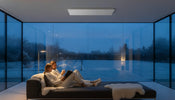
In a conservatory, everything revolves around the view and the natural light. While Intura ’s daylight solutions ensure optimal natural lighting, it is equally important that the heating does not disturb the visual tranquility. Bulky radiators or thick pipes take up valuable space, whereas modern infrared solutions are extremely slim and discreet. They can be easily mounted to the ceiling, where they blend virtually invisibly into the design of the extension. There are even options to integrate lighting into the heating units, making the technology multifunctional. This way, you maintain that sleek, modern look without compromising on comfort. It is a smart upgrade that instantly enhances your living enjoyment without the heating being a prominent feature in your interior.
No two conservatories are the same, and the same applies to the way you heat them. The choice of a specific infrared heater for a conservatory depends heavily on the level of insulation, the ceiling height, and your personal usage. While one person uses the conservatory as a fully-fledged living room, another sees it as a place for early spring mornings. It is therefore essential to choose a system that suits your specific situation.
Infrared ceiling panels are the most efficient solution in most cases. They have a clear radiation angle towards the floor, ensuring the entire room is heated evenly. This prevents furniture from blocking the heat, something that can happen with wall panels. For those who prefer to heat a specific seating area or workspace, wall panels are an excellent addition. Are you dealing with a poorly insulated conservatory or a very high ceiling? Then powerful patio heaters or heat bars offer a solution. These devices operate at a higher intensity to effectively break the cold draft. For maximum flexibility, there are also freestanding models that you can easily move to wherever you are sitting at that moment.
The distinction between wavelengths determines how you experience the heat. Dark radiators (long wave) emit no light and are ideal for fully enclosed garden rooms where a quiet atmosphere is desired. They provide a gentle, constant heat that aligns perfectly with the advice in this Energy Saving Trust guide on energy-efficient heating and preventing condensation. Short-wave radiators, on the other hand, are better suited for semi-open conservatories. This radiation is more powerful and less susceptible to gusts of wind, ensuring you remain comfortable even with an open sliding door.
Heating doesn't have to be boring and shouldn't disrupt the aesthetics of your glass extension. The modern collection of infrared heating offers tempered glass panels that seamlessly complement the modern look of your conservatory. Do you want to completely camouflage the technology? Then choose a photo panel with your own image or a stylish infrared mirror. This way, your heating functions directly as decoration or a functional interior piece. In our showrooms, you can experience the different radiation intensities and designs for yourself before making a decision.
Calculating the correct capacity for a conservatory is a specialized skill. While a well-insulated living room often suffices with a lower wattage, a glass extension requires a more powerful approach. This is because glass conducts heat faster than a stone wall. To guarantee a comfortable climate, we typically use a rule of thumb of 70 to 100 watts per square meter for infrared conservatory heating . This higher power is necessary to effectively neutralize cold drafts at the glass surface.
The height of your ceiling plays a crucial role in this. In conservatories with a pitched roof or a high-rising glass roof, the radiation spreads over a larger volume before reaching the floor. In such cases, it is often advisable to opt for more powerful heaters or to increase the number of panels. Although it sounds contradictory, oversizing is often the most energy-efficient choice. A system with extra capacity reaches the desired temperature faster, allowing the thermostat to switch off the panel sooner. Given the average electricity price of approximately €0.1615 per kWh in August 2026, a fast warm-up time is essential to keep your consumption costs under control.
The quality of your glass largely determines how many watts you actually need. We make a clear distinction here:
The location where you mount the panels determines how effectively the radiation is utilized. A common mistake is placing panels directly opposite large glass surfaces. Because glass partially reflects and partially transmits radiation, valuable energy is lost in this way. It is more effective to orient the panels so that they heat the interior walls or the floor. These objects act as a thermal battery; they store the heat and gradually radiate it back into the room. Keep in mind a radiation angle of approximately 45 degrees. This creates an overlapping heat field that reaches every corner of your conservatory without cold zones.

Installing the right panels is an important step, but the way you control the system ultimately determines your actual comfort and the level of your energy bill. An infrared conservatory heater only performs truly optimally when supported by smart technology. Because a conservatory reacts more quickly to external factors such as a sudden burst of sunlight due to the large glass panels, a reactive control system is essential to prevent energy waste.
Thanks to modern Wi-Fi modules, you never have to step into a chilly room again. You can start warming up the conservatory while you are still in the kitchen or on your way home. This is not only comfortable but also efficient. Moreover, with zone control, you can precisely determine which parts of the conservatory need heat. Are you sitting alone in the reading nook? Then you don't need to heat the entire glass extension. Motion sensors can further automate this process by only switching on the panels when someone is actually present in the room, which is ideal for conservatories that are used only occasionally.
For accurate climate control, connecting your panels to a wireless thermostat the best choice. Unlike built-in thermostats, a wireless model measures the temperature where you are sitting, rather than directly at the heat source. Furthermore, smartphone apps provide you with immediate insight into your current energy consumption. You can set detailed programmable schedules that adapt to your daily routine, so the heating automatically switches off when the sun begins to naturally warm the conservatory.
Safety is paramount when it comes to the electrical installation of a glass room. If you have many plants in the conservatory and use watering systems, it is important to pay attention to the IP rating of the panels. This rating indicates the extent to which the device is protected against moisture and splashing water. Although the installation of infrared panels is relatively simple, a professional connection ensures that your electrical grid can safely supply the required capacity. For those striving for the absolute pinnacle of luxury, a combination with underfloor heating an excellent option. The floor then acts as a constant heat source, while the panels provide fast, direct radiant heat to your body.
Would you like to experience for yourself how these smart features enhance your living comfort? Visit one of our showrooms to see the latest infrared heating systems in action and receive advice on the best configuration for your situation.
At Warmteshop, we understand that a conservatory is more than just a glass extension; it is a place where you want to experience the seasons without feeling the cold. Our collection of infrared conservatory heating has been refined over the years and specifically tested for the thermal challenges of glass and cold drafts. As the market leader in the Benelux since 2006, we offer not just products, but a total solution that elevates your living comfort to a higher level. Moreover, with more than 5,000 panels in stock and our own warehouse, we guarantee a quick transition to your new, warm living space.
You don't have to make the right choice alone. Our experts are happy to create a free heating plan for you, taking into account the exact dimensions, the sun's orientation, and the insulation value of your glass. This personal advice forms the basis for a system that delivers exactly what you need: healthy heat that, just like the sun, directly warms people and space.
To help you orient yourself, we have selected three popular solutions that excel in performance and aesthetics:
Choosing Warmteshop means choosing reliability and craftsmanship. With more than 30 showrooms in Antwerp, Ghent, Brussels, and other locations, we offer you the unique opportunity to experience the pleasant radiant heat for yourself before you decide. So you will never buy a pig in a poke. Our specialists translate complex technical information into understandable advice tailored to your living situation. Moreover, our systems are highly rated by our customers, as you can see in the independent reviews on Trustprofile.
We offer a worry-free service, from the initial heat calculation to professional installation by our own teams. This ensures that your system is connected safely and for optimal efficiency. Are you ready to transform your conservatory into your favorite spot in the house? View the complete collection of infrared heating for conservatories and discover how we can sustainably enhance your living comfort.
You have now seen that heating a conservatory with the power of the sun is not just a dream, but a smart and achievable reality for 2026. By choosing radiant heat instead of air heating, you directly tackle cold drafts near the glass and create a healthy indoor climate without condensation. Whether you fall for the aesthetics of our Red Dot Design Award winners or need the brute power of the High Power series, the right infrared conservatory heating makes the difference between a chilly glass cabinet and a favorite living space where you can unwind all year round.
Do you want to know for sure which configuration works best for your specific situation? Our experts are ready to assist you with a free, customized heat calculation to accurately map out every source of heat loss. You are also very welcome to visit one of our 30+ showrooms in the Benelux to experience the quality and healthy warmth for yourself. Take the step towards a sustainable upgrade to your living comfort today and enjoy a conservatory that always feels cozy.
Discover the ideal infrared heating for your conservatory at Warmteshop
Yes, infrared is actually the most effective method for a glass room because it heats objects and not the air. While warm air cools down immediately against cold glass, radiant heat ensures that your body absorbs the heat directly. For conservatories with a lot of glass, we often recommend our powerful High Power heaters to effectively break the cold draft.
For an average conservatory, you should count on a power output between 70 and 100 watts per square meter. The exact requirement depends heavily on the insulation value of your glass; you need more power with HR++ glass than with triple glazing. A free heat calculation by an expert from Warmteshop is the best way to determine the exact wattage for your situation.
You calculate the costs by multiplying the total wattage of your panels by the current electricity price, which averages €0.1615 per kWh in August 2026. A 1000-watt panel therefore consumes approximately €0.16 per hour when running at full power. However, thanks to smart thermostats, the panels are rarely on for the full hour, which significantly reduces the actual costs.
Many infrared panels are designed as plug-and-play systems that you can hang yourself using a simple bracket. However, for a conservatory, we often recommend professional installation to conceal the wiring invisibly within the profiles or ceiling. This not only ensures a cleaner result but also guarantees that the load on your circuit is safely distributed.
In a conservatory, infrared heating is often more cost-effective because you do not waste energy heating air that cools down immediately. Moreover, you are not burdened by maintenance costs or the need for a flue. In combination with solar panels, switching to electric heating is a smart investment that pays for itself through lower operating costs and a higher return.
Absolutely, infrared heating is one of the best remedies for condensation on your windows. By directly heating the glass profiles and walls, the surface temperature remains above the dew point. As a result, moisture has no chance to condense on the glass, ensuring a clear view and a drier, healthier indoor climate in the glass extension.
The most effective location for an infrared panel is on the ceiling, directed towards the floor or an interior wall. Avoid placing it directly opposite a glass wall, as glass reflects or transmits some of the radiation to the outside. By directing the radiation onto the floor or furniture, you create a thermal mass that retains the heat and releases it evenly.


