

Choosing a bathroom heater in 2026: your complete buying guide for bathroom heating
, by Warmteshop, 14 min read
, by Warmteshop, 14 min read
Heating the air in a stuffy bathroom is one of the most inefficient habits in the home. You probably recognize this: you step out of the shower shivering early in the morning, while the traditional radiator is annoyingly lo…
Heating the air in a stuffy bathroom is one of the most inefficient habits in the home. You’ll surely recognize this: you step out of the shower shivering early in the morning, while the traditional radiator takes an agonizingly long time to warm up and condensation drips down cold walls and fogged-up mirrors. A well-chosen bathroom heater puts an end to this daily frustration once and for all. By opting for targeted radiant heat, you immediately experience a pleasant glow on your skin, comparable to the natural warmth of the sun, without wasting precious energy on slow air circulation.
In this complete buying guide, you will discover which bathroom heater best suits your situation for instant heat, lower energy costs, and a mold-free bathroom. We take a close look at the latest innovations, clarify the strict IP safety zones in accordance with current water standards, and show you exactly how to determine the correct wattage and the ideal installation location for your bathroom.
A bathroom places entirely unique demands on heating technology. You often use this space for only a short time, yet it is precisely at those moments that you long for immediate comfort without long warm-up times. At the same time, a hot shower causes a sudden peak in humidity. Simply hanging up a random bathroom heater is not sufficient; the wrong approach leads to energy waste and stubborn moisture in the masonry.
As soon as warm water vapor comes into contact with cold walls and mirrors, condensation occurs. Damp surfaces cool the room down even further and create an ideal breeding ground for mold. Within the general principles of Heating, Ventilation, and Air Conditioning (HVAC), moisture control is therefore at the core of a healthy indoor climate. By heating surfaces specifically, rather than just the air in between, walls dry quickly and mold is given no chance to take hold.
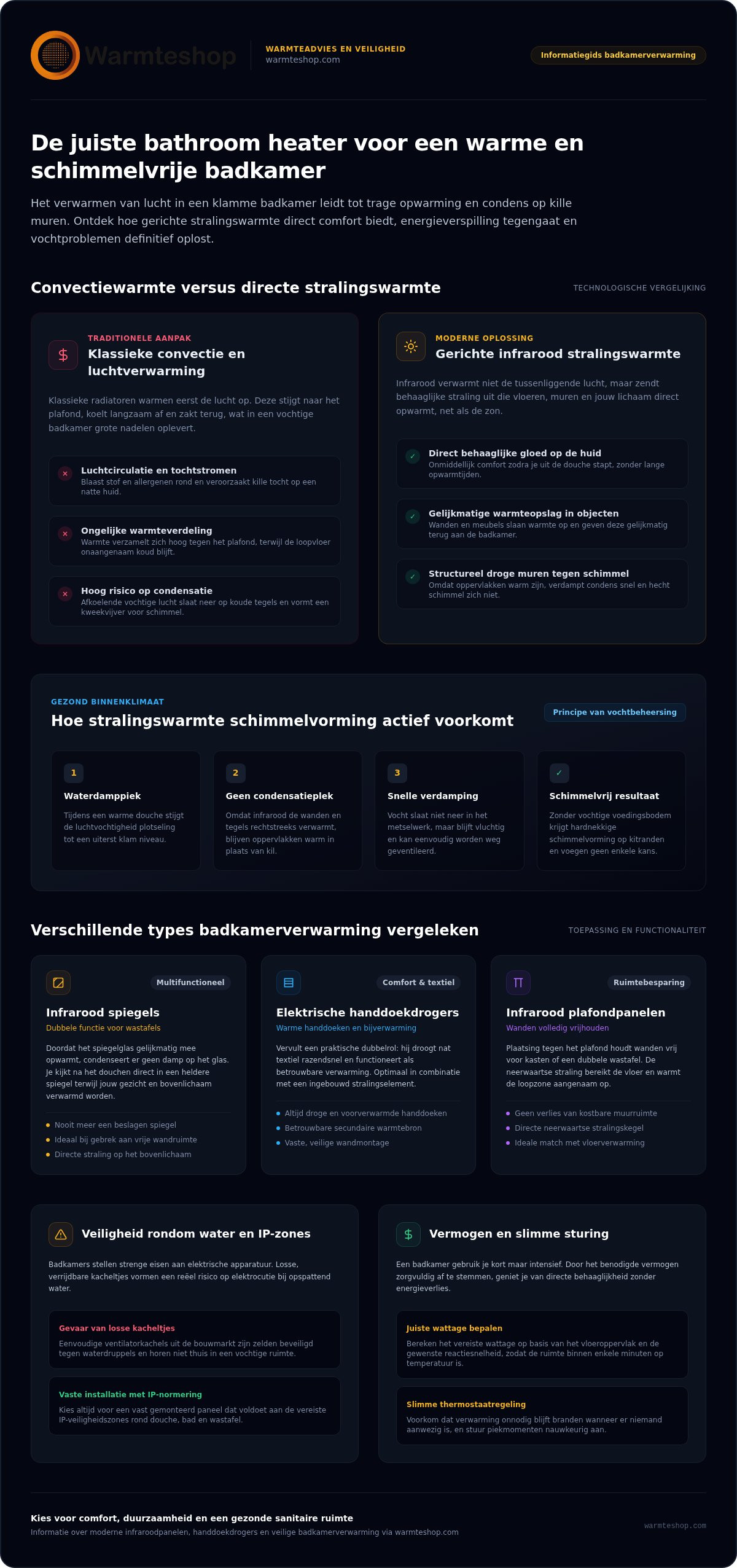
Classic radiators and convection heaters heat the air, after which it rises and cools down again. This entails several disadvantages:
A modern bathroom heater with infrared technology works fundamentally differently. Instead of slow air movement, the system emits pleasant radiant heat, just as the sun warms our earth. The rays instantly warm floors, walls, and furniture, as well as your body when you step out of the shower. These objects store the heat and release it evenly back into the room. This way, you immediately enjoy comfortable warmth without any waiting time, while walls remain structurally dry.
Curious about a comprehensive analysis of all electrical systems? Read more about the background of electric heating in the bathroom for an even more complete comparison of the different technologies.
Not every heating system suits the layout of your bathroom. While standard hardware stores often opt for simple fan heaters, a future-oriented approach offers much more comfort and aesthetics. Moreover, portable heaters pose a real risk in the event of splashing water, as evidenced by official safety warnings for bathroom heaters regarding the risk of electrocution. A fixed, specially designed installation is therefore always the wisest choice for your bathroom.
Lack of space is a common problem in modern bathrooms. A slim infrared panel on the wall or ceiling takes up hardly any space. A particularly elegant solution is the functional infrared mirror. Because the mirror glass itself heats up evenly, no moisture condenses on the surface. You step out of the shower and look directly into a crystal-clear mirror, while your face and upper body enjoy direct radiant heat.
Warm towels significantly enhance daily comfort. A well-designed towel radiator plays a dual role in this regard: it dries textiles extremely quickly and simultaneously acts as reliable supplementary heating. While electric convectors heat the surrounding air more quickly than bulky water radiators, they lose their heat as soon as you open the window to ventilate. A combination of a towel dryer with an integrated radiant element therefore offers the best of both worlds.
Do you want to keep all walls clear for stylish cabinets or a double sink? Then choose an infrared panel on the ceiling. The downward radiation reaches the floor and pleasantly warms the walking area. This combines perfectly with electric underfloor heating mats. Underfloor heating provides a comfortable base temperature beneath the tiles, after which a ceiling heater delivers the desired peak heat within a few minutes.
Are you looking for the perfect balance between sleek design and energy efficiency? Discover the possibilities for your home at warmteshop.com and be inspired by modern heating solutions.
A well-considered purchase requires more than just looking at the design. Because electricity and moisture do not mix well, strict technical regulations apply in sanitary areas. By mapping out the correct specifications in advance, you prevent dangerous situations and unnecessary power consumption.
National installation standards, such as the Dutch NEN 1010 and the Belgian AREI, divide the bathroom into strict safety zones to rule out risks:
A comfortable bathroom temperature of around 24°C is significantly higher than the 20°C in a living room. To reach this temperature quickly, use a power output of 75 to 100 watts per cubic meter (m³) as a rule of thumb. Does your bathroom have large exterior windows or moderate insulation? Then count on a capacity of approximately 100 to 120 watts per m³. A bathroom heater with insufficient power will continue to run at full power without ever feeling comfortably warm. Generously sized wattage, on the other hand, ensures a quick response and switches off in time.
Efficient energy management revolves around targeted control, as is also evident from broader insights into residential heating technologies. You are often only present in a bathroom for a short time. Therefore, connect your heating to programmable thermostats with a convenient weekly timer or presence detection. This way, the room only heats up during your fixed morning and evening rituals. With a wireless thermostat or app control, you switch on the system with a single tap from the breakfast table, so the tiles feel wonderfully warm as soon as you open the door.
Even the most advanced heating system performs poorly if the mounting position is incorrect. Because radiant heat travels in straight lines, just like sunlight, the beam must reach the zones where you are actually standing still without obstruction. An ill-chosen spot behind a swinging door or a tall column cabinet completely blocks the radiation, causing valuable energy to be lost into the furniture.
Wall mounting works excellently when you want to experience targeted heat at chest and face height, for example directly opposite the washbasin or next to the walk-in shower. Ceiling mounting, on the other hand, offers a significant spatial advantage: all walls remain free for storage space or sanitary fixtures. From the ceiling, an infrared panel radiates downwards at a wide angle. As a result, the panel heats the tiled floor evenly across the entire walking surface. When mounting to the ceiling, do take the mounting height into account; preferably do not hang panels higher than approximately 2.70 meters to maintain optimal radiation intensity at floor level.
Thermal bridges in exterior walls are the primary cause of persistent damp. By strategically directing your bathroom heater at the coldest exterior wall of the bathroom, you effectively break down that cold zone. The wall absorbs the radiant heat and remains dry, preventing moisture droplets from establishing a grip on the mortar.
In addition, please observe the following guidelines for final placement:
Do you want absolute certainty regarding the most effective configuration and professional installation in accordance with all applicable safety requirements? Request personal advice from Warmteshop and have your bathroom heating precisely measured by experienced experts.
Switching to modern electric heating means saying goodbye to bulky radiators and slow convection heaters. By choosing sustainable infrared heating, you bring an energy-efficient solution into your home that effortlessly combines design and comfort. An innovative bathroom heater transforms your daily routine into a cozy wellness experience, precisely at the times you need it.
Whereas classic systems require regular bleeding and show wear on valves or pipes, a modern infrared system excels in simplicity. The technology has no moving parts or fluids:
Every bathroom has unique characteristics in terms of dimensions, tiling, and ventilation. An accurate heat loss calculation is therefore the starting point for optimal efficiency. Specializing in energy-efficient infrared technology since 2008, Warmteshop helps you determine the ideal setup and the required capacity for your space. Our in-house installation service, staffed by certified installers, then ensures a flawless, watertight installation in accordance with all current electrical standards.
Would you like to experience the soothing radiant heat for yourself before making a choice? In more than 30 physical stores and showrooms in the Benelux, you can discover how a contemporary bathroom heater feels like the gentle rays of the sun on your skin. Be inspired by stylish mirror panels and towel dryers and discover how easily you can prepare your bathroom for the future.
With the right choices, you effortlessly transform a chilly morning routine into a cozy wellness moment. By switching from slow air heating to direct radiant heat, you permanently eliminate foggy mirrors, damp walls, and energy waste. A thoughtfully placed bathroom heater with the correct IP certification provides direct heat to your skin and keeps your bathroom structure bone dry in the long run.
Do you want to be sure that your new setup is technically and aesthetically correct down to the last detail? Then opt for expert advice with an accurate capacity calculation and leave the installation to our certified professionals. Feel free to visit one of our more than 30 leading showrooms in the Benelux to experience the comfort of radiant heat for yourself. Find your ideal bathroom heating at Warmteshop and enjoy carefree and sustainable comfort every morning.
Yes, an electric bathroom heater is particularly economical if you opt for targeted radiant heat and smart control. Because you typically only use a bathroom for a short time, you do not need to keep the room at 24°C continuously. An infrared system switches on quickly and immediately heats your body and the walls, allowing you to switch off the device immediately after showering for twenty to thirty minutes. This prevents standby power consumption and unnecessary heating.
Yes, provided the infrared panel has the correct IP rating for the specific mounting zone. For damp bathrooms, choose panels with at least an IPX4 rating, which means the device is splash-proof. This allows you to mount the panel safely in zone 2 or just outside of it. Always ensure proper grounding and have fixed connections installed in accordance with applicable safety standards such as NEN 1010 or the AREI.
For a pleasantly warm bathroom, you should count on an average of 75 to 100 watts per cubic meter of volume. Since you often desire a comfort temperature of approximately 24°C in this room, this power output is higher than in other living spaces. In older homes with single glazing or moderate insulation, a margin of up to 120 watts per cubic meter is advisable. With sufficient wattage, the panel heats up quickly and the thermostat switches off in time.
The fundamental difference lies in the method of heat transfer. A convector heats circulating air, which leads to rising layers of warm air, dust displacement, and a chilly draft on wet skin. An infrared heater, on the other hand, heats objects, walls, and people directly via healthy radiant heat, just like the sun's rays. As a result, the heat remains stored within the structure and the bathroom feels evenly comfortable, even when you briefly ventilate the room after bathing.
No, very strict legal restrictions apply within reach of running water. Within Zone 1 (directly above the bath or shower), only specific devices with very low voltage and high water resistance are permitted. In Zone 2, starting 60 centimeters from the edge of the shower or bath, you may install a splash-proof bathroom heater with a minimum IPX4 rating. For maximum safety, installers usually recommend mounting panels at a safe distance or on the ceiling.
A heated bathroom mirror does not fog up because the glass surface is warmer than the dew point of the humid ambient air. Condensation only occurs when warm water vapor comes into contact with a cold surface. Because the integrated infrared element heats the mirror evenly, water vapor simply has no chance to settle as a mist. As a result, you immediately enjoy a perfectly clear reflection and pleasant facial warmth after a hot shower.
Although plug-and-play models are easy to mount on the wall, professional installation in a bathroom is highly recommended. Water and electricity require strict adherence to installation zones, proper grounding, and a waterproof finish for the wiring. Warmteshop's certified installers ensure a safe, invisible connection without loose wires. This way, you can be certain that the installation meets all current standards, allowing you to enjoy reliable heat worry-free.


