

Infrared heating in the industrial hall for heavy-duty applications and a stable working climate
With infrared heating in the industrial hall, you choose a robust and efficient heating solution tailored to intensive use. Industrial halls are characterized by large floor areas, high ceilings, heavy machinery, and continuous processes. Traditional heating systems often reach their limits in these types of environments, in terms of both comfort and energy consumption. Infrared heating offers a targeted approach in which heat is delivered directly to work zones, machines, and employees, without unnecessary heat loss into the air.
Why industrial halls require a different heating approach
Industrial halls require a heating system that can withstand harsh conditions. High ceilings, constant ventilation, and often open passageways cause warm air to dissipate quickly in conventional systems. Furthermore, employees are usually located at fixed workstations, while large parts of the hall are used less intensively. Infrared heating aligns perfectly with this reality by delivering heat where it is needed, independent of air currents or temperature differences.
The operation of infrared heating in industrial environments
Infrared panels work using radiant heat that is directly absorbed by objects and people. In an industrial hall, this means that floors, machines, workbenches, and structures store heat and release it gradually. This creates a stable and even sensation of warmth at working height. Furthermore, the fast start-up time of infrared makes the system suitable for varying production cycles and shift work, without long preheating times.
Suitable infrared solutions for industrial halls
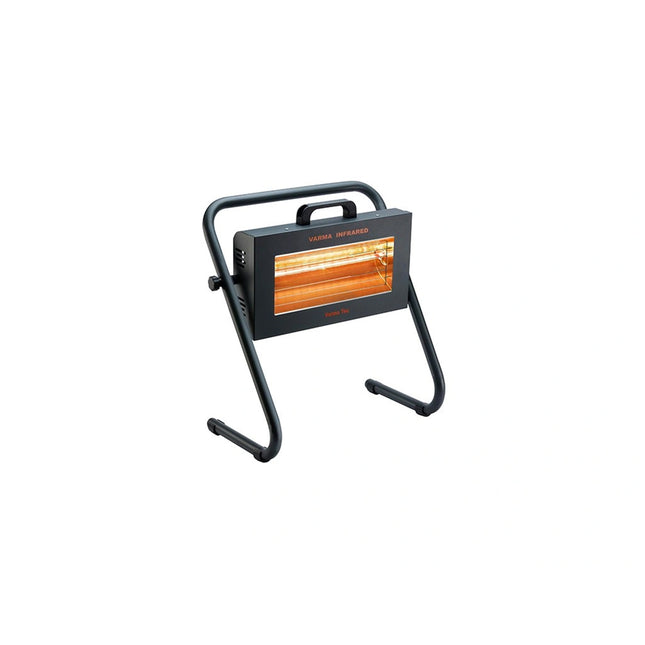
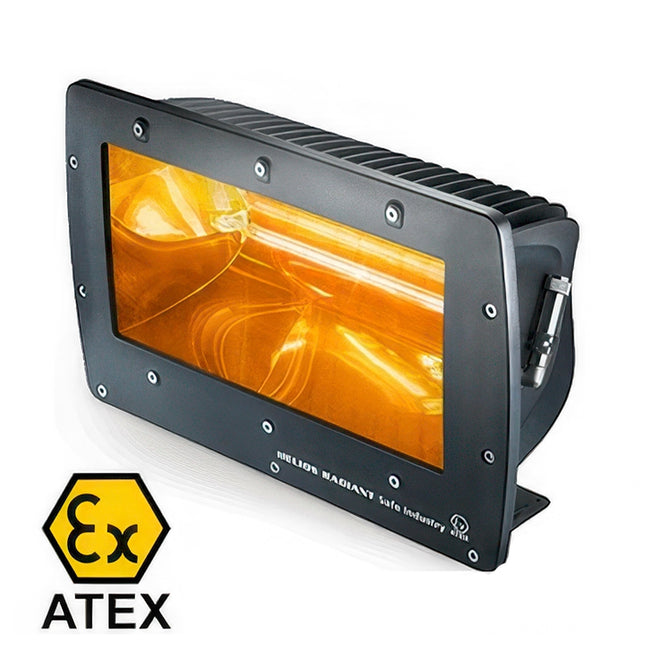
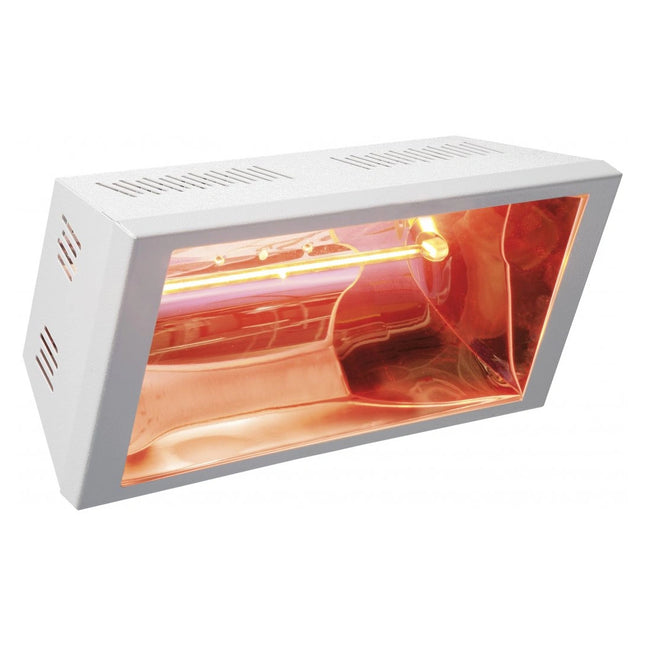
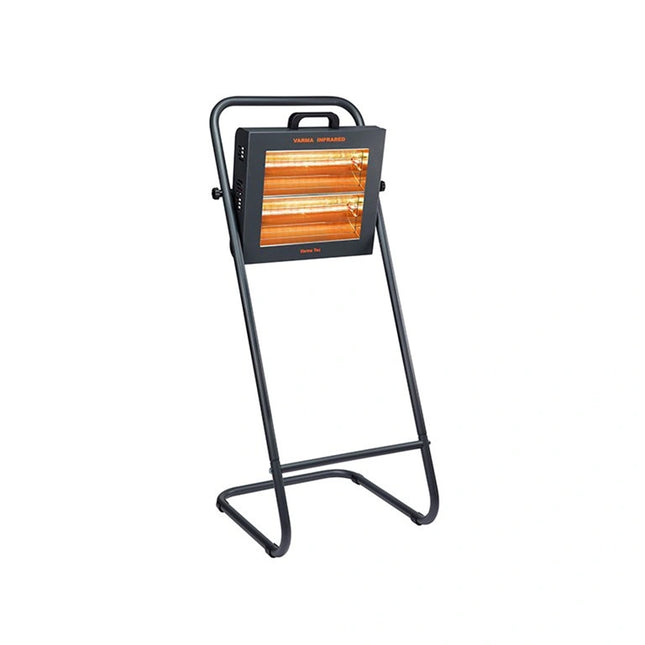
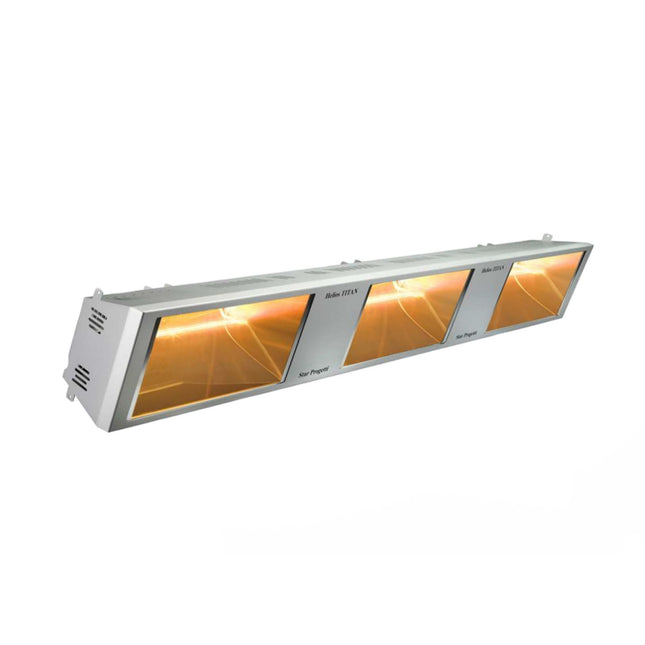
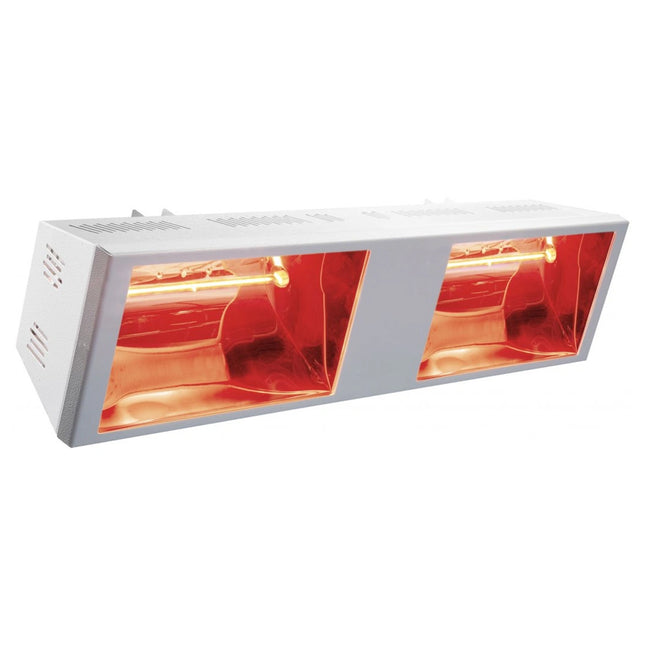
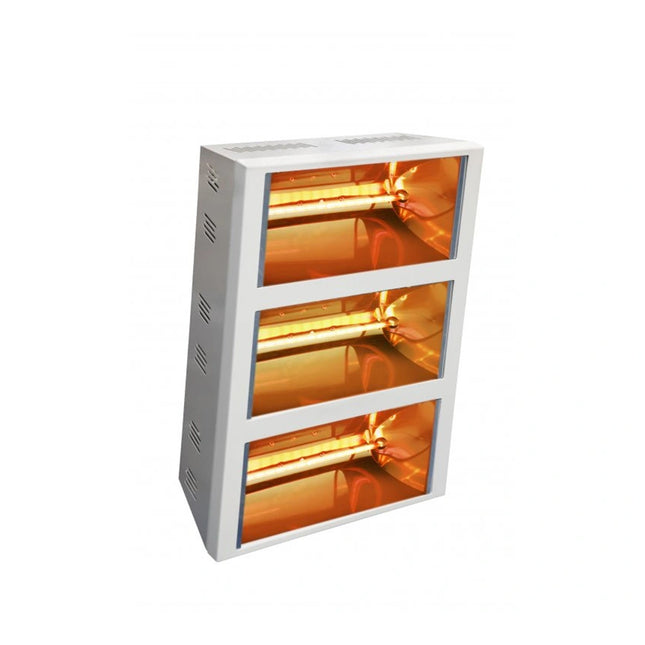
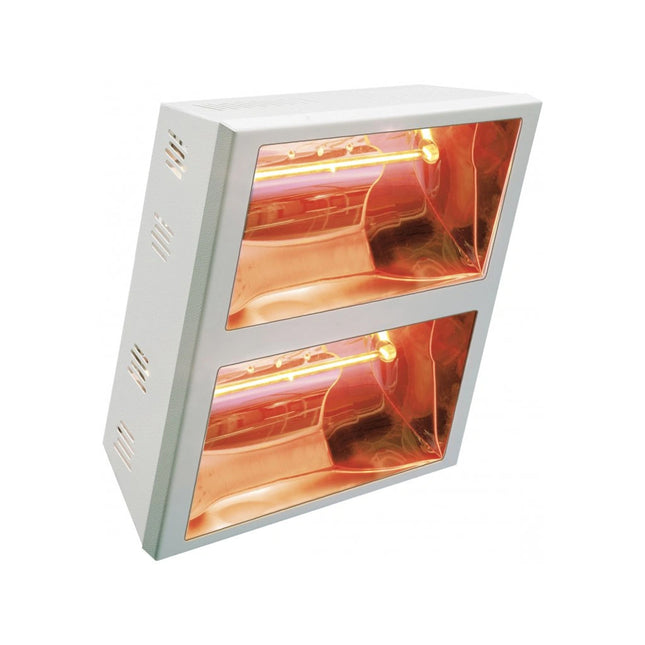
The choice of the right infrared solution depends on the layout and use of the industrial hall. In very high halls, powerful ceiling solutions are often used to heat zones. An infrared panel on the ceiling above production zones or machines provides effective heat without disturbing the work floor. In halls with fixed workstations along walls, a wall panel be used for extra comfort. For temporary or changing setups, a portable infrared heater maximum flexibility.
Zone heating tailored to industrial processes
Infrared heating in industrial halls is almost always applied as zone heating. Only the zones where employees are active or where temperature control is important for the process are heated. This significantly reduces energy consumption and prevents unused parts of the hall from being heated unnecessarily. In halls that are part of a larger whole, such as a factory hall or an adjacent production process, infrared can easily be integrated into a single heating strategy.
Working comfort and safety in industrial halls
A comfortable indoor climate in an industrial hall is essential for safety and productivity. Cold conditions lead to reduced concentration and increase the risk of errors or accidents. Infrared heating provides pleasant warmth without drafts or noise. Because the system has no open flame or combustion, no flue gases are released and air quality remains stable, even during intensive use.
Main heating or additional solution
Depending on the insulation and usage, infrared heating can function as primary heating or as a supplementary solution. In modern, well-insulated industrial halls, infrared can meet the entire heating demand. In older or open structures, infrared is often used to keep specific workstations comfortable, while basic heating remains limited. This flexibility makes infrared suitable for a wide range of industrial applications.
Capacity and customization in industrial halls
Determining the correct capacity is crucial in industrial halls. Factors such as ceiling height, production intensity, machine layout, and ventilation play a major role. Warmteshop always prepares a customized heat calculation to determine the optimal capacity and the best positioning of panels. For more insight into performance and efficiency, the article comparing infrared heating provide further depth.
Condensation control and material protection
Industrial halls often experience condensation due to temperature fluctuations and humid processes. Infrared heating heats surfaces directly, reducing the likelihood of condensation forming. This helps limit corrosion on machinery and structures and contributes to a longer lifespan of installations and materials. Furthermore, the floor remains drier, which enhances workplace safety.
Infrared heating within European energy developments
Electric radiant heating is increasingly cited in European energy visions as an efficient solution for large industrial spaces. Platforms such as energy.ec.europa.eu explain how targeted heat distribution and zone heating contribute to lower energy consumption and better cost control. For industrial halls, where traditional systems often fall short, infrared fits in perfectly.
Why industrial companies choose Warmteshop
Warmteshop has specialized in infrared heating since 2006 and supports industrial companies with a wide range of heating challenges. With more than 5,000 infrared panels in stock and logistical capacity in the Netherlands, Belgium, and Germany, we are able to deliver quickly and also support large-scale projects. In our 30+ showrooms, including those in Antwerp, Ghent, Hasselt, Kortrijk, Brussels, and Culemborg, we demonstrate practical setups specifically tailored to industrial applications. Our expertise and reliability are confirmed by independent reviews via Trustprofile.
Industrial hall heating as part of a total strategy
An industrial hall is always part of a larger production or business process. Infrared heating is easy to combine with other business spaces and scales with changes in capacity or layout. By strategically deploying infrared, you create a future-proof heating system that combines comfort, safety, and energy efficiency.
Back to the infrared panels overview
View the full range of infrared panels from Warmteshop and discover which solutions suit your industrial hall and business environment.